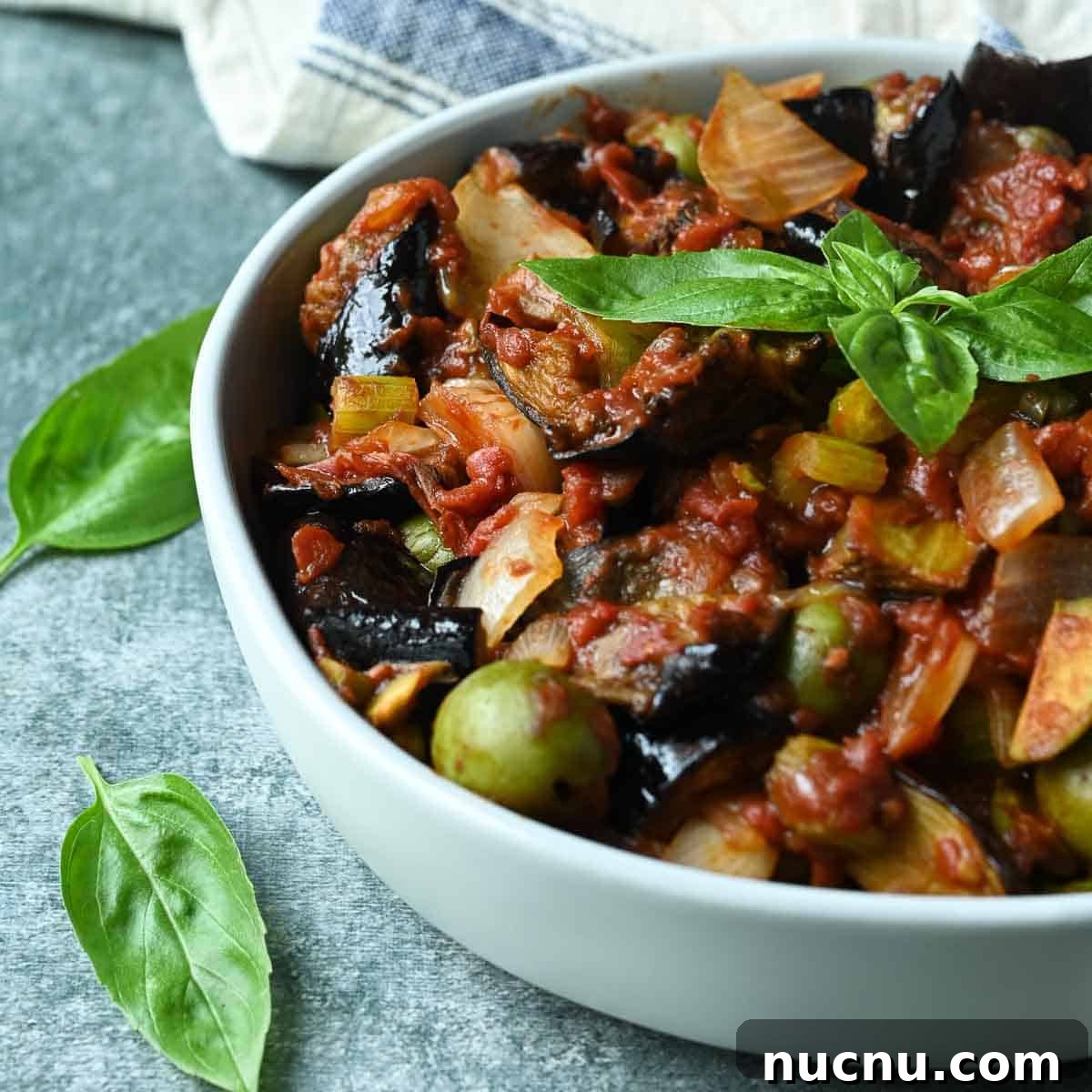
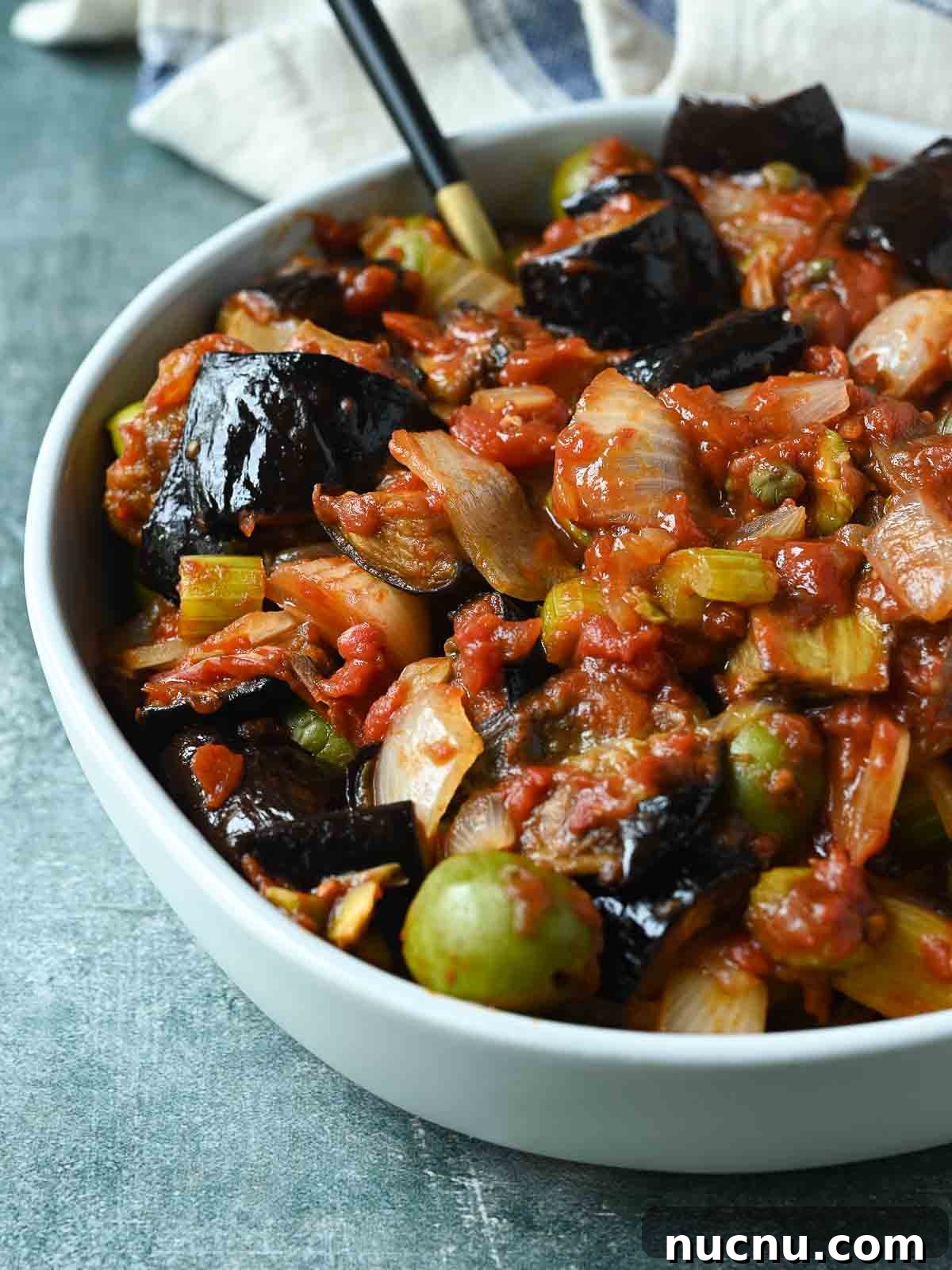
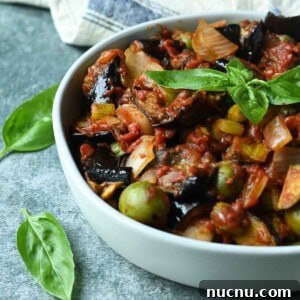
Sicilian eggplant caponata is a sweet-and-tangy Mediterranean relish featuring tender roasted eggplant, olives, capers, onions, tomatoes, and celery. Bright, savory, and balanced, this vibrant dish works equally well as an appetizer, a topping, a side, or a main when paired with pasta or crusty bread.
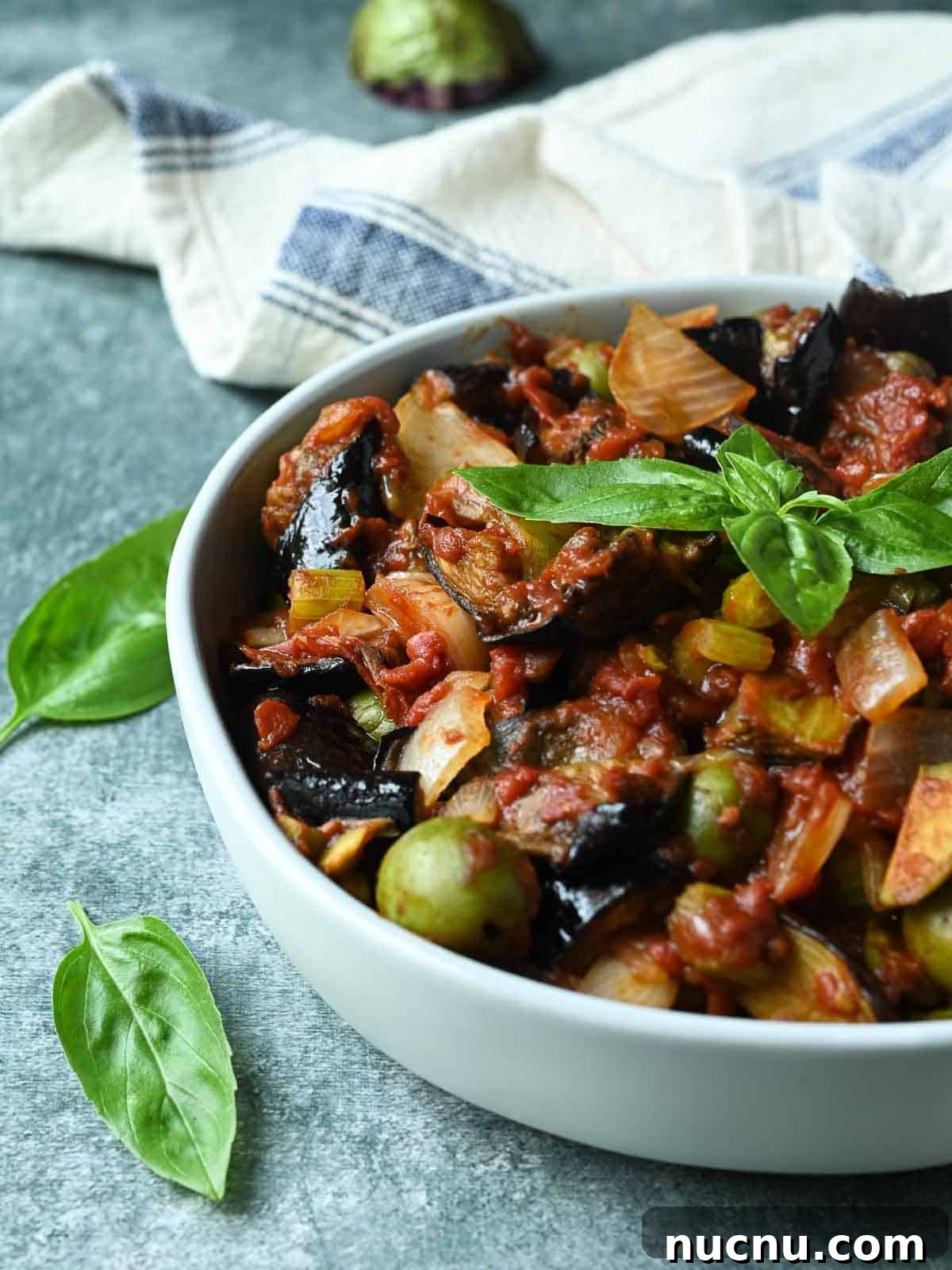
Caponata is a summer classic. I wait until eggplants are at their peak—usually late summer—before making this Sicilian staple. Family recipes vary widely: some include red peppers, raisins, or pine nuts, while others keep it restrained. My version highlights onions, capers, celery, and briny Italian olives for a clean, balanced flavor profile.
I prefer roasting the eggplant rather than frying it. Roasting uses less oil, takes less hands-on time, and yields silky flesh with a slightly caramelized edge. I also like to use a flavorful homemade tomato sauce when possible; its natural sweetness and depth reduce the need for added sugar. For the classic sweet-and-sour finish, a good-quality balsamic vinegar works beautifully—use sugar sparingly and add only if your tomatoes need a boost.
Ingredient notes
These simple pantry ingredients produce an authentic caponata. Swap or adjust based on what you have available.
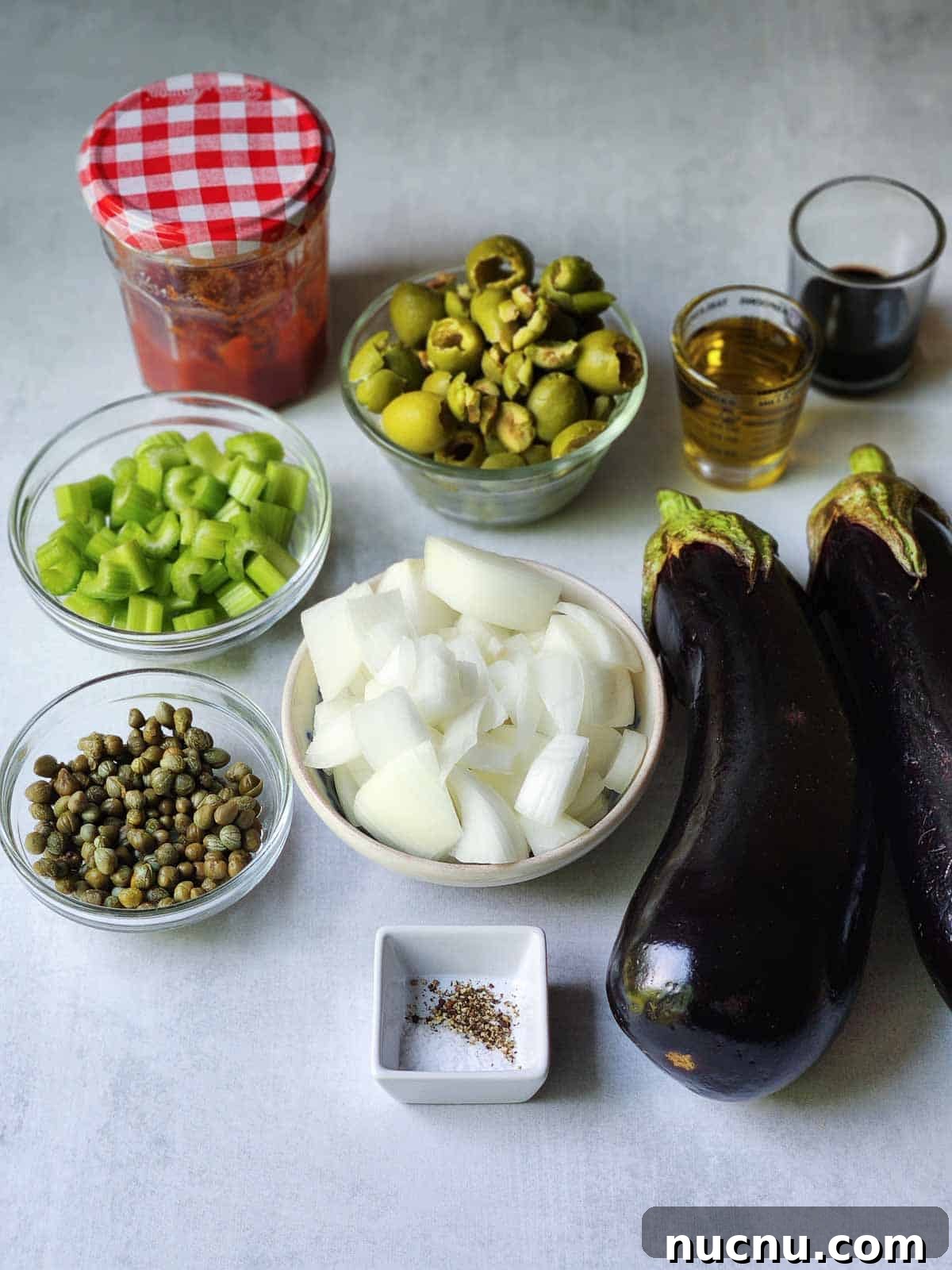
- Eggplant – Many varieties work: Globe, Italian, Graffiti (Sicilian), Japanese, or Chinese. Smaller Italian eggplants have tender skin and flesh; large globe types may benefit from partial peeling. If you roast the eggplant, salting to draw moisture is optional.
- Onion – Yellow, red, or Spanish onions all work fine.
- Celery – Adds texture and a bright, aromatic bite.
- Capers – Rinse and drain to avoid excess salt.
- Olives – Castelvetrano or other mild green olives are ideal. Pitted olives save time.
- Tomato sauce – Use your favorite sauce or canned crushed/diced tomatoes.
- Olive oil – For roasting and sautéing.
- Balsamic or red wine vinegar – Provides the sweet-tart finish. Choose a balanced balsamic rather than a thick glaze.
- Salt and pepper – To taste.
- Sugar – Optional. Add only if your tomatoes or sauce need extra sweetness.
How to make Sicilian eggplant caponata
Roasting the eggplant is an easy way to develop rich flavor without excess oil. If you prefer, you can fry the cubes, but frying uses more oil and requires more attention.
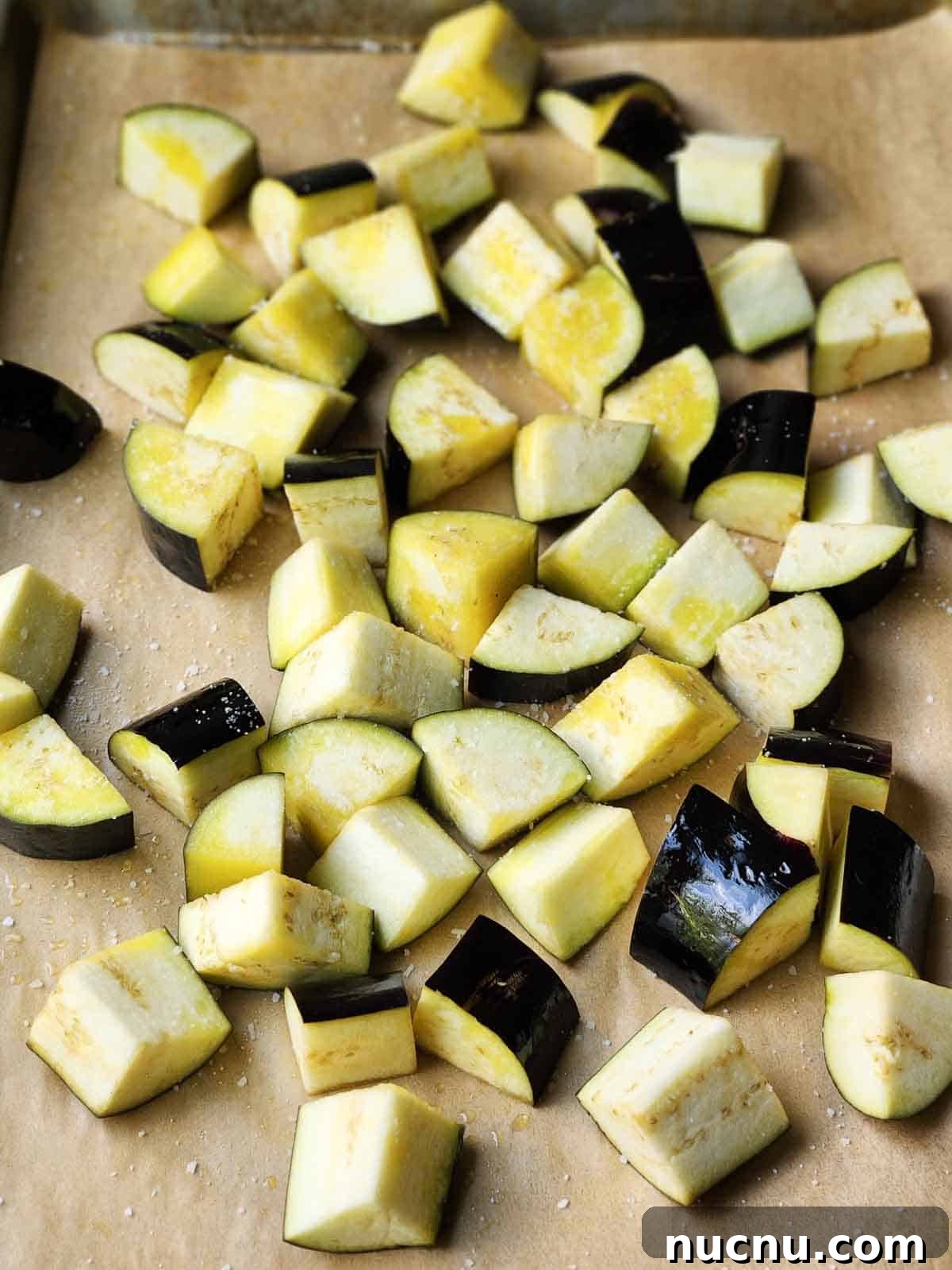
Line a baking sheet with parchment or foil. Cut eggplant into 1/2-inch cubes, toss with olive oil and a pinch of salt, and spread in a single layer.
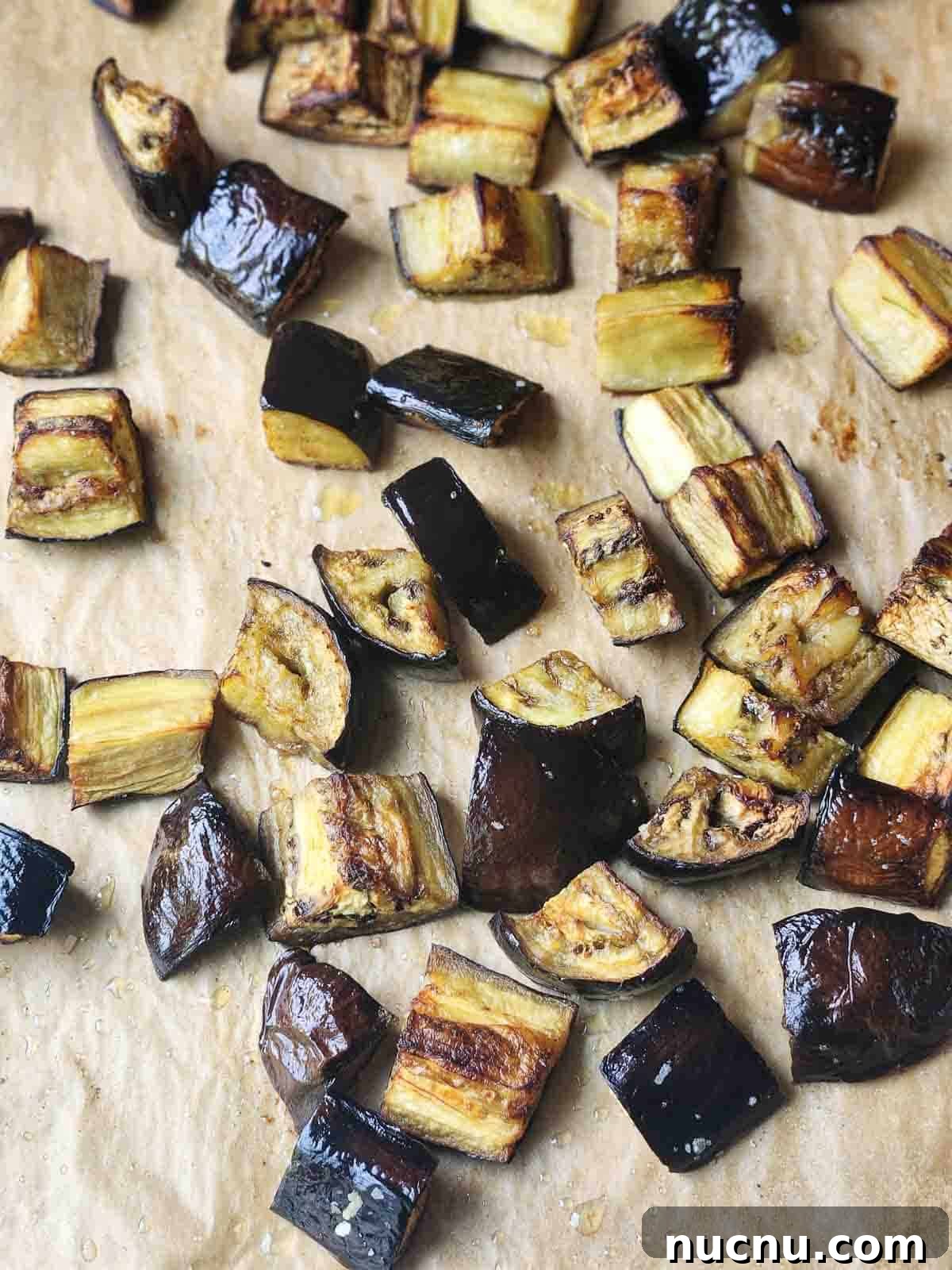
Roast until the cubes are browned and tender, turning once halfway through. Remove from the oven and set aside while you prepare the rest.
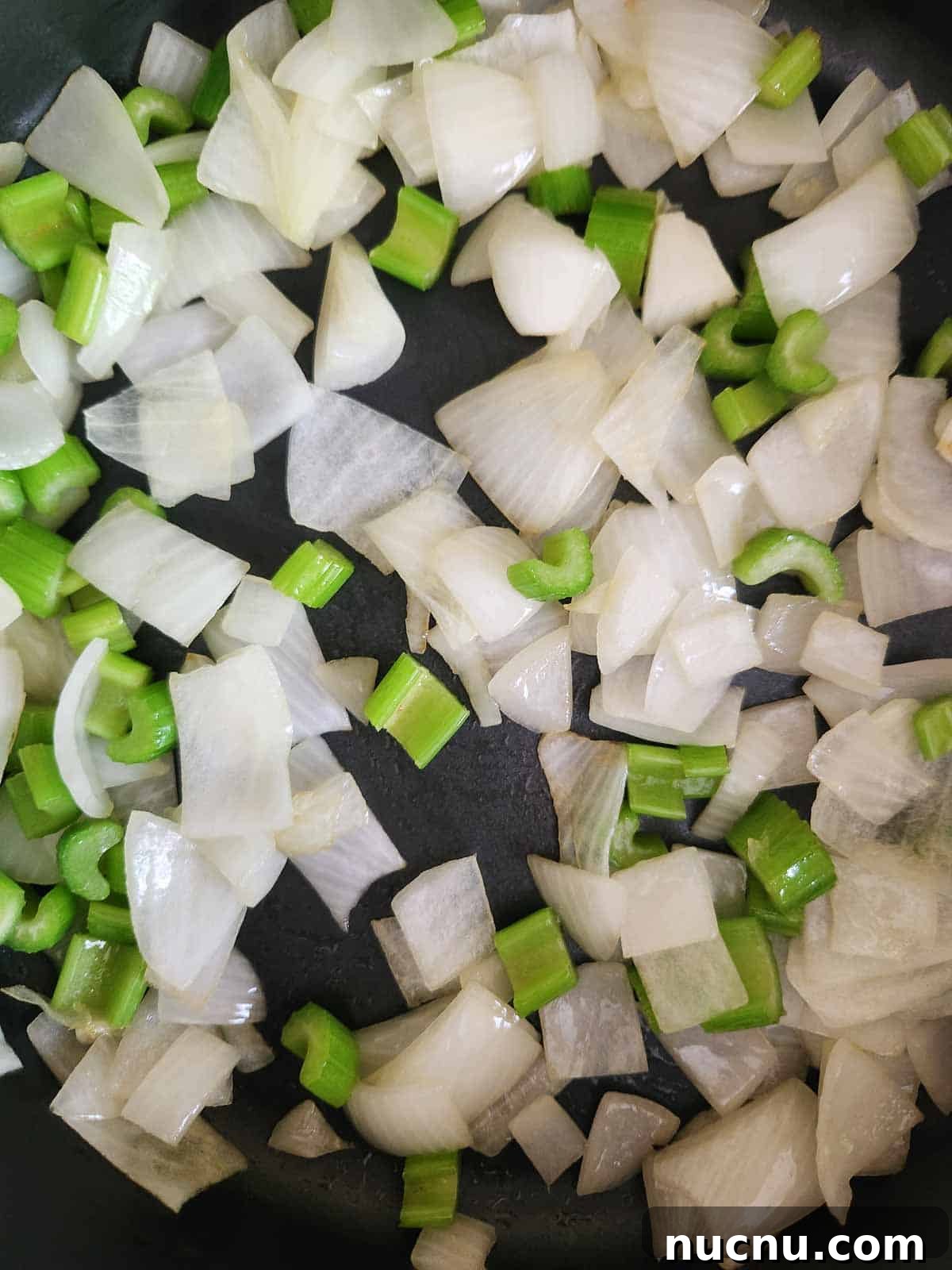
Warm a skillet over medium heat with a little olive oil. Sauté onions and celery with a pinch of salt until softened but not browned.
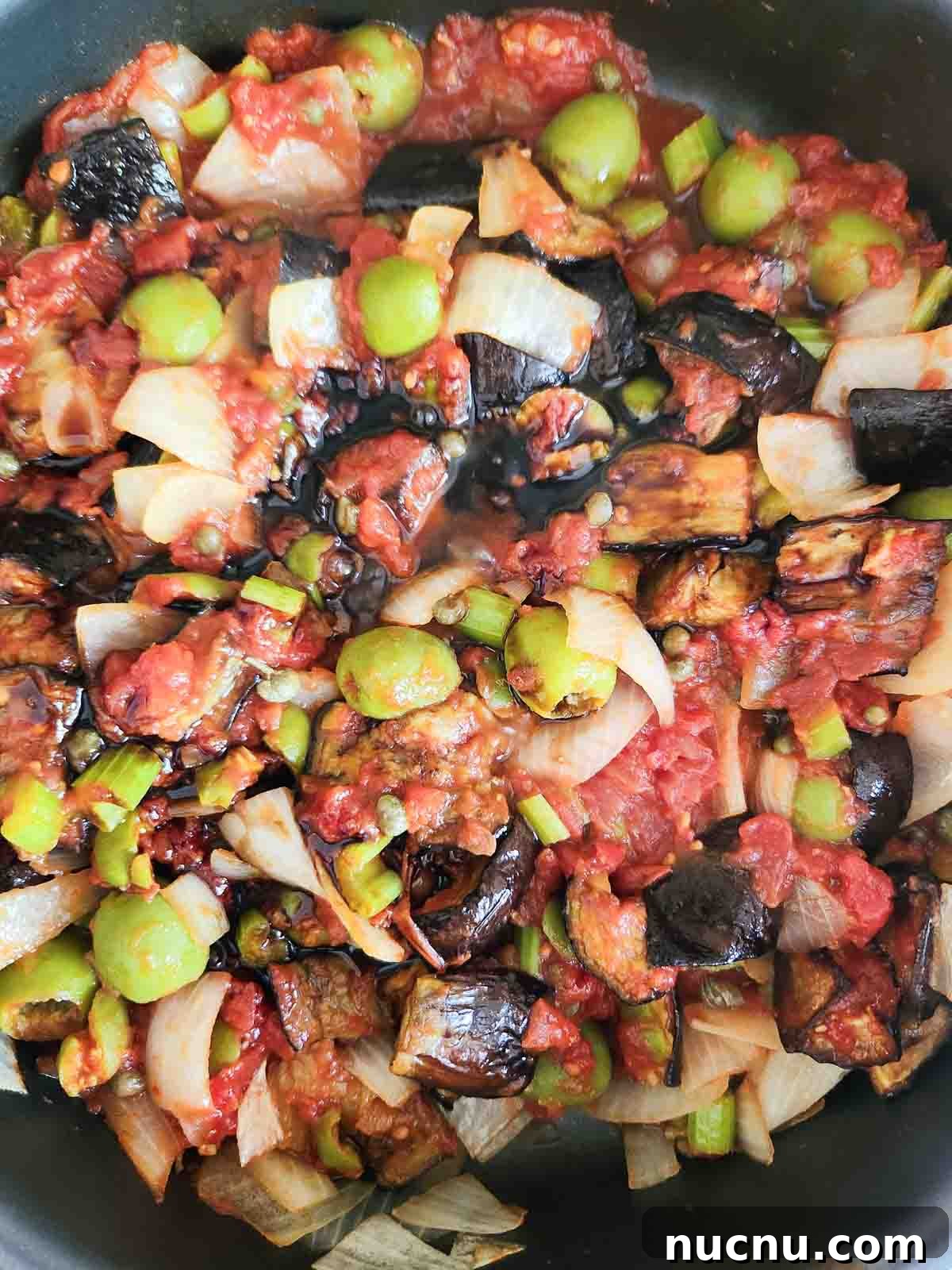
Add the roasted eggplant, olives, capers, and tomato sauce to the skillet. Cover, bring to a simmer, and cook a few minutes. Uncover, stir in the vinegar and sugar if using, and cook briefly until the mixture is slightly thickened. Adjust salt and pepper to taste and finish with fresh herbs if desired.
Serve warm, at room temperature, or chilled. Caponata’s flavors deepen after a few hours or overnight, so it’s a great make-ahead dish.
💡Expert tip
If using smaller Italian eggplants, leave the skin on. For large globe eggplants, peel some strips in a zebra pattern to reduce bitterness and tough skin while keeping texture.
Substitutions and variations
Caponata is versatile—try these variations to suit your tastes or pantry.
- Peppers – Add chopped roasted or fresh red bell pepper for sweetness and color.
- Zucchini – Roasted zucchini or yellow squash will soak up the caponata flavors nicely.
- Garlic – A minced clove adds aromatic depth.
- Nuts – Pine nuts or sliced almonds add crunch in some regional versions.
- Heat – A pinch of crushed red pepper or cayenne brings a spicy note.
Serving suggestions
Caponata’s sweet-sour profile makes it extremely adaptable. Try it:
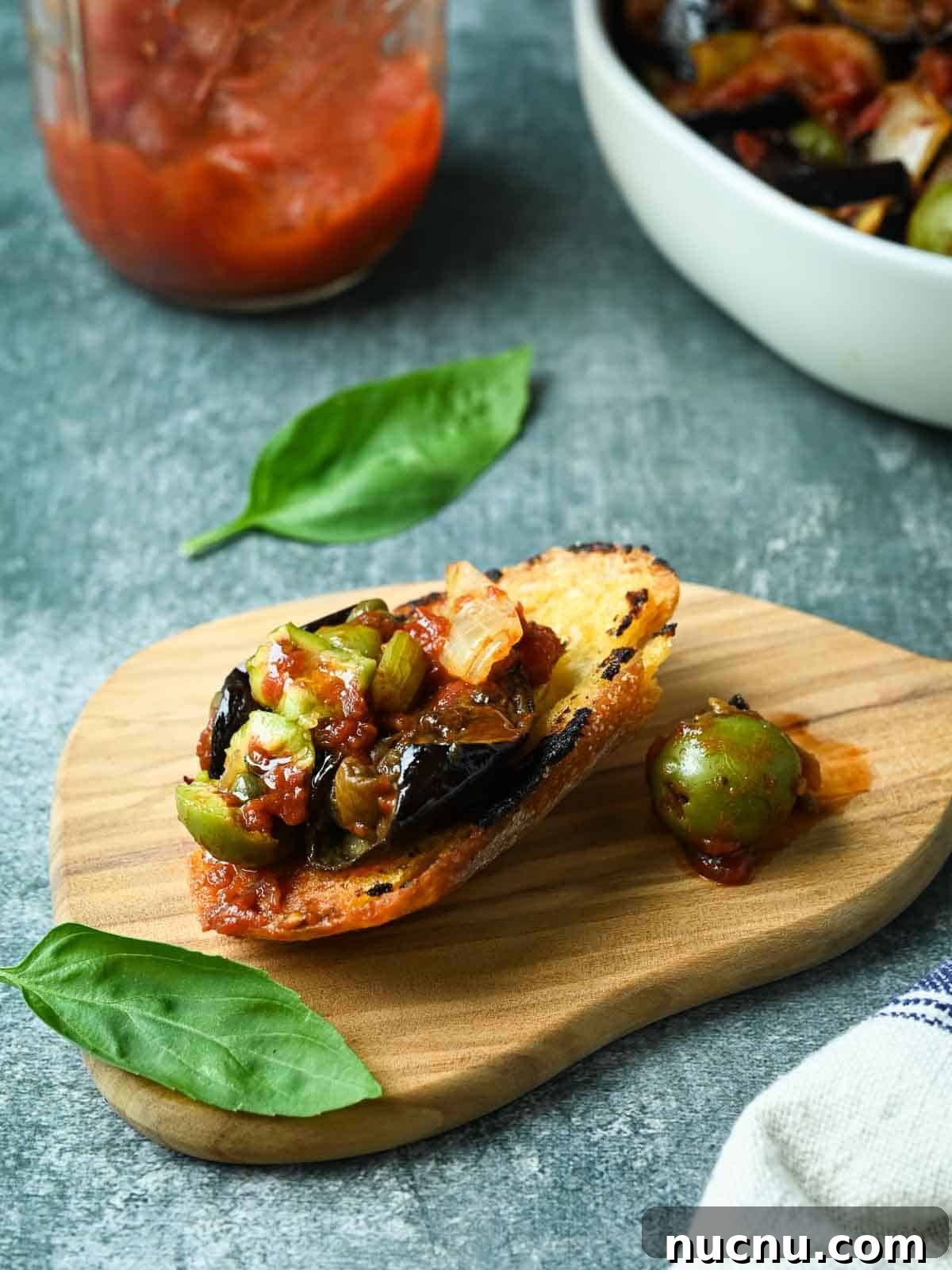
- As an appetizer – Spread on toasted bread or crackers for a flavorful starter.
- As a side – Serve alongside grilled meats or fish.
- As a topping – Spoon over chicken, fish, or steak.
- With pasta – Toss into warm pasta for a satisfying Sicilian-inspired meal.
- For breakfast – Use as a base for eggs or a savory shakshuka-style dish.
- On sandwiches – Add as a relish to sandwiches, sausages, or burgers for bright acidity.
Storage
Store caponata in an airtight container in the refrigerator for up to 5 days. It also freezes well for up to 3 months—cool completely before freezing. Flavors often improve after a day in the fridge, so making it ahead is recommended.
Frequently asked questions
Both. Caponata can be enjoyed warm, at room temperature, or chilled. Its versatility makes it ideal for picnics and potlucks.
More Italian recipes
Craving more Italian flavors? Try caponata with simple accompaniments like crusty bread, grilled protein, or pasta for an easy, satisfying meal.
Made this recipe? Leave a rating and a comment. If you shared a photo, tag @brunchandbatter on Instagram so the creator can see your version!
📖Recipe
Sicilian Eggplant Caponata
Equipment
- baking sheet or roasting pan
- large non-stick skillet
Ingredients
- 1 lb (about 5 cups chopped) eggplant, cut into ½-inch chunks (2 medium or 1 large)
- 3 tbsp extra-virgin olive oil, divided
- ½ tsp kosher or fine sea salt, divided, plus more to taste
- 1 small onion, chopped (about 1 cup)
- 2–3 stalks celery, chopped (about ½ cup)
- 1⅓ cups pitted green olives (such as Castelvetrano), halved
- ¼ cup capers, rinsed and drained
- 2 cups tomato sauce
- 4–6 tbsp balsamic or red wine vinegar
- 1 tbsp granulated sugar (optional)
- Freshly ground pepper, to taste
- Fresh herbs (basil or parsley), optional
Instructions
- Preheat oven to 425°F. Toss the eggplant with 2 tbsp olive oil and ¼ tsp salt on a baking sheet. Spread in a single layer and roast until browned and fork-tender, 35–45 minutes, turning once. Set aside.
- Heat the remaining 1 tbsp olive oil in a large skillet over medium heat. Sauté the onion and celery with the remaining ¼ tsp salt until softened, about 3–5 minutes.
- Add the roasted eggplant, olives, capers, and tomato sauce. Cover and bring to a simmer, then reduce heat to medium-low and simmer 5–8 minutes.
- Uncover and stir in the vinegar and sugar (if using). Cook 1–2 minutes more until slightly thickened. Season with salt and pepper, and stir in fresh herbs if desired. Serve warm, at room temperature, or chilled.
Notes
- Refrigerate in an airtight container for up to 5 days.
- Flavors deepen after a day, making caponata an excellent make-ahead dish.
Nutrition*
*Nutrition information is an estimate and provided as a courtesy. Actual values may vary based on ingredients and substitutions.