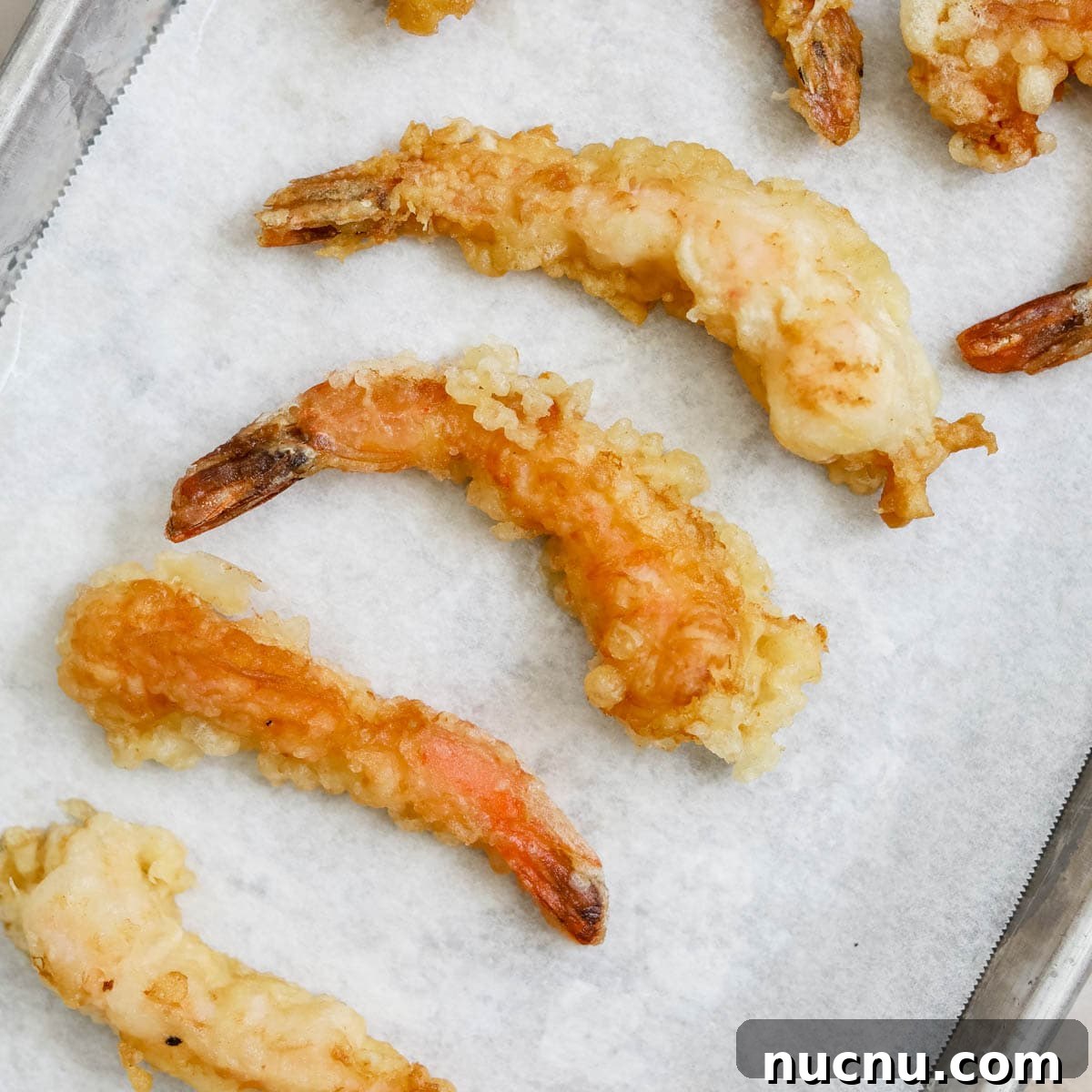
Ebi Tempura, commonly known as shrimp tempura, is a classic Japanese dish featuring tender shrimp coated in a light, airy batter and fried until golden and crisp. It’s simple to prepare and works beautifully as an appetizer, a side, or a topping for udon or rice bowls. Serve with tentsuyu, a savory tempura dipping sauce made from dashi, soy sauce, mirin, and grated daikon, for a perfect balance of flavors.
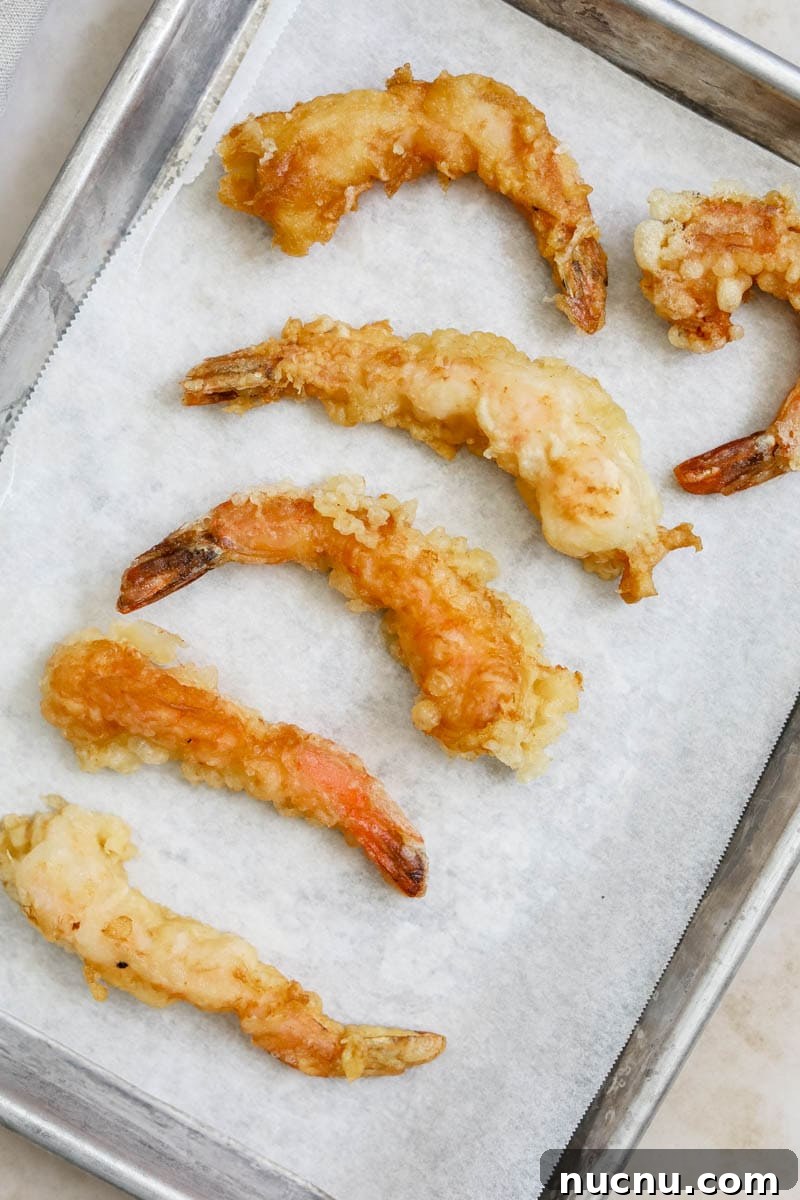
What is Tempura?
Tempura is a traditional Japanese technique in which vegetables or seafood are dipped in a very light batter and deep-fried briefly. The result is a delicate, crunchy coating rather than a heavy breading, making tempura an ideal complement to soups, rice bowls, udon, or bento meals. When served as a side, it’s often accompanied by tentsuyu, a dipping sauce that enhances the tempura’s umami with dashi, soy sauce, mirin, and a touch of grated daikon.
Ingredients
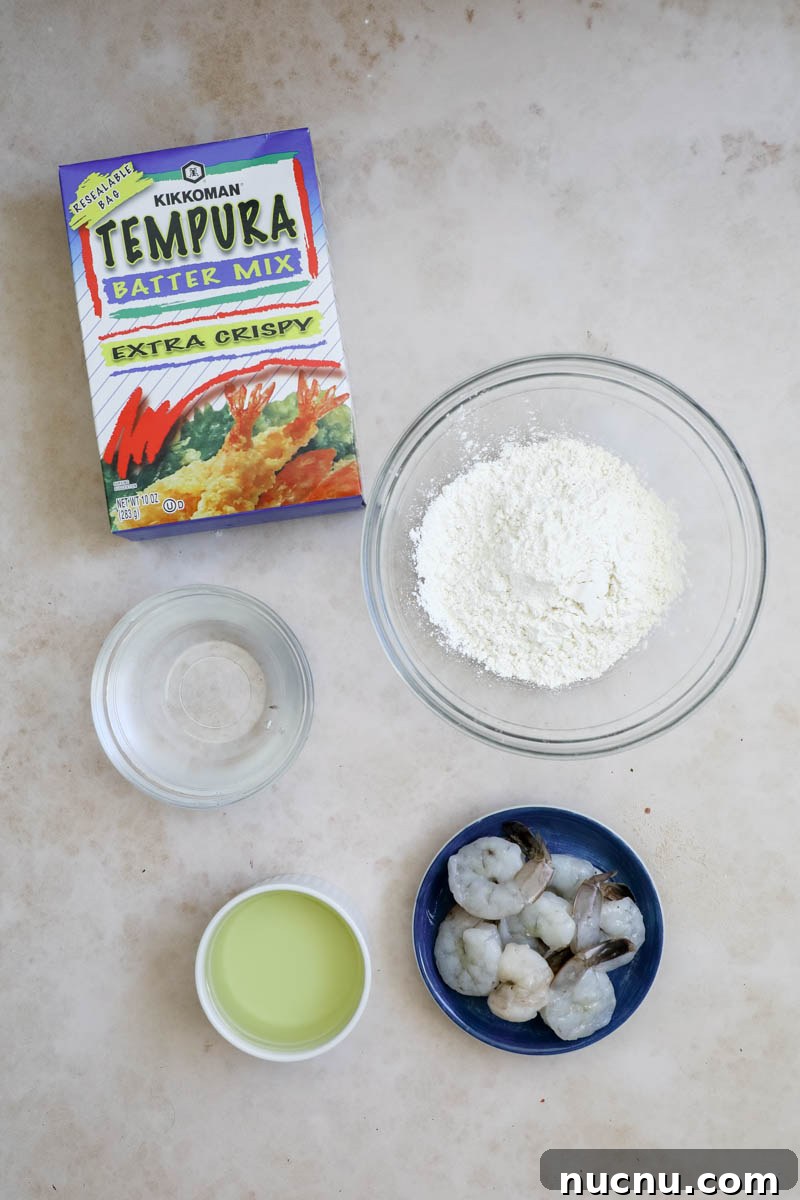
- Vegetable oil – Choose a neutral oil with a high smoke point so it can be heated to frying temperature without burning.
- Ice water – Cold water helps keep the batter light and prevents it from absorbing too much oil.
- Shrimp – Use peeled, deveined shrimp with tails left on for easy handling and a nicer presentation.
- Tempura batter mix – Ready-made tempura mix simplifies preparation and creates the characteristic delicate crust. If you prefer, you can make a homemade mix of flour and starch.
See the recipe card below for exact quantities.
Tempura Batter Ingredients (notes)
- Flour – The base of the batter; use a low-protein all-purpose flour for a light texture.
- Corn starch – Adds crispness and helps the batter cling to the shrimp.
- Baking soda – A small amount can improve lightness and crispness.
Instructions
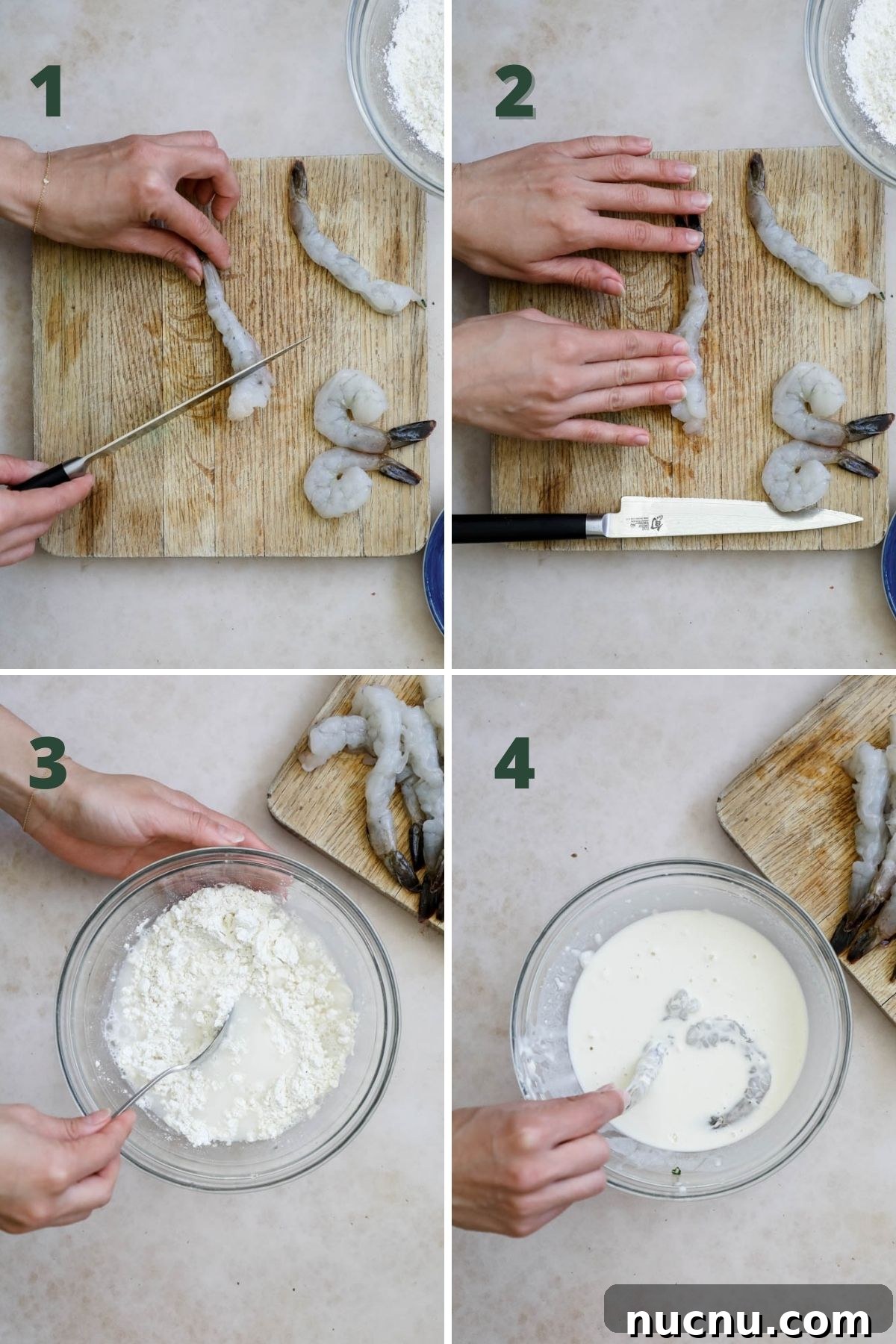
- Prepare shrimp – Make three shallow incisions across the belly of each shrimp to prevent curling. Open those cuts gently and press down on the back to straighten the shrimp.
- Heat oil – Pour oil into a skillet to a depth of about 2 inches and heat to roughly 350°F (175°C). Maintain a steady temperature for even frying.
- Prepare batter – Combine tempura batter mix with ice water in a bowl and whisk briefly until just combined; do not over-mix. Slight lumps are fine and help keep the batter light.
- Fry – Working in batches, dip each shrimp into the batter, then gently lower it into the hot oil. Fry for 2–4 minutes, turning halfway through, until the batter is golden and the shrimp are cooked through. Remove with a slotted spoon and drain on paper towels to remove excess oil. Serve immediately with tentsuyu.
Hint: Between batches, skim out any loose batter bits so they don’t burn and affect the oil temperature.
FAQ
Ebi Tempura is versatile: add it to udon, serve over rice in a donburi, include it in a sushi roll or onigiri, or enjoy it as part of a bento. It also pairs well with other Japanese mains like chicken katsu.
Because the shrimp are fully cooked, shrimp tempura is generally considered safe for pregnant women, but you should consult your healthcare provider for personal dietary guidance.
If shrimp stick, the oil may not be hot enough. Continue cooking until the shrimp releases naturally from the pan; do not force it off before it’s cooked.
Allow oil to cool, then pour it into a container and discard with your regular trash. Do not pour oil down the drain.
Other Types of Tempura
- Vegetable tempura – Dry vegetables with low moisture content—carrot, eggplant, kabocha squash, broccoli, zucchini, green beans, bell pepper, Japanese sweet potato, and cauliflower—work especially well.
- Kakiage – A mixed fritter made from shredded vegetables and seafood formed into a disc and fried.
- Prawn or squid tempura – Use larger prawns or squid rings for variation.
- Fish tempura – White fish like cod, halibut, or haddock make excellent tempura when sliced into portions.
Substitutions and Variations
- Gluten-free – Use a certified gluten-free tempura mix or replace regular flour with a gluten-free blend and rice or corn starch.
- Ebi Fry – For a different texture, coat shrimp in panko breadcrumbs and deep-fry for ebi fry.
- Deep-fryer – A deep fryer can help keep oil temperature steady for very consistent results.
Equipment
Basic equipment for this recipe includes a sharp knife, a cutting board, a mixing bowl, a thermometer (recommended), and a heavy skillet, frying pan, or deep fryer with enough oil for frying.
Storage
Store leftover tempura in an airtight container in the refrigerator for up to 2 days or freeze for up to 2 months. To re-crisp, briefly pan-fry or bake in a hot oven for a few minutes rather than microwaving, which makes the batter soggy.
Top tips
- Straighten shrimp – Make incisions across the shrimp belly and press them flat so they fry straight and look elegant on the plate.
- Heat oil – Keep oil at 350–360°F (175–180°C). If you don’t have a thermometer, drop a small bit of batter into the oil—if it sizzles and turns golden quickly, the oil is ready.
- Don’t overmix batter – Mix just until combined. Overmixing develops gluten and produces a heavier coating instead of a light, crisp crust.
📖 Recipe
Ebi Tempura (Crispy Japanese Shrimp Tempura)
Ebi Tempura is a crispy, light shrimp tempura that’s easy to make and perfect as a side or topping for Japanese dishes.
Ingredients
- 1 cup vegetable oil (for frying)
- 1 cup tempura batter mix
- 3/4 cup ice water
- 1 lb shrimp with tails, peeled and deveined (about 16–20 shrimp)
Instructions
- Prepare shrimp: Make three shallow cuts across the belly of each shrimp and press gently to straighten.
- Heat oil: Fill a skillet with oil about 2 inches deep and heat to 350°F (175°C).
- Make batter: In a bowl, whisk the tempura mix with ice water until just combined. Keep the batter cold.
- Fry: Dip shrimp into batter, then carefully lower into hot oil. Fry 2–4 minutes, turning once, until golden. Drain on paper towels and serve with tentsuyu.
Notes
Store cooled leftover tempura in an airtight container in the fridge for up to 2 days or freeze for up to 2 months. Re-crisp by pan-frying briefly or heating in a hot oven.
Nutrition (per serving)
Calories: 592 kcal | Carbohydrates: 25 g | Protein: 1 g | Fat: 55 g | Saturated Fat: 8 g | Sodium: 77 mg