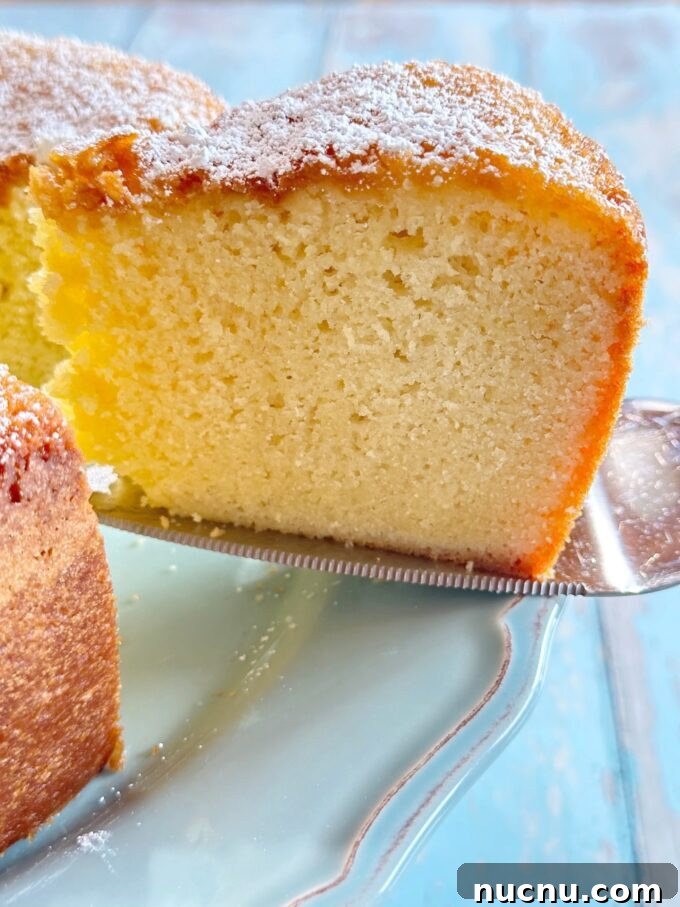
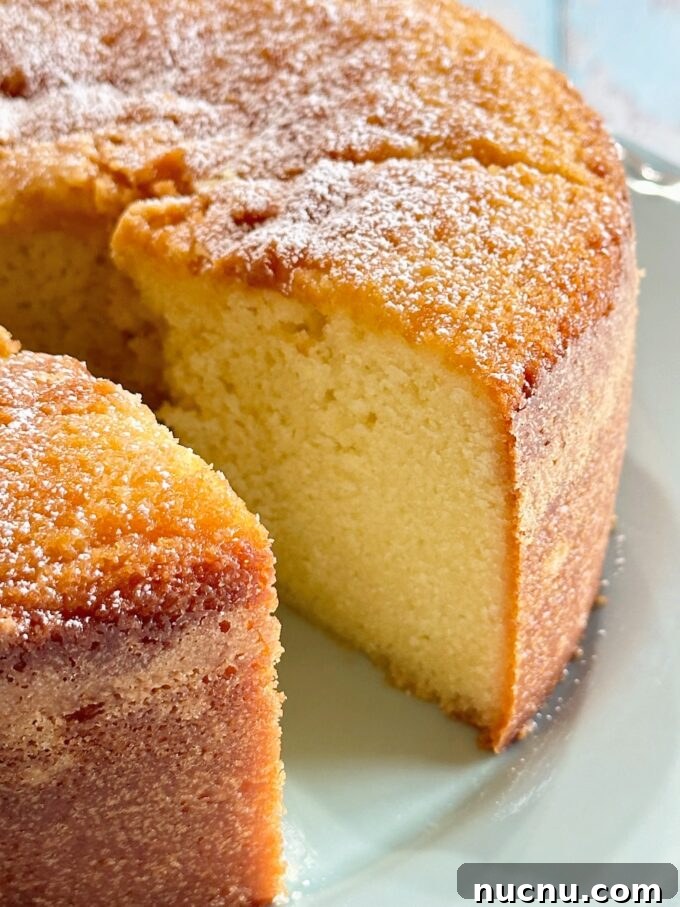
This rich, buttery pound cake has a tender crumb and a golden crust. It comes together quickly and is equally delicious simply dusted with powdered sugar or served with fresh fruit and whipped cream.
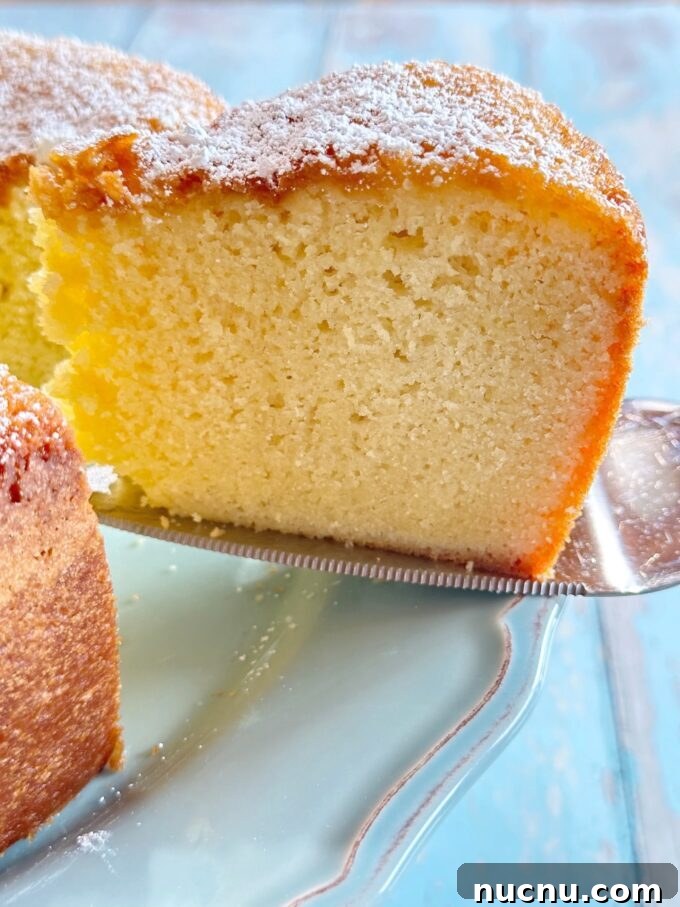
If you want a straightforward, not-too-sweet cake for any occasion, this pound cake fits the bill. It’s dense and buttery with a soft, tender interior.
Classic pound cakes originally used equal weights of butter, eggs, sugar and flour and typically had no chemical leaveners or added liquid, resulting in a dense, firm texture. This recipe modernizes that idea: it still delivers a rich, dense cake but uses an extra ingredient list and a small amount of baking powder so the loaf has a gentle lift and stays moist.
INGREDIENTS FOR THIS RECIPE
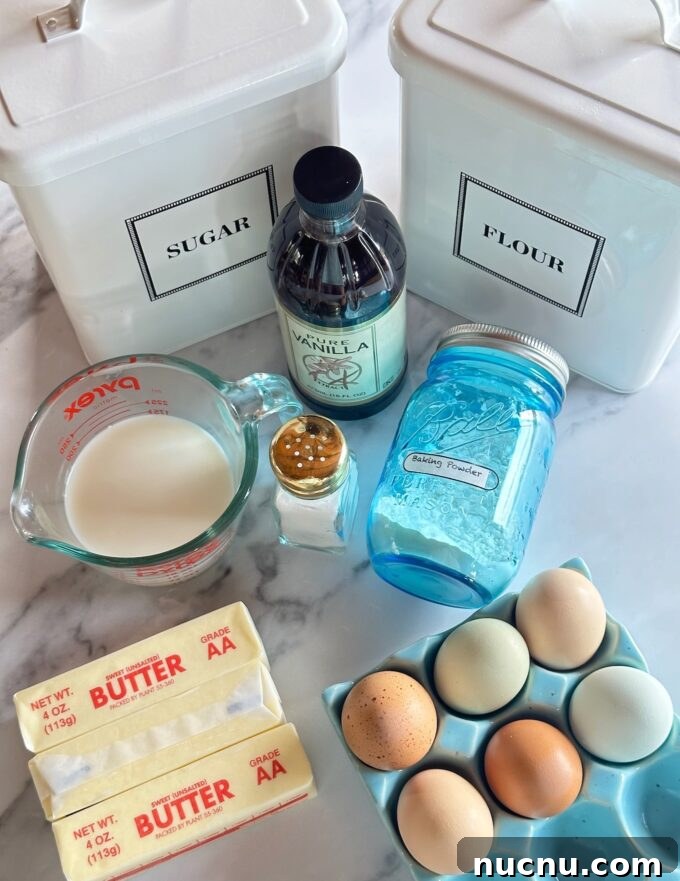
All-Purpose Flour: Use all-purpose flour—we’ll add baking powder for lift.
Baking Powder: A small amount keeps the cake from being overly compact while maintaining a buttery density.
Salt: Enhances the cake’s flavors.
Unsalted Butter: Use unsalted butter and add the measured salt in the recipe; if you must use salted butter, omit the added salt.
Large Eggs: Eggs add richness and structure; this recipe uses six large eggs.
Granulated Sugar: Sweetens and balances the butter flavor.
Milk: Adds moisture and contributes to a tender crumb; 2% or whole milk works well.
Vanilla: Pure vanilla extract provides classic flavor.
HOW TO MAKE THIS CAKE
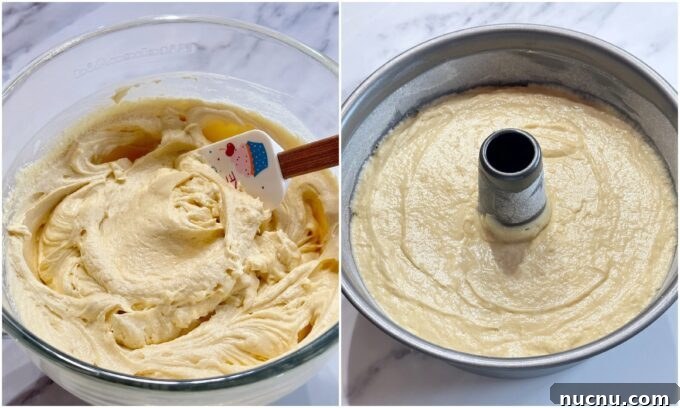
Preheat the oven to 325°F (163°C). Butter a 12-cup tube or bundt pan thoroughly, then lightly flour it and tap out the excess. If using a bundt pan, be sure to coat every crevice. Set the pan aside.
Whisk the flour, baking powder and salt together in a medium bowl and set aside. In the bowl of a stand mixer, cream the room-temperature butter on medium speed until softened, about 30 seconds. Add the sugar and vanilla and beat on medium-low for about two minutes, until well combined. Add the eggs one at a time, mixing just until each is incorporated.
With the mixer on low, add the flour mixture and milk alternately, beginning and ending with the flour. Scrape down the sides of the bowl as needed. On the final addition, mix only until the flour is just incorporated—the batter will be thick.
Pour the batter into the prepared pan and smooth the top by gently shaking the pan back and forth to remove large air pockets. Bake about 1 hour 20 minutes, or until a toothpick inserted in the center comes out clean or with just a few moist crumbs and the top is golden brown.
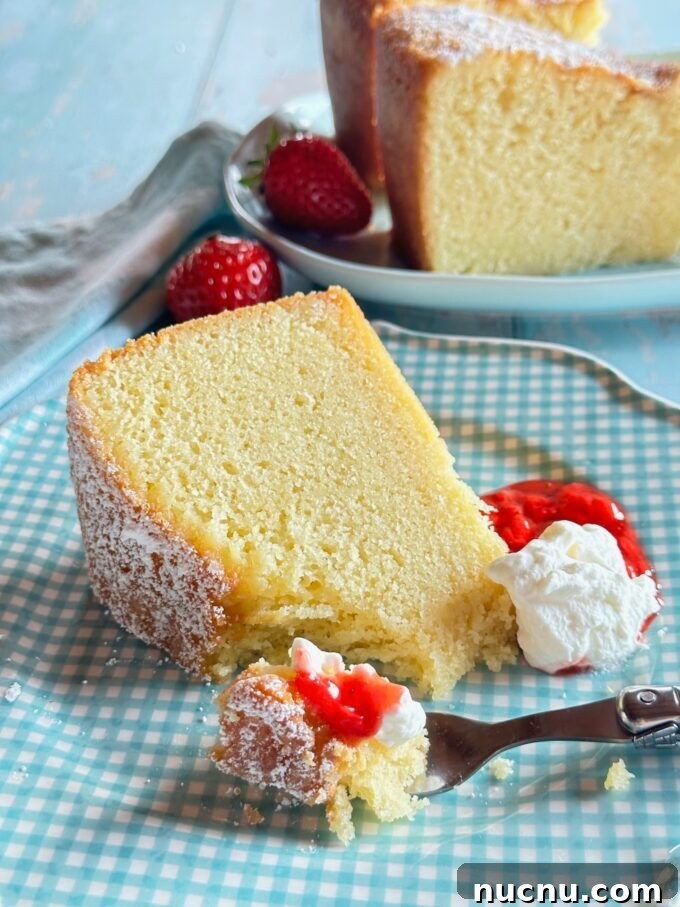
Let the cake cool in the pan for 10 minutes, then invert it onto a wire rack to finish cooling. Removing it promptly prevents the crust from becoming soft due to trapped steam.
PRO TIPS FOR THIS RECIPE
- Bring the butter, milk and eggs to room temperature before starting for better integration and texture.
- Measure flour accurately: sift if needed, then spoon into a measuring cup and level with a knife. Too much flour yields a dry cake.
- Cream the butter and sugar the recommended time. Under- or over-creaming affects the cake’s texture; over-creaming can create gummy streaks.
- Use the toothpick test and avoid overbaking; a few moist crumbs are okay.
- Bake slowly at 325°F rather than increasing the oven temperature.
- Store the cake wrapped tightly at room temperature for 4–5 days; the buttery flavor often improves after the first day.
- Use quality ingredients—real butter and pure vanilla—since flavor depends on them.
- For a crunchier exterior, butter the pan and sprinkle granulated sugar instead of flour.
TOPPINGS/GARNISHES
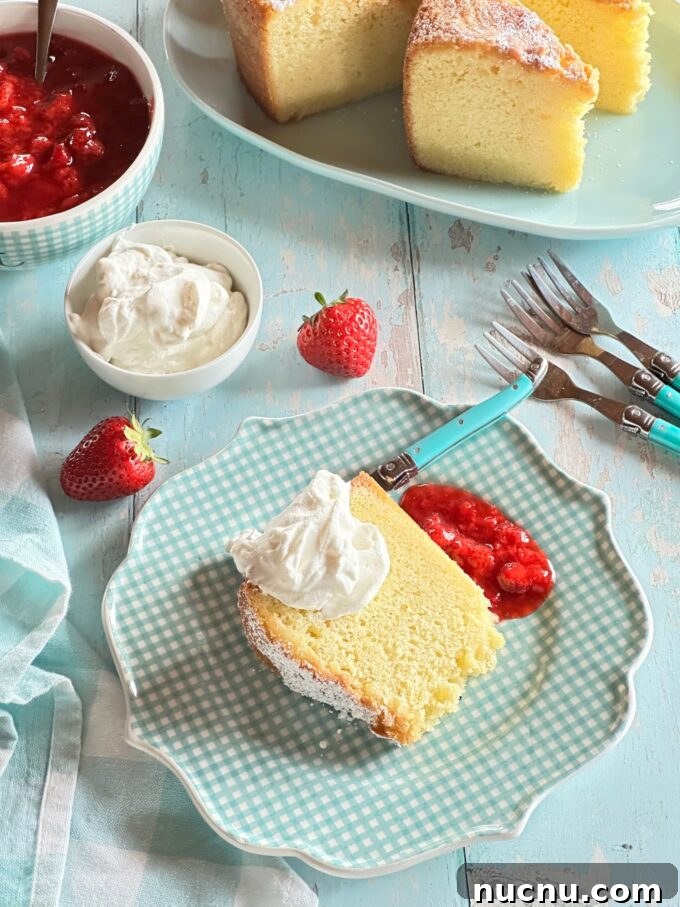
This cake is excellent with just a dusting of powdered sugar, but it’s also delightful served with whipped cream and fresh fruit or a fruit compote.
FAQ’S
Can I add other flavorings to this cake?
Yes. Lemon or orange zest works beautifully—about 2 teaspoons added to the butter and sugar while creaming. Keep the vanilla for balance.
Can I freeze this cake?
Yes. Slice the cake, wrap individual slices in plastic wrap, place them in a freezer bag and freeze up to three months. Thaw at room temperature; avoid microwaving to prevent drying.
Can I bake this cake in loaf pans?
Yes. The batter fits two standard loaf pans. Butter and lightly flour the pans and tap out excess flour. A 12-cup tube pan produces the loaf shown here.
Why is there a gummy streak in my pound cake?
A gummy streak usually means the butter and sugar were over-creamed, incorporating too much air. That extra air can cause the cake to rise quickly and then collapse as it cools, leaving a gummy appearance even when the cake is fully baked.
If you try this recipe, please leave a rating and comment — feedback is appreciated.
Pound Cake
- Author: Cindy @mycountrytable
- Prep Time: 20 minutes
- Cook Time: 1 hour 20 minutes
- Total Time: 1 hour 40 minutes
- Yield: 12 servings
- Category: Cake
- Method: Bake
- Cuisine: American
Description
This pound cake is deeply buttery and dense, ideal with a dusting of powdered sugar or served with whipped cream and fruit. The flavor often improves after resting overnight.
Ingredients
- 3 cups all-purpose flour (sift then measure)
- 1 teaspoon baking powder
- 1/2 teaspoon salt
- 1 1/2 cups (3 sticks) unsalted butter, room temperature
- 2 1/2 cups granulated sugar
- 6 large eggs, room temperature
- 1 tablespoon pure vanilla extract
- 3/4 cup milk (2% or whole)
Instructions
- Preheat oven to 325°F. Butter and lightly flour a 12-cup tube pan, bundt or angel food pan.
- Whisk together the sifted flour, baking powder and salt; set aside.
- Cream butter in a stand mixer until soft, about 30 seconds. Add sugar and vanilla and beat on medium-low about two minutes. Add eggs one at a time, mixing just until incorporated. On low, add the flour mixture and milk alternately, beginning and ending with the flour. Mix only until just combined.
- Pour batter into the prepared pan, level the top, and bake about 1 hour 20 minutes, until a toothpick comes out clean or with a few moist crumbs and the top is golden.
- Cool in the pan 10 minutes, then invert onto a wire rack to cool completely before slicing.
Notes
- The batter also fits two standard loaf pans. Butter and flour the pans, tapping out excess flour.
- For a crunchier crust, butter the pan and sprinkle granulated sugar instead of flour.