I’m back with yesterday’s school update!
Wednesday’s menu featured several intriguing dishes—some hits, some misses (at least to my taste). Our first course was oysters with a champagne glacée. It was the first time we used oysters in class and, for most of us, the first time shucking them. I found it uncomfortable—my oysters were oddly shaped, which made them difficult to open—and I sincerely hope the restaurant I end up working at doesn’t serve them often. Chef Patrice showed us a safer method for opening oysters, but given the risk stories I’ve heard, it was still a little nerve‑wracking.
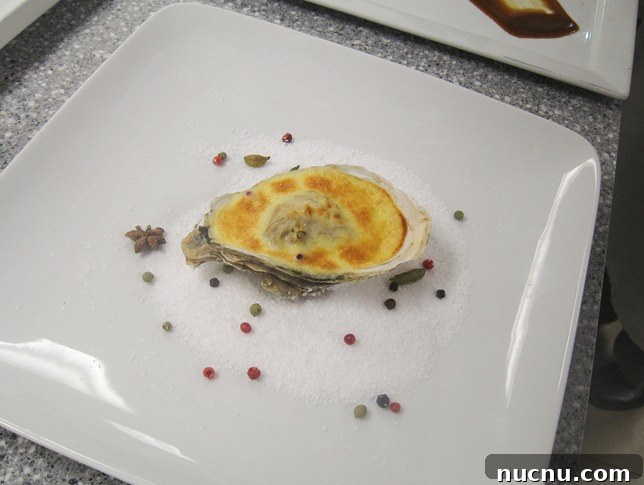
The oyster preparation was a bit complex. We shucked the oysters and reserved the liquor, then reduced it with champagne and briefly blanched the oysters. After cleaning the shells, we added a sautéed julienne of beets, placed the cooked oyster on top, and spooned over a reduced, thickened oyster jus folded into a sabayon. The assembled shells were finished under the salamander until golden brown. Personally, I wasn’t a fan—though I’m ambivalent about oysters in general—because the textures and flavors felt off for me.
For presentation, we served each oyster on kosher salt with colored peppercorns and star anise arranged like tiny starfish to evoke a beach scene. It was a playful touch and looked kind of cute.
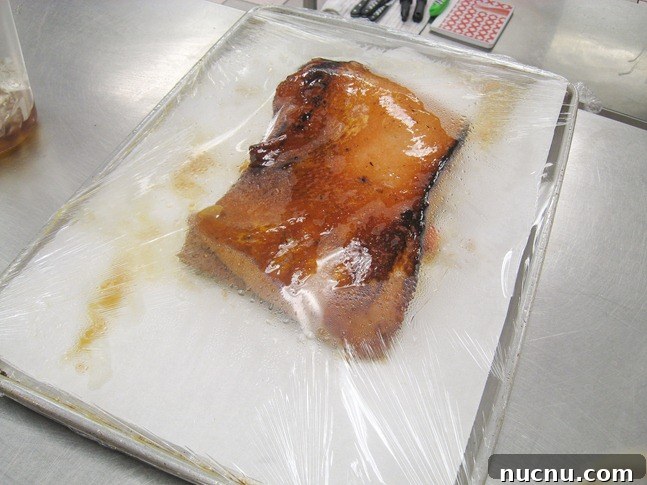
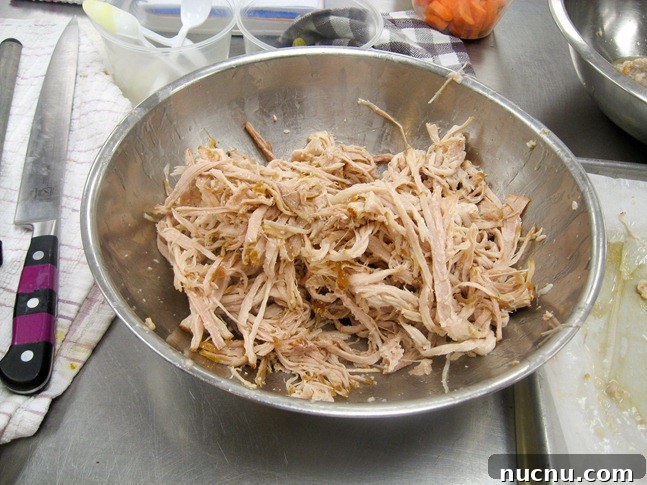
Our second course was unusual in concept but surprisingly tasty. The day before, we braised pork belly for several hours, reserved the jus, removed the fat, and shredded the meat. We combined the shredded pork with capers, cornichons, Dijon mustard, tarragon, green onion, and shallots— the acidity from the pickles and mustard brightened the richness.
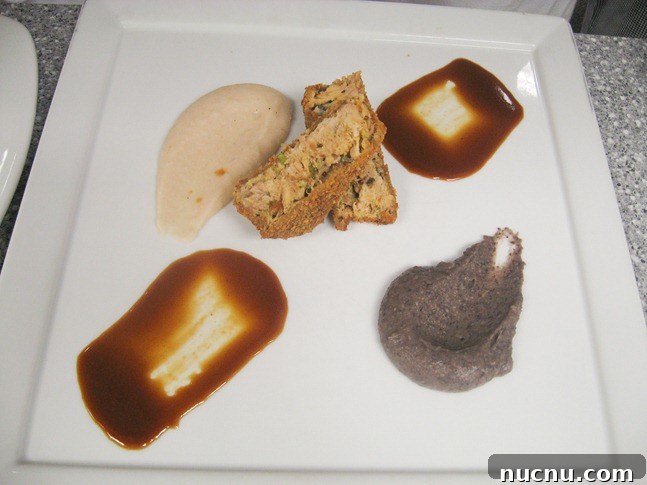
The odd step came next: we packed the mixture tightly into a terrine mold to chill overnight, forming a compact loaf. For service we sliced the terrine into rectangles, breaded and fried them. The dish was plated with pureed black beans and pureed white navy beans—Chef Michel had cooked the beans for us—and finished with the reduced pork jus.
Although the terrine tasted good, it was probably the least visually appealing plate we’ve made so far: everything leaned toward beige. Taste certainly outperformed looks on this one.
Dessert was a highlight: a classic French Charlotte aux Pommes. Traditionally made from stale bread and apples, our version boosted flavor by sautéing green apples in clarified butter with a bit of sugar to caramelize, deglazing with Applejack, and finishing with a pinch of cinnamon.
We packed the apple mixture into ramekins lined with very thin bread slices that had been brushed in clarified butter and lightly sugared on one side so they caramelized in the oven. We tucked a small spoonful of jam into the filling and added toasted walnuts, then covered the ramekins with foil and baked until nicely browned.
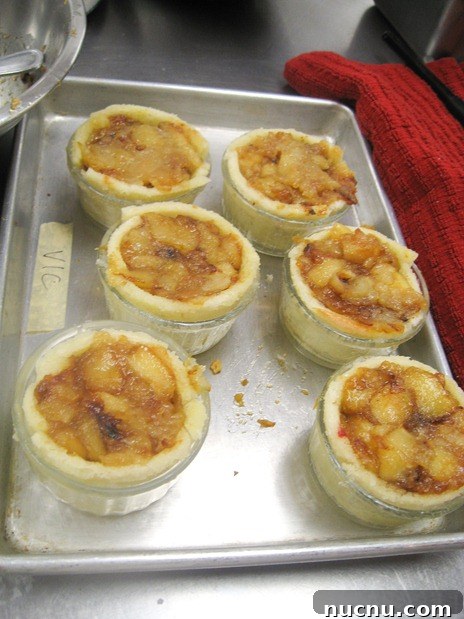
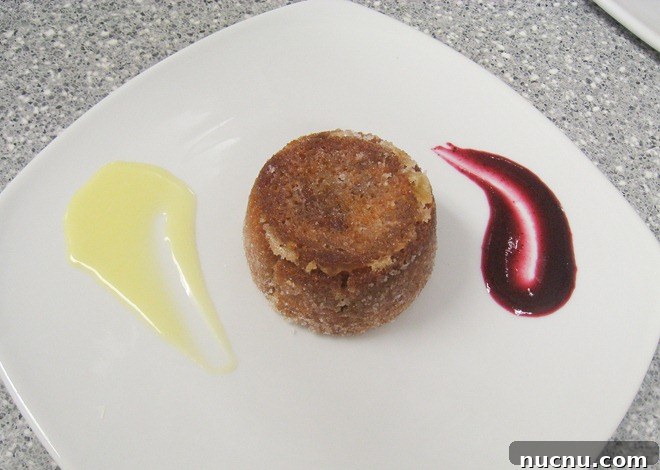
We unmolded the Charlottes to reveal a buttery, caramelized dessert that was delicious. They were served with crème anglaise and blueberry coulis (we generally use whatever coulis is in the fridge). This dessert would also be excellent with vanilla ice cream.
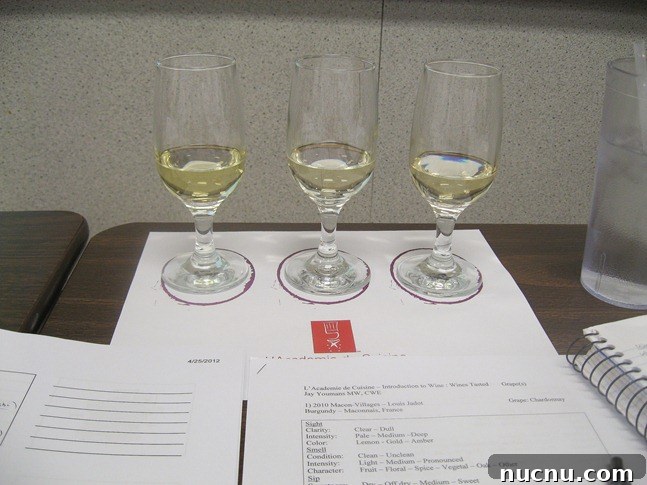
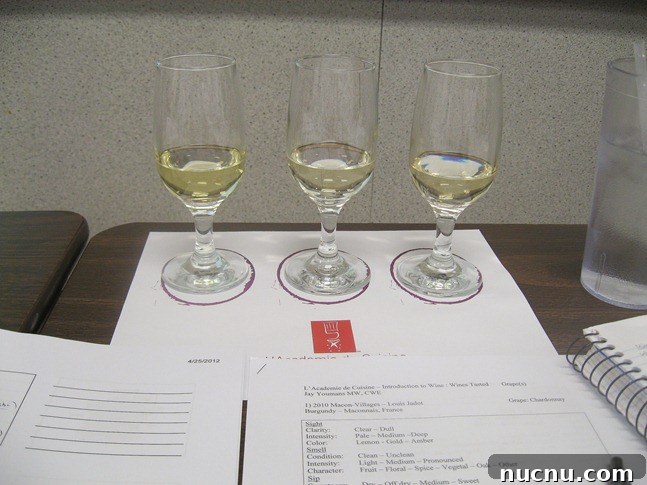
The afternoon’s highlight was our first wine class. We have two more classes taught by a Master of Wine—an elite certification with very few holders in the U.S., and only one in the Washington, D.C. area. The session covered many red and white grape varieties and major wine styles. We tasted three whites—Sauvignon Blanc, Chardonnay, and Riesling—and three reds—Pinot Noir, Cabernet Sauvignon, and Syrah. Our instructor walked us through how to evaluate a wine’s clarity, aroma, body, and flavor. It was informative and exactly what I wanted to learn more about; the class lifted everyone’s spirits.
Overall it was a very good day—if only service had gone as smoothly. But that’s a story for another time.
Tomorrow brings another Market Basket challenge, and I have a full-day stage this Saturday. Should be interesting!