We’re lonely.
It’s affecting us deeply.
And many of us struggle to connect with other people.
Heather MacFadyen is here to help. The author and host of the Don’t Mom Alone podcast focuses on building real connection so moms can feel supported and more confident in their roles.
“Loneliness can be when you’re with others but not feeling truly known,” Heather says in this encouraging conversation. We discuss the three kinds of relationships moms need, how to let go of unattainable standards society imposes, and practical ways to counter loneliness.
We cover anger, lies versus truths, podcast clubs, and much more.
If you’ve ever felt the vulnerability of making a new friend or wish you had the courage to invite someone for coffee or a walk—or if you’re simply human—this interview is for you.
Pick up Heather’s book from your local library or bookstore and consider subscribing to the Don’t Mom Alone podcast.
Find all the episodes of the Healthy Parenting Handbook podcast on the show page or wherever you get your podcasts:
Please consider leaving a review on Apple Podcasts—thank you!
Can’t see the video? Watch it on YouTube.
No time for the video? Here are the notes.
Time Stamps for Building Mom Friendships
2:43 – Heather explains how perfectionism and external pressure crept in as her platform grew. When listeners formed “podcast clubs” to talk about real life, she felt called to rebrand and create a space where moms could connect rather than compare.
Breaking Free from Mom Guilt and Shame
5:53 – Many moms internalize impossible standards. Heather points out that what we call “mom guilt” is often false guilt created by cultural expectations. When guilt turns into shame, we withdraw—and loneliness grows.
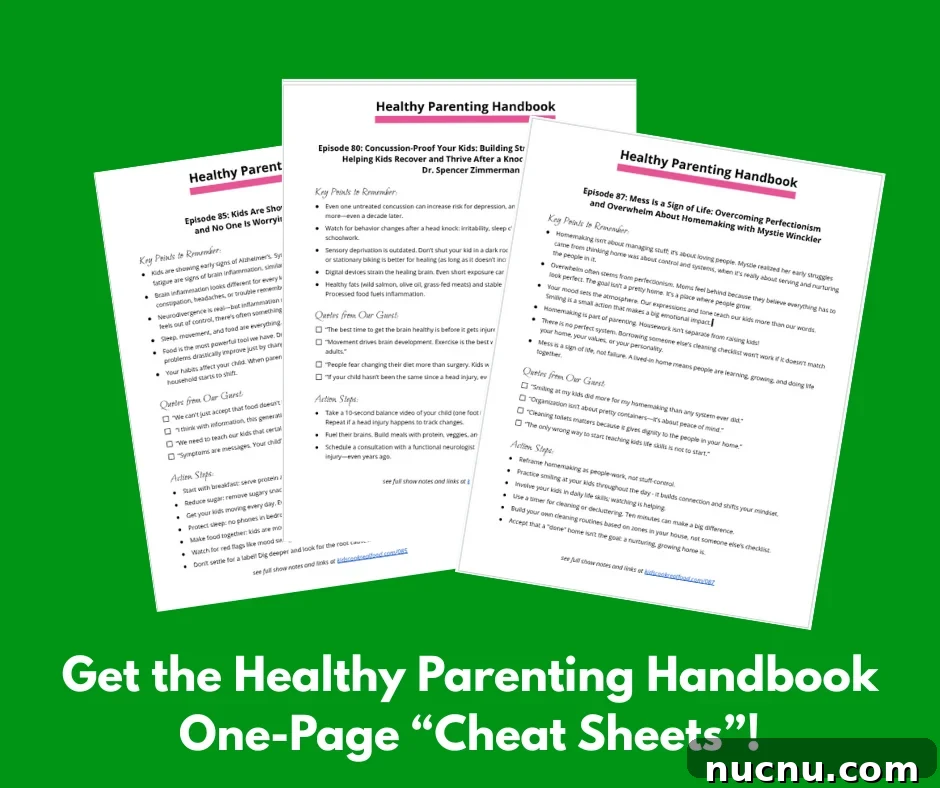
Turn expert advice into a handbook you can actually use.
These one-page summaries capture the highlights of episodes so you can find practical tips quickly.
8:17 – Heather traces how communities once formed naturally through shared work and proximity. Today, social media and constant comparison flood us with information but leave us short on wisdom and discernment.
“Information is at an all-time high, but wisdom is at an all-time low.” – Heather MacFadyen
11:04 – Heather cites three essentials for lasting friendship: proximity, timing, and energy. When children are small, these often appear naturally; as life changes, we must intentionally schedule and protect time for connection.
12:49 – Making adult friends can feel awkward. Heather encourages taking small risks without fear of rejection. You don’t need to appear needy—be genuine. Friendship grows through one brave invitation at a time.
The Power of Vulnerability
14:08 – Vulnerability prompts vulnerability. Share a bit of truth and see if it’s received safely; if not, move on gracefully. Every “no” brings you closer to the right “yes.”
17:03 – Even after the pandemic, many hesitate to host. Heather shares an example of inviting seventh-grade moms over despite feeling insecure about her home. Everyone contributed something small, stayed for hours, and left encouraged—proof that showing up matters more than perfection.
19:02 – Heather draws on her faith to find courage to reconnect after rejection. Relationships can hurt but also heal; isolation tends to keep us stuck.
Kids don’t need plastic knives. They need real skills.
Teach safe technique, focus, and confidence in a favorite kids cooking lesson (ages 2–12).
20:25 – Heather outlines three essential support roles: mentors who guide, peers who walk alongside you, and partners who share the load. Mentors don’t need perfect résumés—just being a step ahead is enough to help.
Letting Others In
24:56 – Letting people see the messy parts of motherhood is hard but necessary for real support. Heather challenges moms to move beyond complaining and to name their true feelings. Often, listening—rather than offering advice—is the most helpful response.
27:50 – Heather’s book structure emerged from identifying the lies that isolated her. One common lie is “I’m fully responsible for how my kids turn out.” The truth: you matter, but you’re not solely responsible. Your influence is powerful, and community and faith also shape your children’s lives.
Using Anger as a Signal, Not a Solution
31:23 – Raising four energetic boys taught Heather that anger is information, not the solution. It points to a problem but isn’t the tool to fix it. Learning to calm the body, lower unrealistic expectations, and coach children toward character growth is more effective than reacting in anger.
Modeling Connection
34:12 – Children learn how to form relationships by watching their parents. When we invest in friendships and community, we show our kids that connection is valuable and normal.
38:23 – Heather closes with a simple, practical step: be a curious observer of yourself. Notice the patterns that hold you back from connection. Awareness is the first step toward deeper relationships.
Resources Mentioned
- Heather’s books: Don’t Mom Alone and Right Where You Belong
- Subscribe to the Don’t Mom Alone podcast
- Mel Robbins episode on why making friends as an adult is hard
- Research on the science of friendship
- Books that informed this episode about relationships and emotional regulation
 Heather MacFadyen hosts the popular Don’t Mom Alone podcast and is the author of Don’t Mom Alone and Right Where You Belong. She connects women to mentors and experts through her show and speaks at live events across the country. She lives in Dallas, Texas, with her husband and four sons.