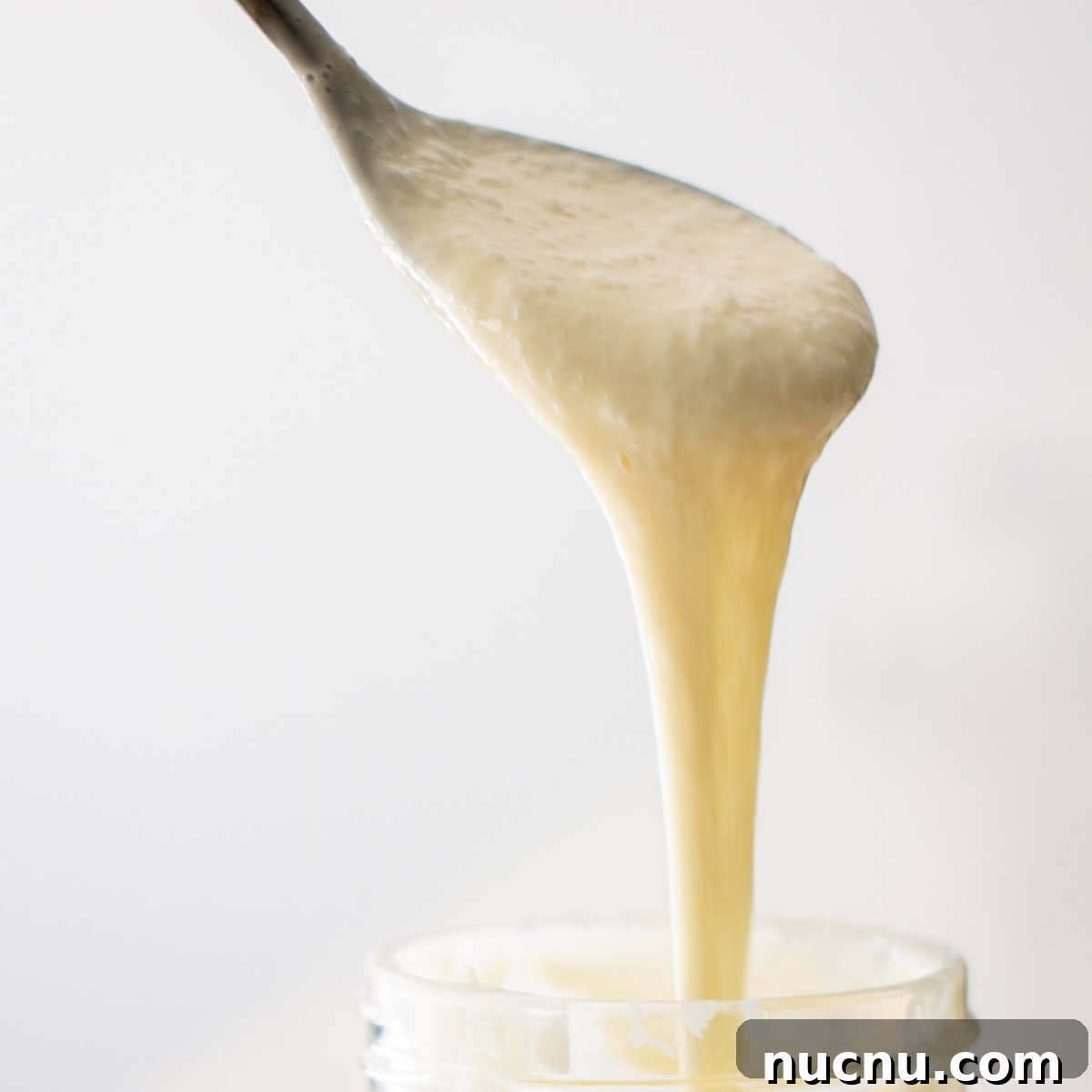
Feeding your starter is easy and takes only a few minutes, whether you made it yourself or bought a culture. This guide explains how to feed and maintain a healthy sourdough starter, offers practical tips for beginners, and helps you troubleshoot common issues.
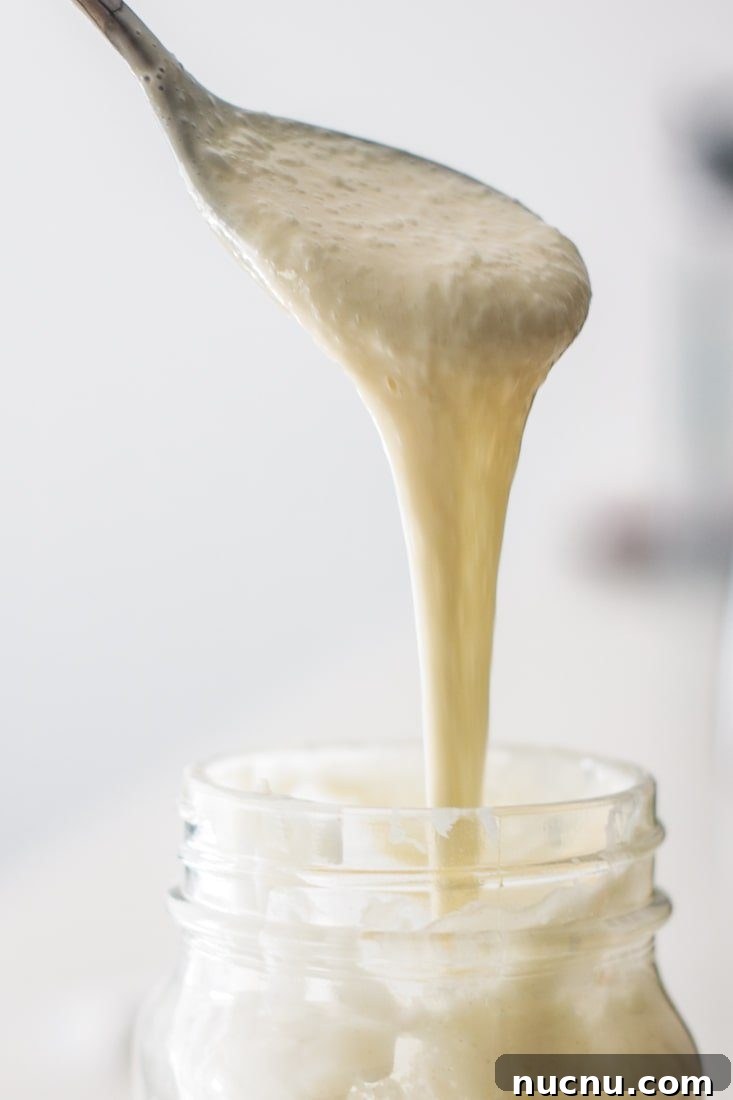
If you’re new to sourdough, consider learning how to create a starter day by day and which flours work best when building a culture.
Do I need to feed my starter every day?
How often you feed your starter depends on how often you bake and the temperature in your kitchen. If you bake regularly and keep the starter at room temperature (about 70–75°F / 21–24°C), daily feedings will keep it active and predictable. If you bake less often, storing the starter in the refrigerator and feeding it weekly is a convenient option.
Adjust the schedule if your starter looks sluggish, overly sour, or less bubbly—more frequent feedings will usually revive it.
Room temperature routine: Daily feedings are recommended. Discard some starter and refresh with fresh flour and water every 24 hours.
Refrigerator routine: For mature starters you don’t use frequently, refrigerate and feed once a week. After feeding, let it sit at room temperature for a few hours so it can become active before returning it to the fridge.
If your starter is new (under about four months), avoid long refrigeration; it benefits from daily care while the culture develops.
I don’t recommend feeding twice daily unless you live in a warm climate or you can be sure the starter has risen and fallen between feedings. Discarding before a starter reaches its peak can weaken the culture.
In my experience, a refrigerated starter fed weekly is reliable. I’ve also stored mine for a month without feeding and revived it successfully with a few regular feedings.
How to feed a starter
A kitchen scale simplifies feeding and discard calculations and is worth getting if you bake with sourdough often. Weighing ingredients ensures consistent hydration and predictable behavior.
Before feeding, you should discard some starter so you’re not continuously increasing the total volume. Save the discard for recipes—sourdough discard works well in pancakes, tortillas, and quick breads.
Feeding ratios: I commonly use 1:1:1 for room-temperature maintenance and 1:4:4 for reviving or feeding before refrigeration. These ratios are expressed as starter:water:flour by weight. For example, 1:1:1 means equal weights of each component; 1:4:4 means one part starter to four parts water and four parts flour.
Example: With 50 g of starter, a 1:1:1 feed uses 50 g water and 50 g flour. A 1:4:4 feed uses 200 g water and 200 g flour.
Because cup volumes vary between ingredients, avoid using cups when precision matters—weights are the reliable method.
Step-by-step feeding:
Discard. Stir the starter, then remove most of it so you’re left with the amount you plan to feed. For instance, if you have 180 g and want to keep 60 g for a 1:1:1 feeding, discard the rest.
Feed. Add the measured water to the kept starter and stir until combined, then add the flour and mix thoroughly, scraping the jar sides as needed. Cover the jar (a loose lid or breathable cover is fine during room-temperature fermentation).
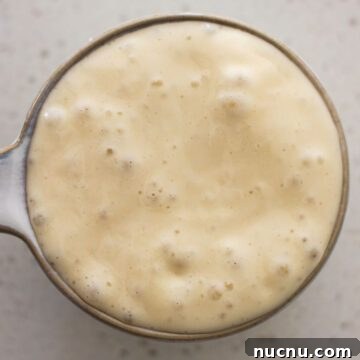
Let it rise. Leave the starter at room temperature until it becomes bubbly and roughly doubles in size, typically within 4–8 hours. When refrigerated, let the starter sit for 2–3 hours after feeding before returning it to the fridge; letting it peak first is ideal.
You can feed straight from the fridge, but activation will be slower in cool conditions, especially in winter.
How to feed a starter without using a scale
Feeding without a scale risks changing your starter’s hydration. Most sourdough recipes assume a 100% hydration starter (equal weights of flour and water). If you must use cups, measure flour by fluffing and spooning it into the cup rather than scooping or packing.
Approximate weight conversions help when you don’t have a scale. Use these as a guide to keep hydration close to 100%:
| Ingredient | 1 tbsp | ¼ cup | ½ cup |
| Starter (not bubbly) | 18g | 70g | 140g |
| Water | 15g | 60g | 120g |
| Flour | 8g | 32.5g | 65g |
For example, feeding roughly 1/4 cup starter (70 g) without a scale, you might add about 1/4 cup plus 1 tablespoon water (≈75 g) and 1/2 cup plus 1 tablespoon flour (≈73 g) to stay near 100% hydration.
Sourdough feeding schedules
If you keep the starter at room temperature, feed it every 24 hours at a consistent time. Consistency helps the starter maintain a predictable rise and fall schedule.
When storing in the refrigerator, feeding can be done at any time of day. Morning or early afternoon feedings are convenient so the starter has time to activate before chilling.
If you plan to bake in the afternoon, feed the starter in the morning so it will be ready. If it’s been refrigerated, using lukewarm water can help speed activation.
Questions you might have
What feeding ratio should I use?
There’s no one-size-fits-all answer—experiment with ratios and schedules until you find what matches your starter and baking cadence.
Do I need to clean the jar between feedings?
No. Regularly scraping down the jar and leaving some starter on the sides is fine; complete cleaning between every feeding is not necessary.
What’s the best flour to feed a starter?
A mix of 50% white flour and 50% whole wheat is a good all-purpose choice, or you can feed exclusively with unbleached white flour. Whole-grain flours boost activity and flavor but can require more frequent feedings.
Can I use bleached flour?
Feeding an established starter occasionally with bleached flour likely won’t kill it, though it may slow activity. Avoid using bleached flour to start a new culture.
Do I have to discard when I feed?
Discarding prevents the starter from expanding exponentially and keeps refresh ratios manageable. If you consistently feed without discarding, the volume will grow rapidly and become impractical.
How long can a starter go without feeding?
An established starter can survive weeks or months if stored properly and can usually be revived with a few feedings, provided it hasn’t developed mold or an unpleasant smell. If in doubt, refresh it several times before using in a recipe.
More Sourdough 101
- Got a Sourdough Starter? Here’s How to Use it
- Sourdough Starter Ingredients: Best Tips And What You Shouldn’t Use
- Why is my sourdough starter not rising?
- What’s the best temperature for my sourdough starter?
📖 Recipe
How to Feed a Sourdough Starter
Tatiana Kamakura
Pin Recipe
Save
Ingredients
- 50 g sourdough starter for cups, see notes
- 50 g water
- 50 g flour
Instructions
-
Discard. Stir your starter and remove most of it, leaving the amount you plan to feed. For example, keep 60 g from 180 g if you want a 1:1:1 feed.
-
Feed. Add the measured water and stir, then add the flour and mix until smooth, scraping the jar sides as needed. Cover the jar.
-
Let it rise. Keep the starter at room temperature until it becomes bubbly and doubles in size, usually 4–8 hours.
Notes
If you bake less frequently and have a mature starter, refrigerate and feed about once a week, letting it sit at room temperature for a few hours after feeding.
Feeding without a scale
If you must use cups, fluff and spoon flour into the cup rather than packing it. Use the conversions above as a rough guide to keep hydration near 100%.
| Ingredient | 1 tbsp | ¼ cup | ½ cup |
| Starter (not bubbly) | 18g | 70g | 140g |
| Water | 15g | 60g | 120g |
| Flour | 8g | 32.5g | 65g |
For a quarter-cup starter, aim for roughly 75 g water and 73 g flour to stay close to 1:1 hydration when you don’t have a scale.