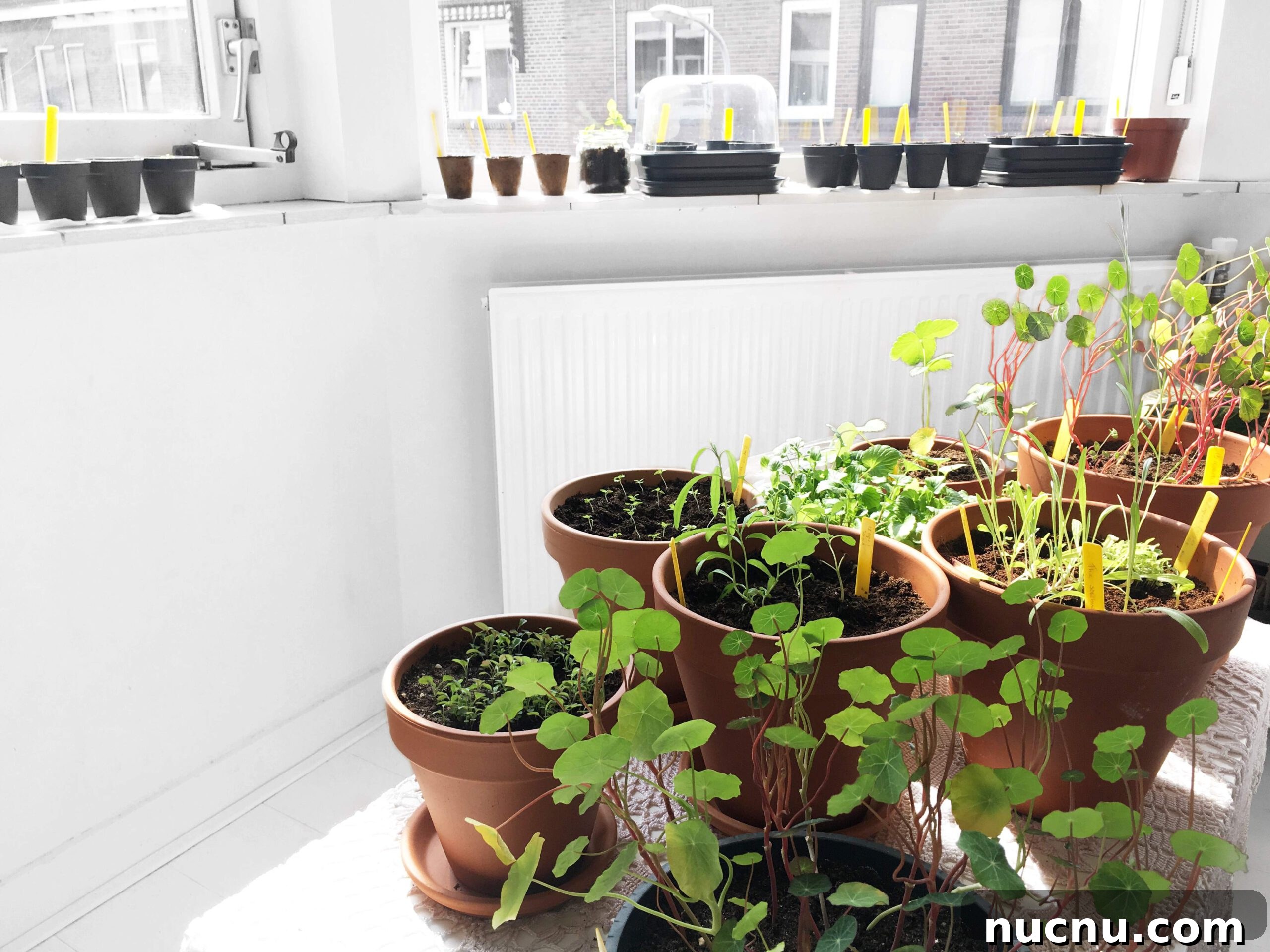
Are you interested in growing your own medicinal and culinary herbs and edible flowers? Join me on this gardening journey — if you haven’t already, take a look at part one of the series. This post gives an overview of the plants I’ve sown so far so you can follow along and choose similar varieties if you plan to cook or make remedies with them later.
I’ll keep this series brief and approachable. I plan to explore individual plants and techniques in deeper posts, and the next installments will shift to topic-focused formats.
New seeds have been planted
25 March 2017
- True Lavender – 1 of 2 pots sprouted
- Lemon Balm
- Cornflower – sprouted 29 March
- Cinnamon Basil – sprouted 31 March
2 April 2017
- Chamomile – sprouted 10 April
- Lemon Basil – sprouted 12 April
- St. John’s Wort – sprouted 16 April
- Forget-me-not – sprouted 10 April
4 April 2017
- 2 Pineberry plants
12 April 2017
- German Winter Thyme – sprouted 18 April
- Thai Basil – sprouted 18 April
- Sage
- Stevia
- Marigold – sprouted 19 April
- Russian Tarragon – sprouted 17 April
- Chamomile
8 May 2017
- Marjoram
- Cilantro
- Pansies (Bambini & Johnny Jump Up)
- Lemon Balm
- Dark Opal Basil
- Peppermint
14 May 2017
- Nasturtium (Tom Thumb)
- Anise
- True Lavender
- Lemon Basil
- Cinnamon Basil
Quick update on the plants
Nasturtiums:
My first batch of nasturtiums is doing well. A few leaves have yellowed — a common sign of inconsistent watering — but after transplanting starter pots into larger containers the plants have started to flower. That means nasturtium blossoms will soon make their way into the kitchen.
The outdoor-started plants have developed thicker stems and lower-growing foliage, so they are far more wind-resistant than the seedlings started indoors, which still sway at the slightest gust. A second batch, planted directly in containers and kept inside, sprouted on 2 April and is growing vigorously. For a third batch I sowed fewer seeds per pot to encourage larger individual plants and left those outdoors as temperatures warmed.
Basil plants:
We should have plenty of basil this summer. I’ve planted Dark Opal, Cinnamon, Lemon and Thai basil, combining Lemon, Cinnamon and Thai in a single planter. I made some beginner mistakes with spacing and watering; I’ll cover those in a later post so you can avoid the same pitfalls.
Pansies:
Pansies are thriving in their pots. I’ve added a few different varieties to the collection and will give them a shady spot in the garden since they don’t enjoy intense, direct sun.
And much more:
I’ve transplanted several other herbs and flowers too, but I’ll save those details for future posts to keep this update concise.
What did we learn this week?
As a beginner, I’ve made mistakes, but those early errors teach the most. Key takeaways from this round:
- In our cooler climate, starting seeds indoors usually gives the best results.
- Each plant has unique needs for water, sunlight and temperature; learning those specifics improves success.
- Some species do better when sown directly where they will grow long-term. For example, nasturtiums sown directly into containers grew faster and produced larger leaves than those started in small starter pots.
What’s next?
Soon many of the plants will move outdoors and settle into permanent spots in the garden, while others will find a cozy place indoors. Upcoming posts will cover topics such as:
- Recipes using our herbs and flowers
- Managing limited space when you have many plants
- Regular updates on the collection and plant health
- More beginner mistakes and lessons learned
- In-depth posts on specific plants
- And whatever else comes up — feel free to suggest topics or ask for specific plant coverage
We’ll be back with another Gardening Adventure next week. I may adopt a weekly topic format, so please share your thoughts in the comments.
One love,
A.J.