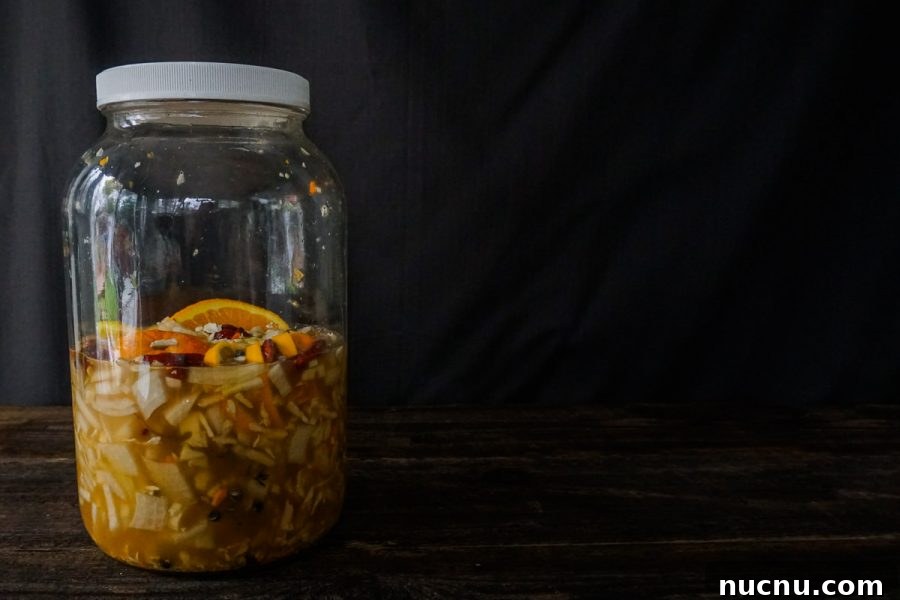
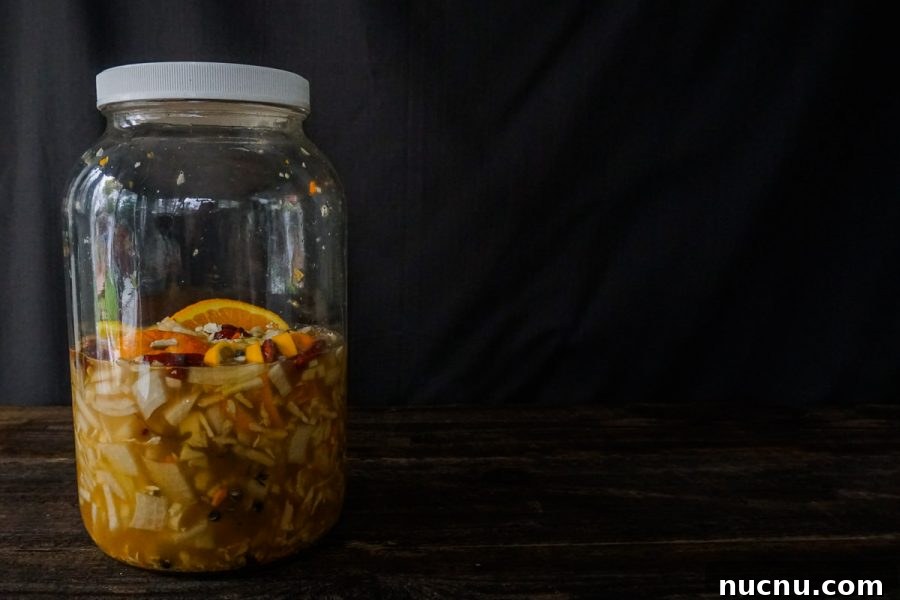
Fire cider is a traditional herbal remedy useful for supporting the body during colds and the flu.
Discover how to make your own fire cider using common kitchen ingredients and garden herbs.
(This post was contributed by Melissa Keyser.)
Have you ever tried fire cider? If not, it’s worth a try. This pungent, vinegar-based tonic is a powerful addition to your home remedy cabinet.
When you feel the first signs of a cold — scratchy throat, stuffy nose, fatigue — a small dose of fire cider can help relieve symptoms and shorten the illness. It’s concentrated and strong, but the sharp flavors mellow when mixed with a little honey or used in a drink or dressing.
I’m a self-taught herbalist and enjoy experimenting with plant-based remedies. Fire cider is a perfect place to start: it requires no special tools and uses ingredients that are usually easy to source locally or grow yourself.
What is fire cider?
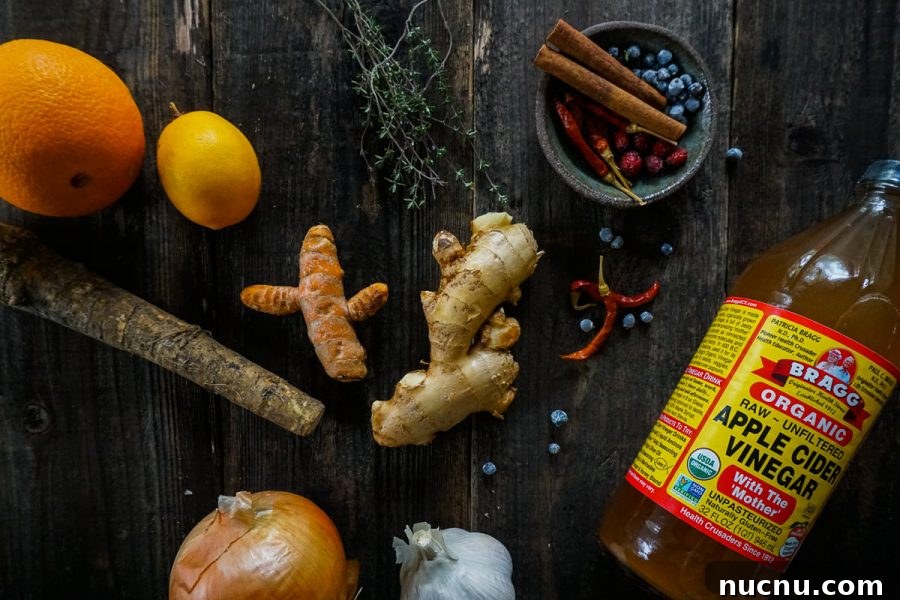
Fire cider is a folk remedy traditionally taken at the first signs of respiratory illness. The basic idea is to infuse a sharp vinegar with pungent, medicinal foods—like garlic, onion, ginger, horseradish and hot peppers—then strain and sweeten the infusion with honey.
Recipes vary by household and season; many people add citrus, herbs, or warming spices depending on taste and availability. It’s a flexible, DIY remedy that sits well with simple kitchen apothecary practices.
Making fire cider can be as much about ritual and care as it is about the ingredients. Preparing a batch connects you with older traditions of using the garden and pantry to support health.
How to make your own fire cider
Most fire cider recipes follow the same pattern: chop or grate fresh ingredients, pack them into a glass jar, cover with raw apple cider vinegar, let the mixture steep for several weeks, strain, and then add honey to taste. Use raw, unfiltered apple cider vinegar with the “mother” for best results, and select organic produce when possible to avoid residues being extracted into the vinegar.
If you want to skip straight to the recipe, see the Ingredients and Instructions sections below.
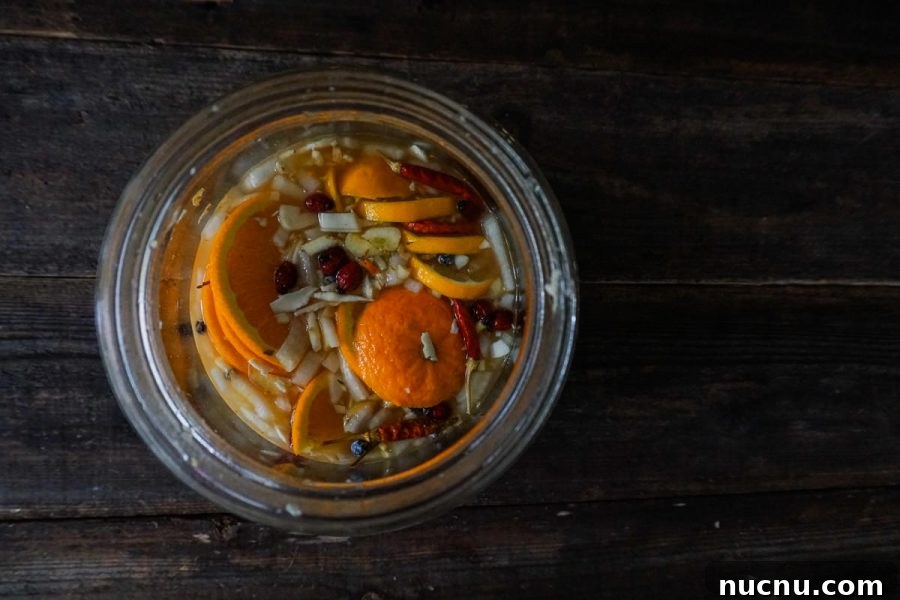
Vinegar acts as the extracting medium, pulling out the flavorful and active compounds from fresh roots, bulbs, and herbs. Honey is added after straining to balance the sharpness and to contribute antimicrobial properties.
Fire cider ingredients
Apple cider vinegar (raw, unfiltered) — soothes sore throats, supports digestion, thins mucus and can reduce congestion.
Ginger — warming, anti-inflammatory, decongesting and helpful for digestion and nausea.
Horseradish — a strong respiratory and infection fighter that helps clear mucus and supports the upper respiratory tract.
Onion — rich in antioxidants, anti-inflammatory and supportive for the immune system and airways.
Garlic — antiseptic, antibacterial and antiviral; widely used to support immunity and fight infections.
Chili — provides capsaicin, which stimulates circulation, helps relieve congestion and can support immune function.
Citrus — adds vitamin C and bright flavor.
Honey (raw, local when possible) — antibacterial and soothing, it softens the sharp edges of the vinegar infusion and can help suppress coughs.
My batch of fire cider
I prepare a batch periodically, adjusting ingredients depending on what’s on hand. For this batch I used the traditional base—garlic, onion, ginger, horseradish and hot peppers—then added thyme, cinnamon, and foraged rose hips and juniper for extra immune support and flavor.

Fire Cider
Ingredients
- 1/2 cup freshly grated ginger root (peeled or not)
- 1/2 cup freshly grated horseradish root (peeled)
- 1 medium onion, chopped
- 10 cloves garlic, chopped
- 2 spicy peppers, chopped (jalapeño or cayenne)
- 1 lemon, sliced or chopped
- 1 quart raw apple cider vinegar
- 1/4 cup (or more) local raw honey
Optional ingredients
Orange, lime, grapefruit, rosemary, thyme, oregano, fresh turmeric, rose hips, juniper berries, star anise, cinnamon, elderberry, or other immune-supporting herbs and spices.
Instructions
- Place all prepared ingredients into a large glass jar and cover with the apple cider vinegar.
- Close the jar. If using a metal lid, place a piece of parchment or wax paper between the glass rim and lid to prevent vinegar contact with the metal.
- Store in a dark spot and shake the jar daily or when remembered.
- Let the mixture steep for 3–4 weeks.
- After steeping, strain through cheesecloth or a fine sieve into a clean container.
- Stir in honey to taste until incorporated. Adjust sweetness as desired.
Notes
Store in the refrigerator; the infusion will keep for up to two years. Take 1–2 tablespoons (or a shot glass) at the first sign of a cold, repeating every 3–4 hours until symptoms improve. You can also add fire cider to a Bloody Mary, a dressing, or dilute it in warm water or tea.
Disclaimer: I am not a medical professional. The information here is for educational purposes and is not a substitute for professional medical advice or treatment.