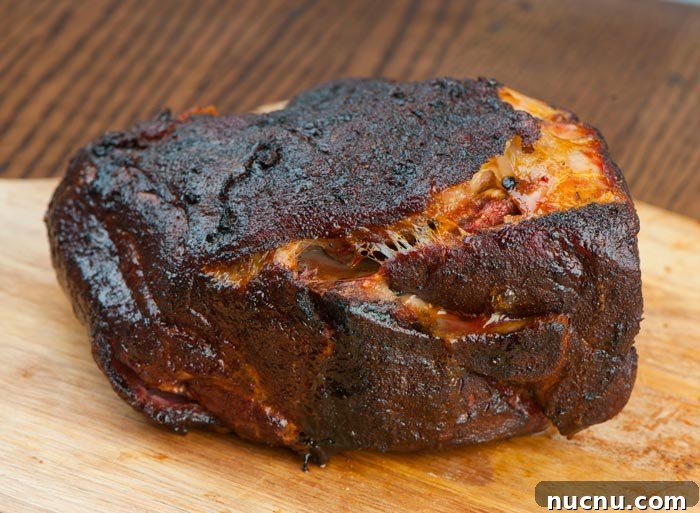
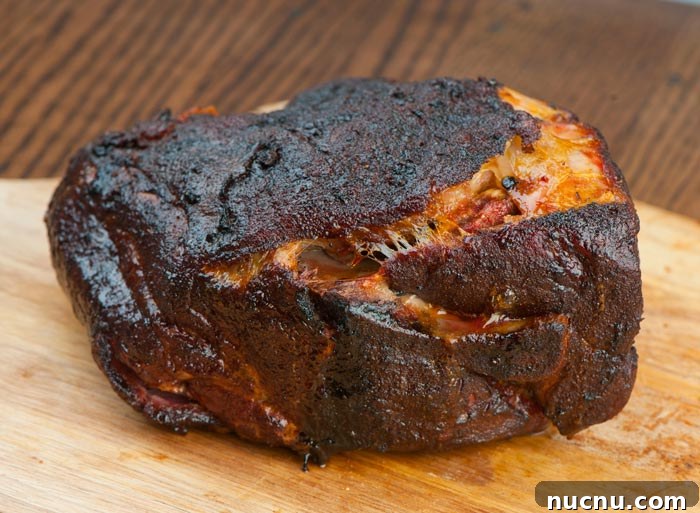
The best way to smoke a pork Boston butt is low and slow over fruit and hardwood—apple with a touch of hickory—resulting in deeply flavored, tender barbecue pork.
- How to Prepare Pork Butt
- Prepare Your Smoker
- What Wood Is Best for Smoking Pork Butt?
- How to Smoke Boston Butt
- Quick Tips
- Smoked Pork Butt
Pork butt is a forgiving and accessible cut for beginners. It requires minimal prep but teaches essential smoking skills like managing the stall, wrapping, and the value of patience.
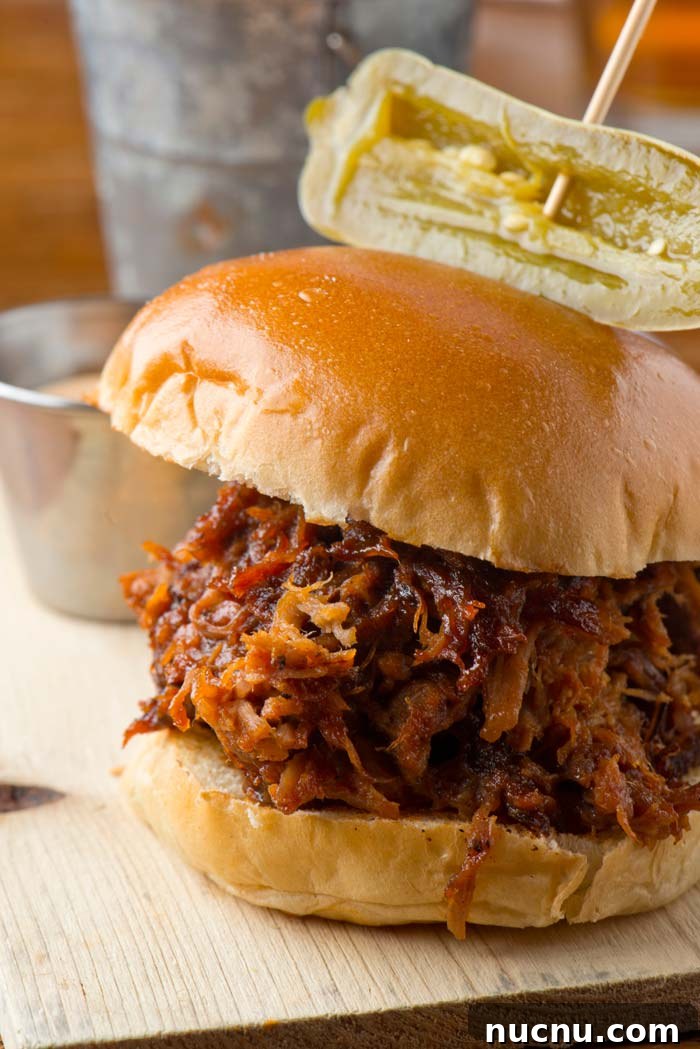
This well-marbled cut holds smoke and moisture beautifully. When properly smoked and rested, it becomes fork-tender and perfect for shredding—ideal for pulled pork sandwiches, tacos, nachos, salads, and more.
Below is a clear, practical guide to smoking pork butt like a pro.
How to Prepare Pork Butt
Pork butt is straightforward to prepare. Unlike beef brisket, it generally needs only light trimming. Remove the roast from its packaging, place it on a tray, and pat dry with paper towels to remove excess moisture.
Look for the pork butt’s “money muscle,” a small, especially tender strip of meat near the shoulder. Some pitmasters remove it and cook it separately for an even more tender result.
Apply a thin layer of a binder across the surface to help the rub adhere. Good options are yellow mustard, olive oil, apple juice, or apple cider vinegar. Yellow mustard is a popular choice because it’s an excellent binder and contributes a subtle tang that complements smoke flavors.
Next, apply a dry rub evenly over the meat. A balanced rub with brown sugar, smoked paprika, chili powder, garlic and onion powders, cumin, salt, and pepper works well. Don’t bury the meat—leave some of the meat visible through the rub so it forms a proper bark.
With binder and rub in place, the pork is ready for the smoker.
Prepare Your Smoker
Preheat your smoker to a stable 225°F (107°C). If the temperature drifts a bit, staying under 250°F (120°C) is fine. Pellet, propane, and electric smokers typically hold temperature easily; charcoal setups may require more attention to maintain steady heat.
What Wood Is Best for Smoking Pork Butt?
Fruit and nut woods pair best with pork for sweet, mellow smoke. Apple, maple, and pecan are excellent choices. In this recipe, apple wood is used for sweetness with a single chunk of hickory added for a bit more depth—use hickory sparingly, as it can overpower the meat if overused.
How to Smoke Boston Butt
Place the pork butt on the smoker grates with the fattest side facing the heat source; this helps shield the meat and promotes even rendering. Add your chosen wood to the smoker, close the lid, and smoke for roughly three hours until a mahogany-colored bark develops.
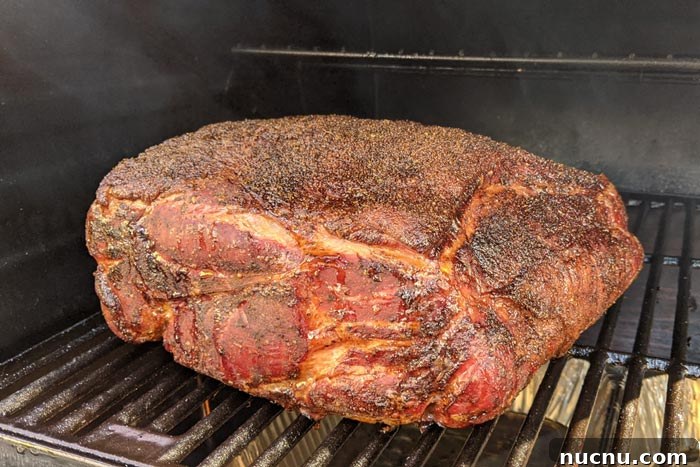
Prepare a spritz of equal parts apple cider vinegar and water in a food-safe spray bottle. Beginning after the first three hours, spritz the pork every 30 minutes to encourage bark development and prevent it from drying out. Continue this until the internal temperature reaches about 165°F (74°C); at that point the meat has usually passed through “the stall” and is ready to be wrapped.
Wrap the pork tightly in two to three layers of aluminum foil. Before sealing, baste with a bit of the spritz and add a light dusting of extra rub. Return the wrapped roast to the smoker and continue cooking until the internal temperature reaches 200°F (93°C), which typically takes another 2–3 hours depending on size.
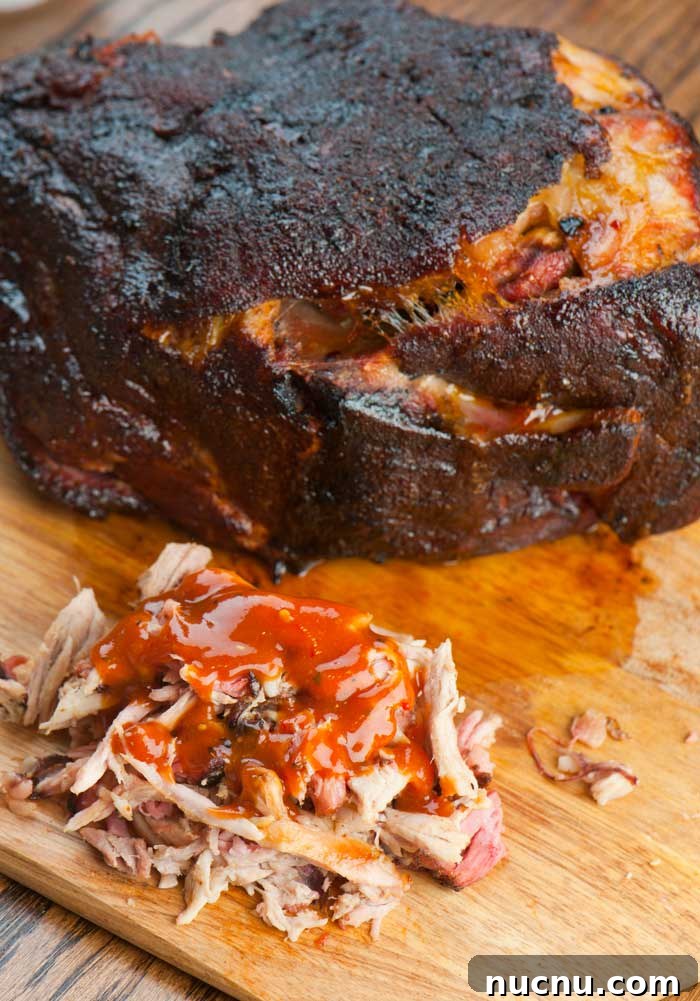
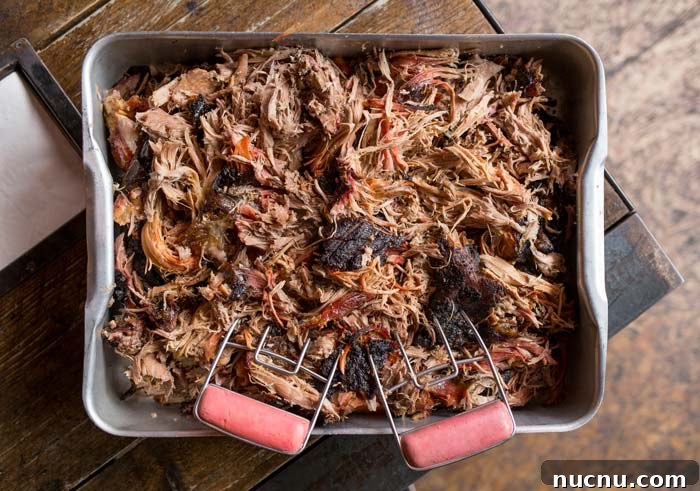
When the roast reaches 200°F, remove it from the smoker and let it rest in the foil for 30 minutes. Resting allows juices to redistribute and yields a more tender result. Carefully unwrap, drain any accumulated juices if desired, and shred the meat with forks or shredding claws.
Serve right away or store properly for later use in sandwiches, tacos, or other recipes.
Quick Tips
To ensure the best results:
- Keep the meat moist by spritzing every 30 minutes after the initial bark has formed. Use apple cider vinegar mixed with water, apple juice, or even beer for variety.
- Monitor internal temperature rather than time; a properly smoked pork butt is best judged by its internal temps (165°F to wrap, finish at 200°F).
- Use fruit woods for a balanced, sweet smoke; add stronger woods like hickory sparingly.
- Allow adequate rest time in the foil to let the meat relax and reabsorb juices before shredding.

Smoked Pork Butt
Equipment
-
apple smoking wood
-
Food-safe spritz/spray bottle
-
aluminum foil
-
meat shredding claws or forks
Ingredients
- 8 lb pork butt
- 2 tbsp yellow mustard (or other binder)
Dry Rub
- 2 tbsp smoked paprika
- 2 tsp cumin
- 2 tbsp chili powder
- ½ cup brown sugar
- ½ tsp dried onion powder
- 1 tsp garlic powder
- 2 tsp kosher salt
- 1 tsp ground black pepper
Spritz
- 1 cup apple cider vinegar
- 1 cup water
Instructions
-
Fire up your smoker to 225°F (107°C).
-
Trim any large excess fat or silverskin, rinse if desired, and pat the pork dry.
-
Apply a thin layer of yellow mustard (or another binder) over the pork.
-
Mix the dry rub ingredients and press the rub evenly into the meat, covering all sides.
-
Place the pork fat-side up on the smoker grates and smoke for about 3 hours, until a deep bark begins to form.
-
Combine the spritz ingredients in a food-safe spray bottle and spritz the pork every 30 minutes.
-
When the internal temperature reaches about 165°F (74°C), wrap the pork tightly in double foil, add a splash of spritz inside, and seal.
-
Return the wrapped pork to the smoker and continue until the internal temperature hits 200°F (93°C), roughly 2–3 more hours.
-
Remove from the smoker and let rest in the foil for 30 minutes to redistribute juices.
-
Carefully unwrap, drain excess juices if desired, and shred the pork with claws or forks. Serve and enjoy.