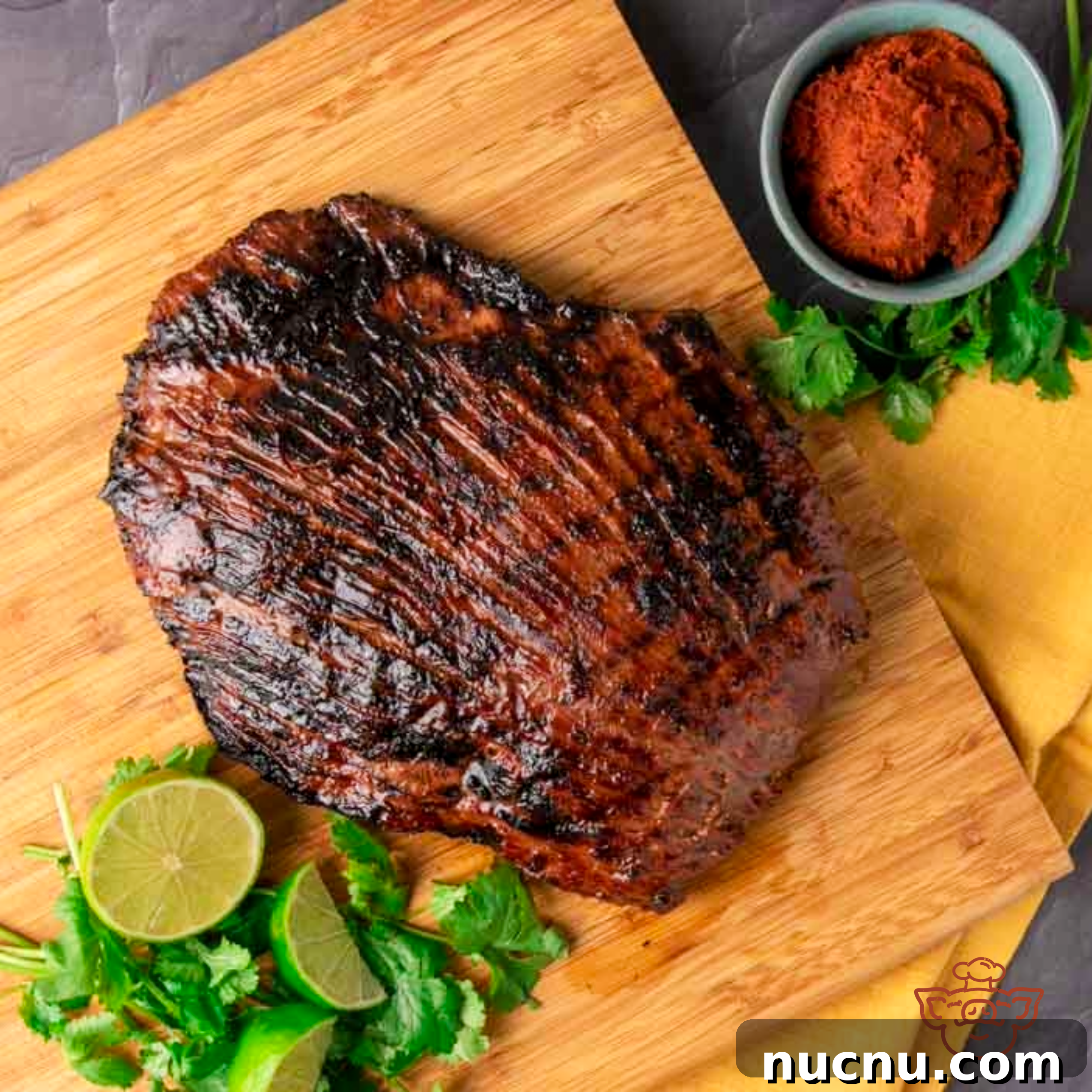
Capturing the spirit of Korean BBQ at home takes attention to technique and ingredients. At the heart of this is bulgogi — in Korean, “bul” means fire and “gogi” means meat — a combination of high-heat searing and a deeply savory, umami-rich marinade.
This recipe highlights those classic Korean flavors — salty soy, toasted sesame, bright ginger and garlic — paired with a well-marbled American Wagyu flank steak. Searing over intense heat produces a caramelized crust and concentrated flavor you won’t achieve on the stovetop.
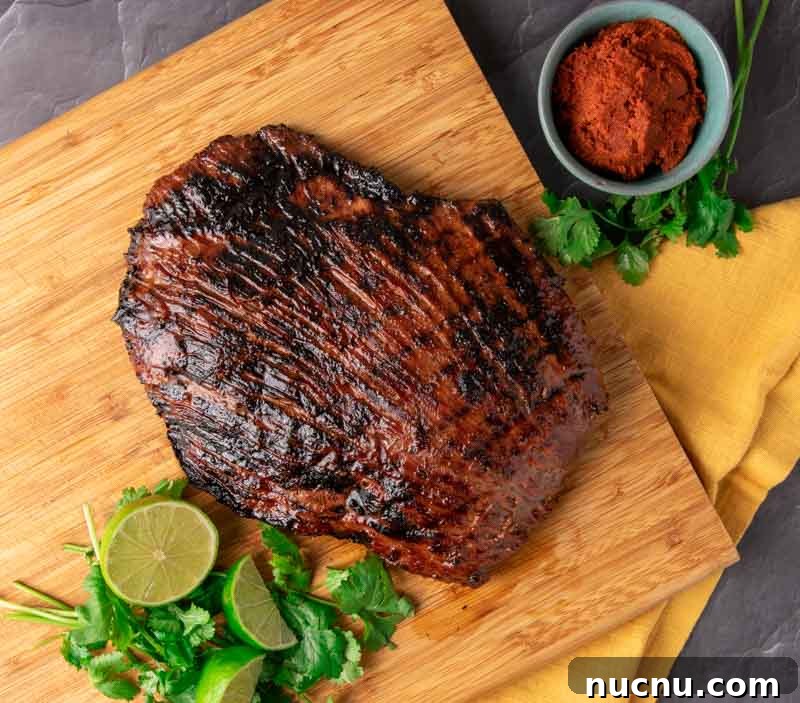
The result is Grilled Korean Bulgogi Flank Steak that’s straightforward to prepare but delivers an elevated, restaurant-quality bite. Serve it over rice or in lettuce cups (ssam style) for a mix of sweet, savory and charred notes.
Why Flank Steak for Bulgogi?
While traditional bulgogi often uses thinly sliced ribeye, a whole flank steak offers advantages for grilling outdoors:
- Marinade absorption: Flank’s coarse grain soaks in flavors like garlic, ginger and soy.
- Better crust: A thicker cut can be left over direct heat long enough to develop a deep crust without overcooking the center.
- Versatility: Rested and thinly sliced against the grain, the steak is tender enough for tacos, bowls, or simple platters.
Step 1: The Bulgogi Marinade
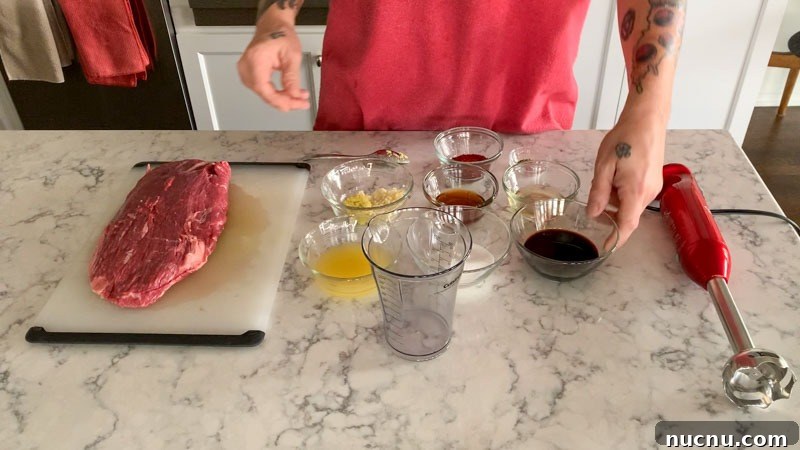
The marinade is essential — it flavors, tenderizes and helps form that caramelized exterior. Balance salty soy with sweeteners and acidity, add aromatics and finish with sesame oil for aroma.
What You’ll Need
- Base: Soy sauce for salt and umami, with sugar for sweetness and caramelization.
- Acids: Mirin and pineapple juice. Pineapple juice contains bromelain, a tenderizing enzyme, which helps break down the tough fibers of flank when used in controlled amounts.
- Aromatics: Minced garlic and grated fresh ginger for brightness and bite.
- Heat and smoke: Gochugaru (Korean red pepper flakes) and black pepper to add depth.
- Finish: Sesame oil for a nutty, fragrant finish.
Mixing the Flavors
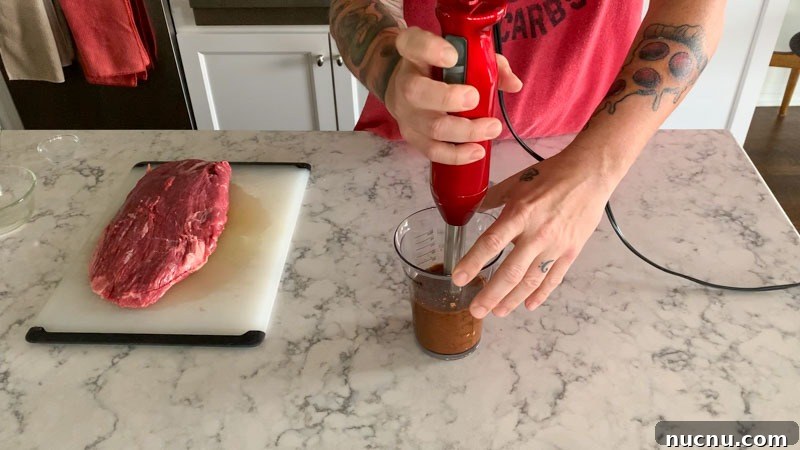
Whisk the marinade ingredients until the sugar dissolves. The aroma should be sweet, savory and aromatic.
Step 2: Prepping the Wagyu
Even a premium Wagyu flank benefits from a little prep. Trim excess fat and remove any silver skin so the marinade can penetrate and the steak cooks evenly.
Trim and Clean
Trim the flank steak of excess fat and silver skin. Silver skin is a thin membrane that won’t render and can make the steak chewy if left intact.
- Excess fat: Leave the internal marbling but remove thick outer fat so the marinade reaches the muscle.
The Marinating Vessel
Place the trimmed steak in a food-safe container or a heavy-duty gallon freezer bag so the marinade fully covers the meat. A narrow container helps keep the liquid in contact with the steak for deeper infusion.
Step 3: The Long Soak
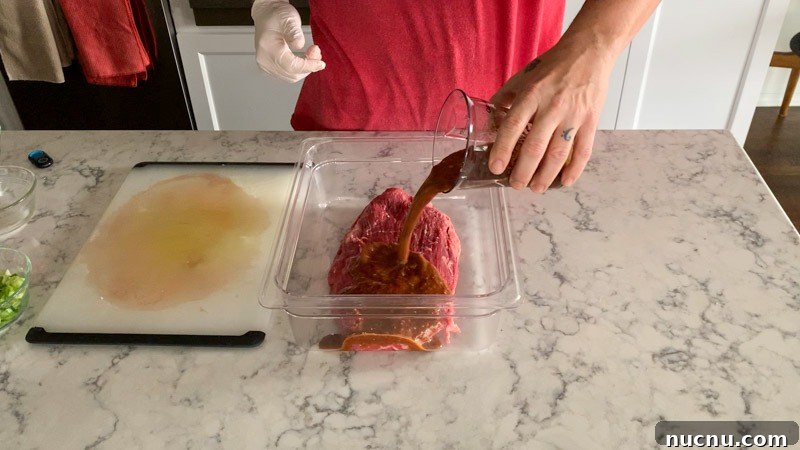
Pour the marinade over the steak, flip to coat, seal and refrigerate. Because of the pineapple juice, aim for 4 to 8 hours. Avoid much longer than 12 hours to prevent over-tenderizing the surface.
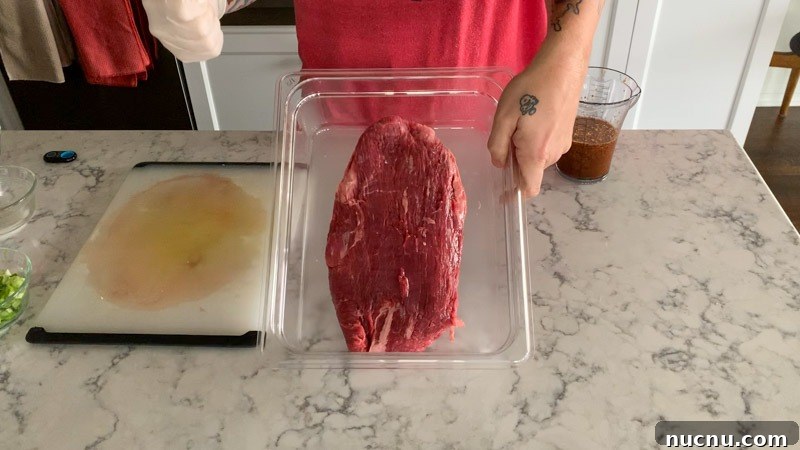
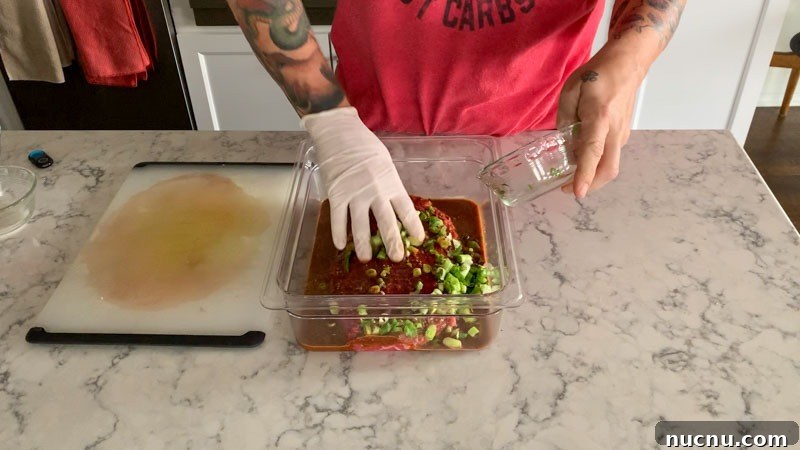
Add sliced scallions to the marinade. They bring a mild, grassy sweetness that complements the garlic and ginger.
Step 4: Big Green Egg Setup
When the steak has marinated, move to the grill. This cook is about direct heat and timing to build that bulgogi crust.
Tempering the Meat
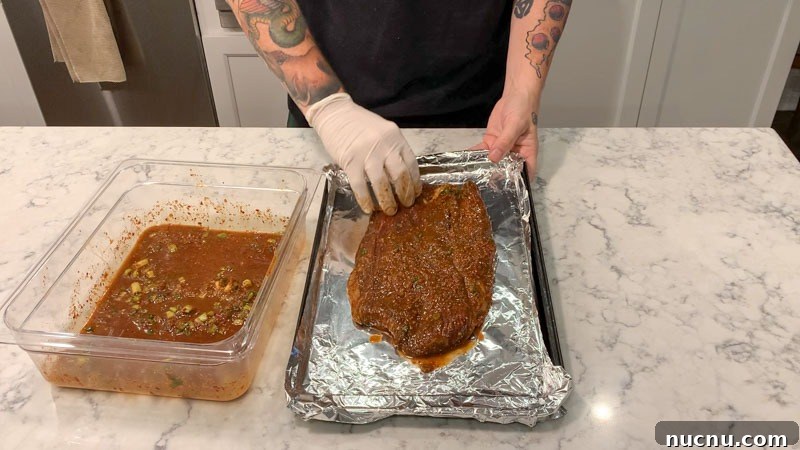
Remove the steak from the fridge 20–30 minutes before grilling to come up to room temperature. This helps the meat cook evenly and avoids tightening of the muscle fibers when exposed to high heat.
- Surface dry: Let the steak drip dry slightly so sugars can caramelize immediately when it hits the hot grate.
The Big Green Egg Configuration
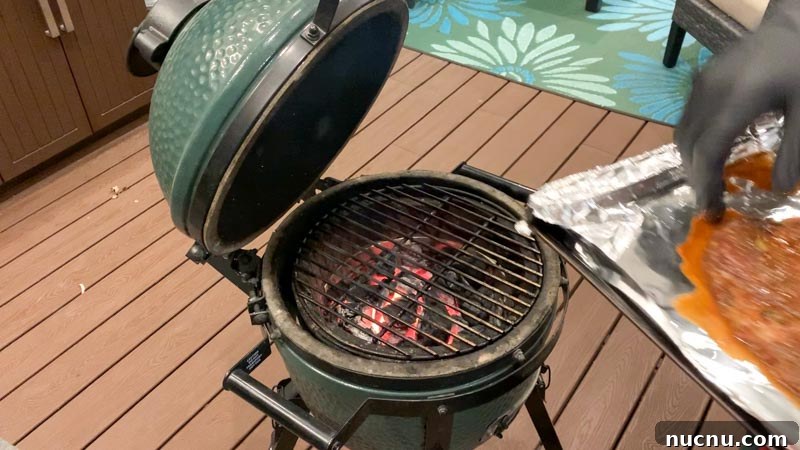
Use direct grilling for this recipe—no convEGGtor. Aim for a steady 450°F to 500°F so the steak sears quickly and develops a deep crust.
- Clean grates: A clean grate helps produce even, non-stick grill marks.
- Build the fire: Light lump charcoal and open the vents to reach 450°F–500°F.
- Direct method: Place the steak close to the coals to mimic traditional Korean “fire meat” cooking.
Step 5: The Sear
With the grill at 450°F–500°F, sear the steak to develop a mahogany crust without burning.
First Side Sear
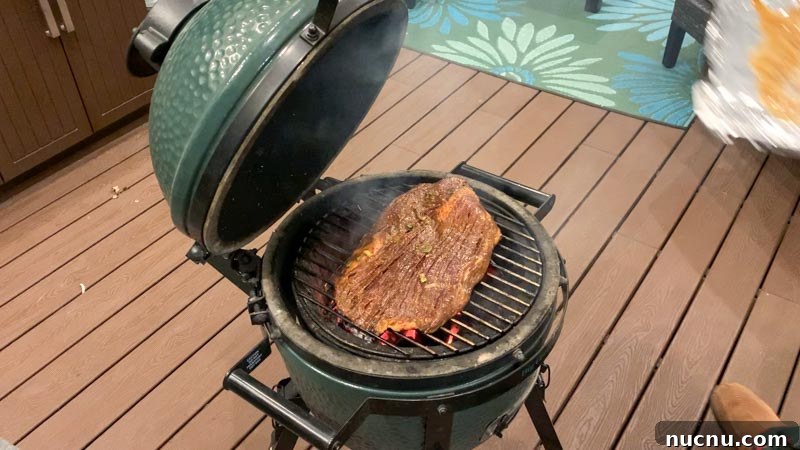
Place the steak on the grate and close the dome. Cook for 4 minutes. Keeping the lid closed maintains consistent heat and reduces flare-ups from rendered Wagyu fat.
- Maillard reaction: During these minutes the sugars in the marinade will caramelize into a rich, mahogany crust rather than black char.
Step 6: The Flip and Finish
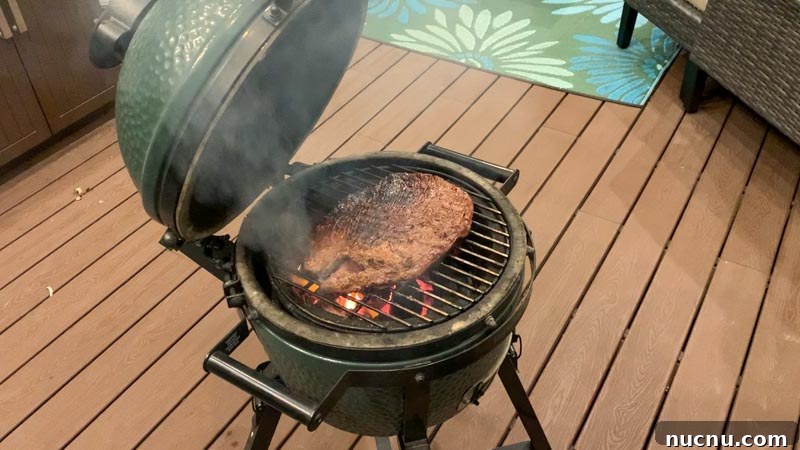
- Flip: Use tongs to turn the steak and check for deep grill marks.
- Second side: Close the dome and cook 3–4 more minutes.
- Temperature: Pull the steak at 130°F–135°F for medium-rare.
Step 6: The Rest
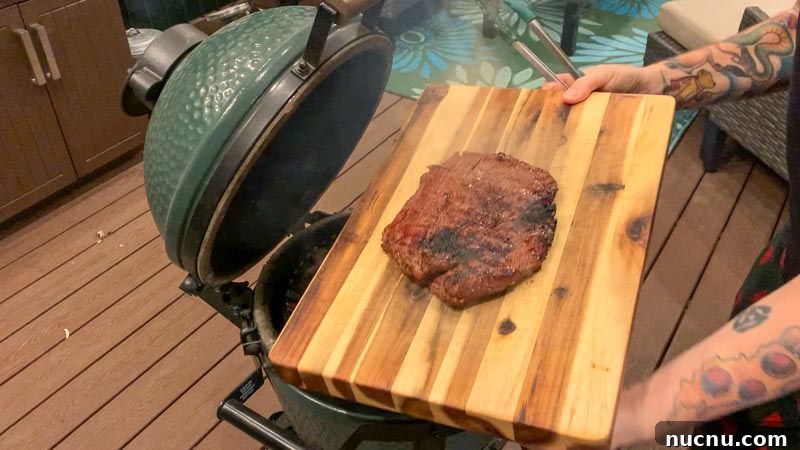
Remove the steak and let it rest for 10 minutes. Resting redistributes juices so slices remain moist.
Why the Rest Matters
High heat pushes juices toward the center. Resting allows fibers to relax and reabsorb moisture, especially important with well-marbled Wagyu so the fat stays integrated in each slice.
- Tip: Avoid tightly tenting the steak; a loose covering or warm platter is enough to retain heat without overcooking.
Step 7: The Master Slice
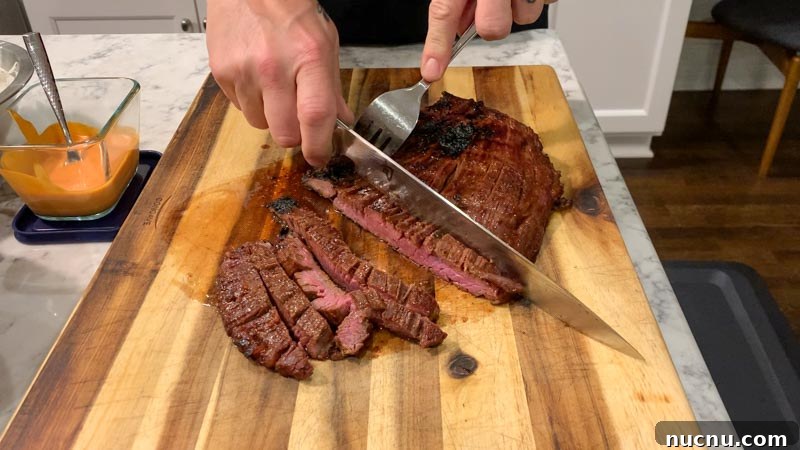
After resting, slice the steak thinly against the grain to shorten fibers and maximize tenderness.
Thickness: Aim for biased slices about 1/4 inch thick.
Identify the grain: Note the long muscle fibers and position your knife perpendicular to them. Always slice against the grain for the most tender bites.
The Grand Finale: Serving Ssam-Style
Serve the sliced Wagyu over jasmine rice or build lettuce wraps (ssam) for a fun, interactive presentation. Ssam literally means “wrapped” and is a classic way to enjoy Korean BBQ.
How to Build the Perfect Lettuce Cup
- Base: Use butter or bibb lettuce leaves for a tender, sturdy wrap.
- Meat: Place two or three slices of bulgogi in the center of the leaf.
- Crunch: Add sliced scallions and toasted sesame seeds for texture.
- Kick: A small dab of gochujang or ssamjang ties the sweet marinade to the smoky char.
Pro Tips for the Perfect Korean BBQ Experience
- Slice against the grain: If slices look stringy, rotate the board and try again to get true cross-sections of the fibers.
- Pairing: A crisp lager is a classic companion; the bright finish cuts through rich Wagyu fat and the sweet marinade.
- Leftovers: Thinly sliced leftover bulgogi works great in tacos or sandwiches with a quick kimchi slaw.
Grilled Korean Bulgogi Flank Steak: Big Green Egg Recipe
Ingredients
Meat Ingredients:
- 3 pound Flank Steak
Marinade Ingredients:
- 1/2 cup Soy Sauce
- 1/4 cup Sugar brown or granulated
- 2 tbsp Mirin
- 1/4 cup Pineapple juice
- 4 cloves Garlic minced
- 1 tbsp Fresh ginger grated
- 1 tbsp Gochugaru
- 1 tbsp Sesame oil
- 1/2 tsp Black pepper
- 3 Scallions sliced thin
Serving Ingredients:
- Butter lettuce leaves
- Steamed rice
- Extra scallions
- Gochujang or ssamjang for serving
Instructions
- Prep the steak: Trim excess fat and remove silver skin. Optionally score the surface lightly to help the marinade penetrate.
- Mix & marinate: Combine all marinade ingredients, place the steak in a container or bag with sliced scallions, and pour the marinade over the meat.
- Chill: Cover and refrigerate for about 4 hours (up to 8 hours is fine; avoid much longer).
- Temper: Remove from the fridge 20–30 minutes before grilling.
- BGE setup: Prepare your Big Green Egg for direct grilling and stabilize at 450°F–500°F.
- Cook: Place the steak on the grate, close the dome and cook 4 minutes. Flip and cook another 3–4 minutes.
- Pull: Remove when the internal temperature reaches 130°F–135°F for medium-rare.
- Rest & slice: Rest 10 minutes, then slice thinly against the grain at a slight bias.
- Serve: Arrange on a platter and serve with lettuce cups, steamed rice and condiments.
Nutrition info is an approximation.