This guest post was written by Anne Elder, my wonderful intern, about a recent class trip she took to the Jura. The photos are hers. Take it away, Anne!
Driving through France, roadside signs often feel like meeting an old friend—place names I usually encounter only through my tiny Paris kitchen and the labels on favorite foods. That familiar thrill returned on a trip through the Jura, a green, mountainous region just south of Burgundy and bordering Switzerland. Often overlooked by tourists, the Jura is rich in landscape and tradition, a place where geography and climate give birth to distinct local products.
The French idea of terroir is everywhere here. To eat a produit du terroir is to taste the land itself: the soil, the climate, and the hands that made it. Terroir shapes everything from cheese—where what cows eat changes flavor—to wine, where precise combinations of soil, exposure, and skill create unique grapes and glass after glass of character.
The Jura is a treasure trove for anyone who wants to taste terroir. With rain boots and notebooks, my classmates and I explored farms, cooperatives, and cellars. We drove over ridgelines past rows of sapins (spruce trees used for aging shelves), stayed in a simple gîte, and spent five days watching cheese made, aged, and served, sampling wines aging in oak, and enjoying countless local dishes prepared by generous hosts.
If you plan to visit the Jura, here are the terroir products you should not miss.
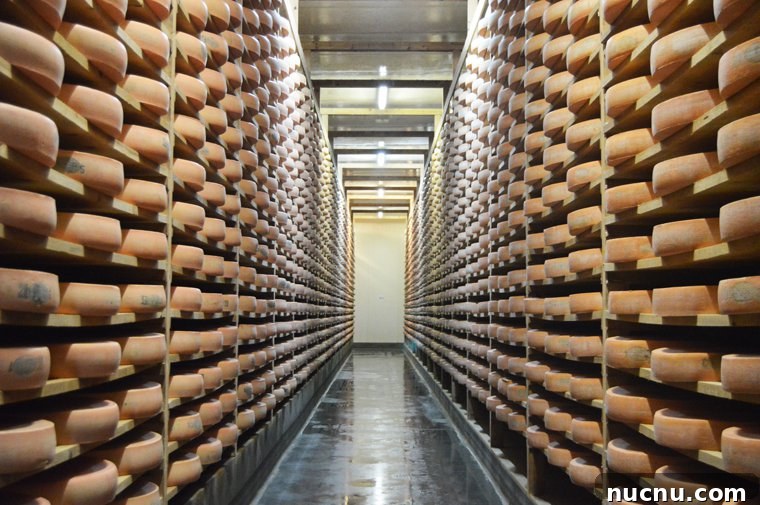
Comté wheels aging at the affineur’s.
Cheese
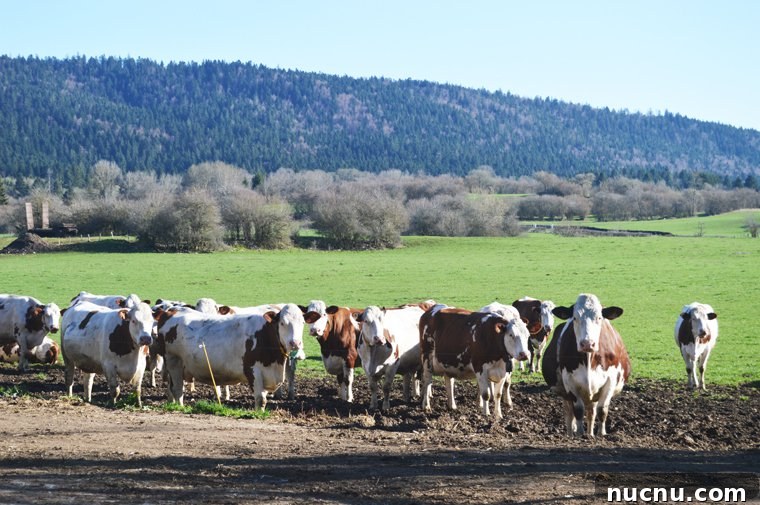
The Jura is the birthplace of one of France’s most popular cheeses: Comté. Made from the milk of Montbéliard cows—those brown-and-white spotted animals that look like they stepped out of a picture book—Comté reflects the seasons. Cheese made in warm months when cows graze fresh grass tends to be yellower; winter cheese made from hay-fed cows looks paler.
After curdling and pressing at the fruitière (cheese cooperative), Comté must age for at least four months on spruce shelves. The region’s cahier des charges (production specifications) governs every step; cheeses that don’t meet these standards cannot be labeled Comté.
The most important thing about Comté is that no two wheels taste the same. Each develops its own profile based on farm, herd, and cellarmaster decisions. A rigorous regional system ensures quality, but it preserves variety rather than uniformity—and that variety is part of the joy.
Morbier originated as a practical solution when there wasn’t enough milk to make a full wheel of Comté. Cheesemakers poured leftover milk into a mold, covered it with a strip of ash to protect it, then topped it with more milk from the next milking. Today Morbier is made deliberately, recognizable by the dark ash line through its center; it’s softer and creamier than Comté.
Mont d’Or is a seasonal raw-milk cheese available roughly from October to March. When you find it, hollow a ring in the top, pour a little white wine into the well, and warm it in the oven for a rustic, spoonable fondue.
Cancoillotte is a runny melted cheese, found plain or flavored with garlic, vin jaune, or other seasonings. Poured warm over potatoes, it’s comforting and richly satisfying.
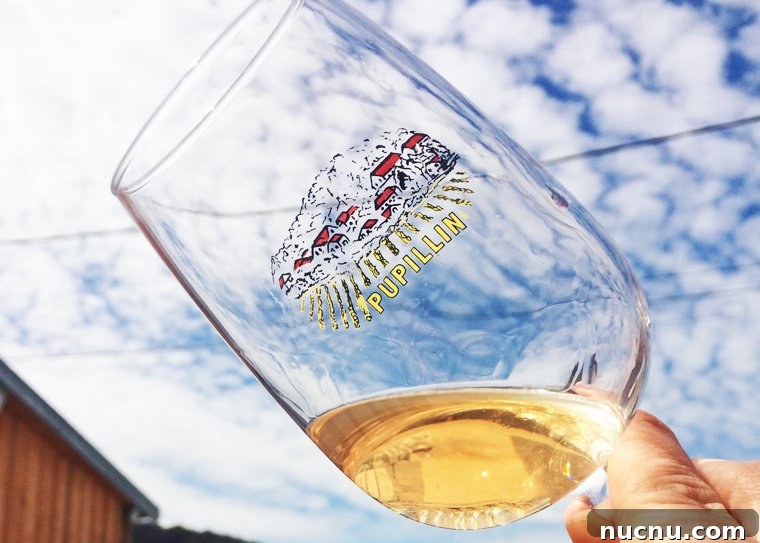
Vin jaune looking golden and gorgeous in the sunlight.
Wine
Although Jura is one of France’s smallest wine regions, it has an outsized history: vin d’Arbois was the first official appellation created in 1936. The vineyards sit on folds of rock from the Jurassic period—fossilized oysters can still be found among the vines. We visited Domaine de la Renardière in Pupillin, where Jean-Michel farms organically and plants complementary crops like radishes and fava beans to support vine health.
Vin jaune, or “yellow wine,” is one of Jura’s signature bottles. Aged for about seven years in barrels under a veil of yeast, vin jaune has a sharp, sherry-like edge and a warm golden color. It shines as an aperitif, pairs beautifully with regional cheeses, and adds depth to dishes like chicken with mushrooms.
Vin de paille, another Jura specialty, differs in production: grapes are dried on straw before pressing, and the resulting wine is aged for about three years, resulting in concentrated sweetness and complexity.
Two important red varieties in Jura are Ploussard and Trousseau. These grapes make lighter-colored wines—often appearing rosé-like—but with earthy, berry-driven flavors. Trousseau is especially rare, grown on just a few hundred acres worldwide. Because of their subtle color and nuanced taste, these wines work well in blind tastings.
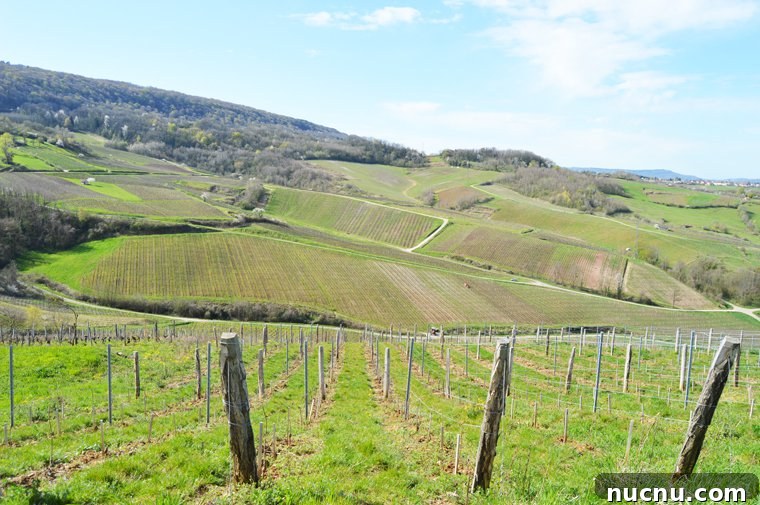
Jean-Michel’s vineyards cross a former line of demarcation evoking the area’s volatile history of resistance during World War II.
Other Terroir Products
Honey from the Jura is outstanding. Miel d’acacia, a light, delicate honey, is a regional favorite. In Arbois, local chocolatiers sometimes garnish chocolates with honey and decorate them with honeycomb patterns—small delights that showcase local ingredients.
Saucisse de Morteau, also called “Belle de Morteau,” is a smoked sausage traditionally made from pigs fed whey left over from cheesemaking. The result is a tender, flavorful sausage often braised with potatoes or served alongside hearty dishes.
One sunny Sunday at La Petite Échelle, near the Swiss border, we enjoyed fondue made with aged Comté and a touch of aspérule, an herb that lends a subtle vanilla-like sweetness. After the fondue, plates of rösti—crispy grated potatoes similar to a large latke—arrived topped with slices of Morteau. It felt like a lesson in regional cuisine and a very persuasive argument for eating well while traveling.
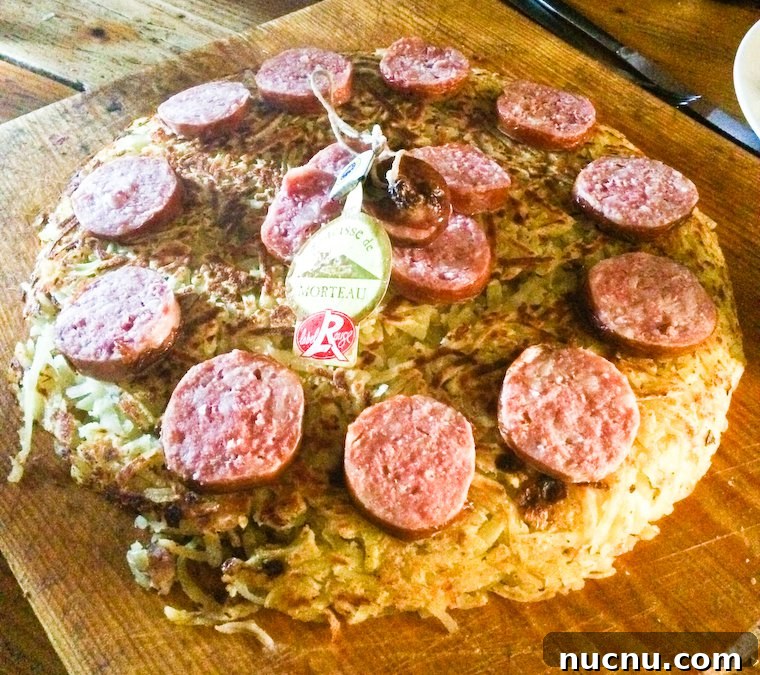
Rösti with Morteau sausage
Can’t make it to the Jura? Many of these terroir products can be found in specialty stores in Paris and beyond—look for quality cheeses, vin jaune, and regional sausages to get a taste of the region at home.
*This trip was part of the Food, Culture, and Communication class taught by Christy Shields at the American University of Paris. Many thanks to her for helping fact-check this post.
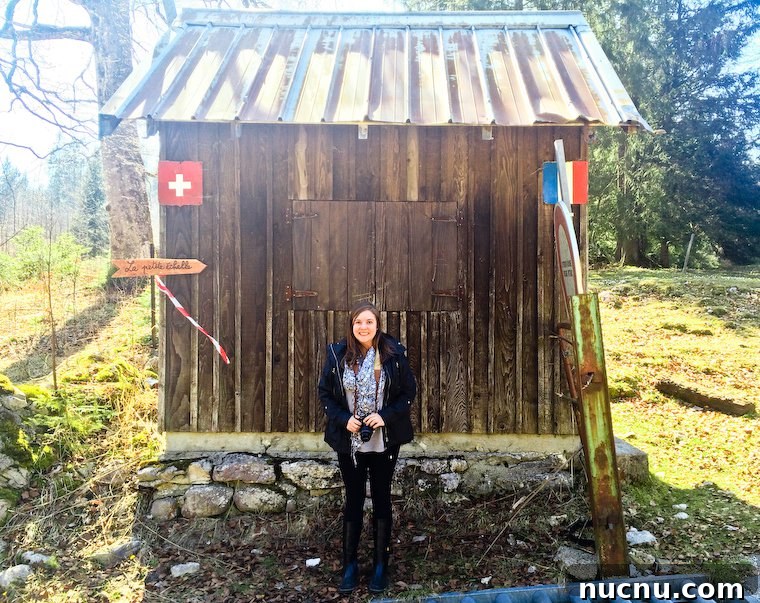
Anne Elder, standing right at the border between France and Switzerland.