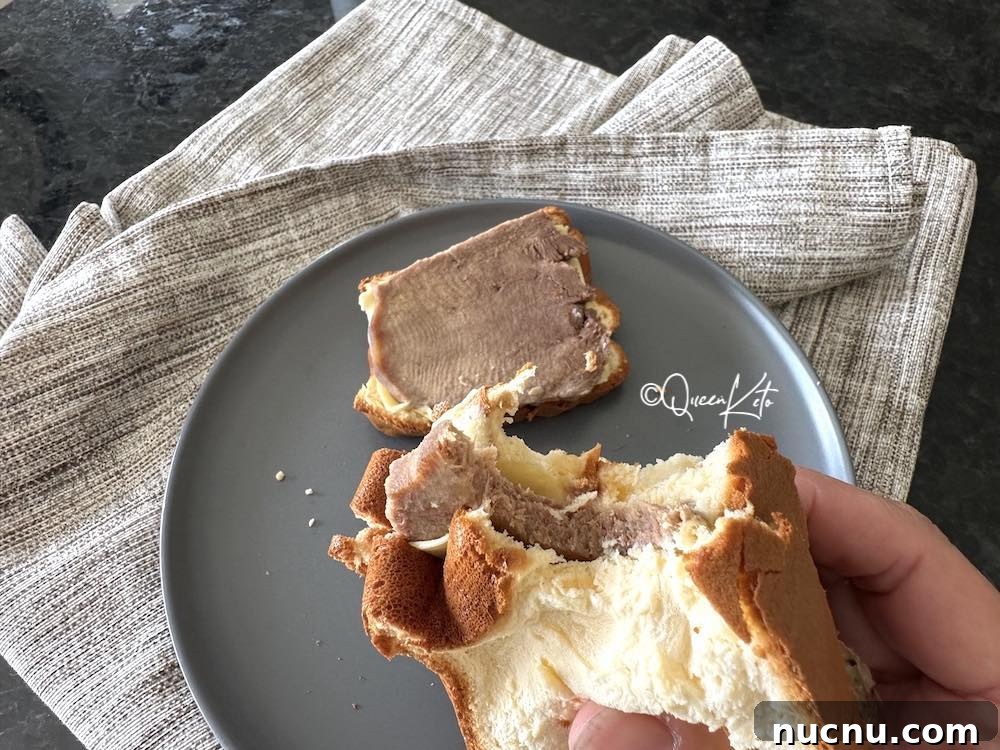
Zero-Carb Carnivore | Beef Tongue. It’s highly nutritious, very tasty, and surprisingly easy to cook.
Eating nose-to-tail is a thoughtful approach for carnivores. Beef tongue is tender, rich and moist, and excellent served hot or cold.
Slice it thinly and tuck it into low-carb or carnivore-style bread for a roast-beef-like sandwich that’s even better. If you’ve tried authentic Mexican tacos, you may already have tasted beef tongue without realising it.
How to Make Zero-Carb Carnivore | Beef Tongue
Beef tongue is rarely offered raw in mainstream supermarkets; pre-cooked packaged versions often contain additives and sugar. Your local butcher might order it in, or you can buy nose-to-tail cuts from quality online suppliers of grass-fed meat.
For this Italian-style preparation you’ll need salt, an onion, a carrot, a celery stalk, 3–4 bay leaves and a few whole peppercorns. The method is straightforward and forgiving.
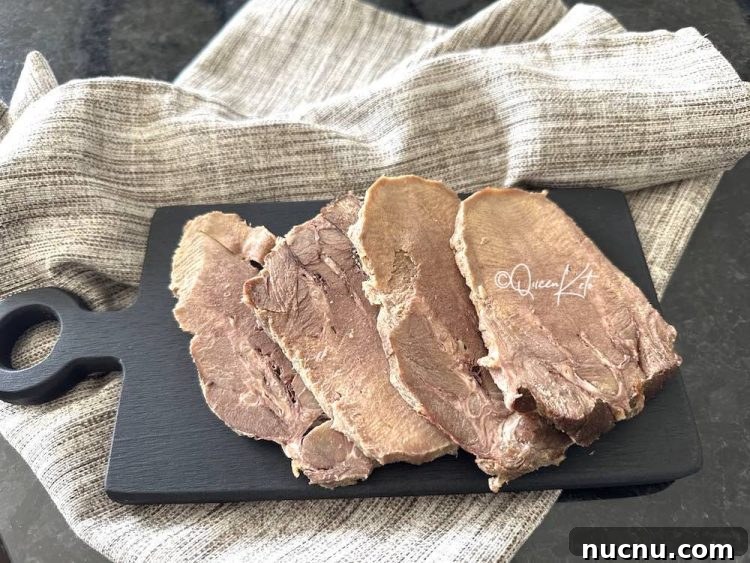
Start by rinsing the tongue under cold running water and scraping away any surface impurities with a knife. If the tongue is not perfectly clean, soak it in plenty of cold water for a couple of hours; this step is optional for very clean tongues.
Place the tongue in a large tall pot — it will expand when cooking — and cover with cold water. Bring to a vigorous boil, then reduce to a gentle simmer.

During the first ten minutes skim off any foam that rises to the surface, then add the onion, carrot, celery, bay leaves, peppercorns and salt. Simmer for about 60 minutes, then test the thickest part with a knife: it should pass through with a little resistance. If not, continue simmering in ten-minute increments until tender but not falling apart.
When the tongue is cooked, remove it from the pot, discard the cooking liquid and aromatics, and place the tongue on a board. As soon as it’s cool enough to handle, make lengthwise slits in the outer skin and peel off the thick, waxy layer. There is a fatty layer beneath the skin that some people remove for a leaner texture; this is optional.
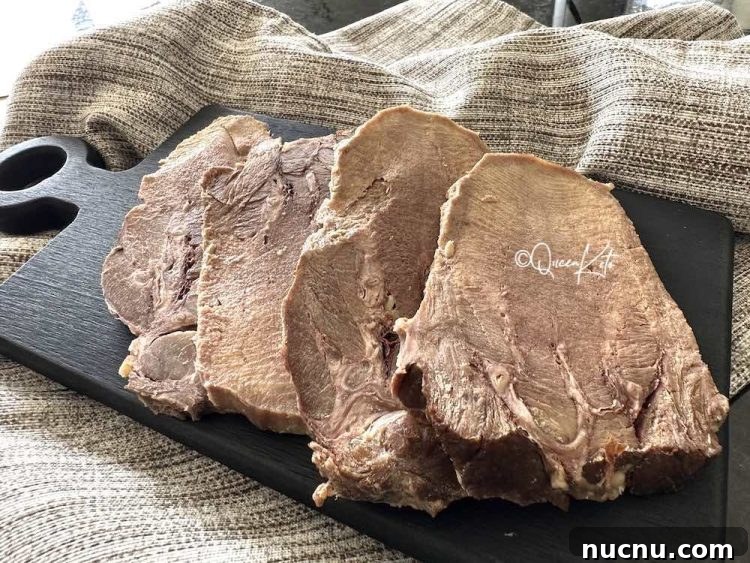
You can eat the tongue immediately, or wrap it and chill it in the fridge overnight. Chilling helps the meat compact, making it much easier to slice very thinly for sandwiches. Thicker slices are delicious pan-fried or air-fried as a warm side.
Cooked tongue will keep in the refrigerator for 3–4 days or can be sliced and frozen in individual portions for later use.
Enjoy!
Zero-Carb Carnivore | Beef Tongue
8 servings
Ingredients
- 1 kg beef tongue
- 3 TBSP fine salt
- 1 celery stalk
- 1 onion
- 1 carrot
- 3–4 bay leaves
- 10 whole peppercorns
Instructions
- Rinse the tongue under cold running water and use a knife to scrape off any visible impurities.
- Place the tongue in a large tall pot and cover with plenty of cold water. Leave to soak for 2 hours if needed.
- Drain and refill with fresh water to fully submerge the tongue.
- Bring the water to a fast boil, then reduce to a simmer and set a timer for 60 minutes. During the first 10 minutes skim off any foam, then add the celery, onion, carrot, bay leaves, peppercorns and salt.
- After 60 minutes, test the thickest part with a knife. If it passes through with a little resistance, it’s ready. If not, simmer a further 10 minutes and test again.
- Remove the cooked tongue, discard the cooking liquid and aromatics, and place the tongue on a board.
- When cool enough to handle, make lengthwise slits in the outer skin and peel it away. You may optionally trim the next fat layer for a leaner result.
- Leave to cool completely, then wrap and refrigerate overnight to compact the meat for thin slicing.
- Slice as thinly as possible and serve cold in a sandwich, or slice thicker and pan-fry or air-fry to serve warm with a main meal.
Notes
Nutrition
This post contains affiliate links. As an Amazon Associate the author may earn from qualifying purchases; this does not increase cost for readers but helps support running the site.