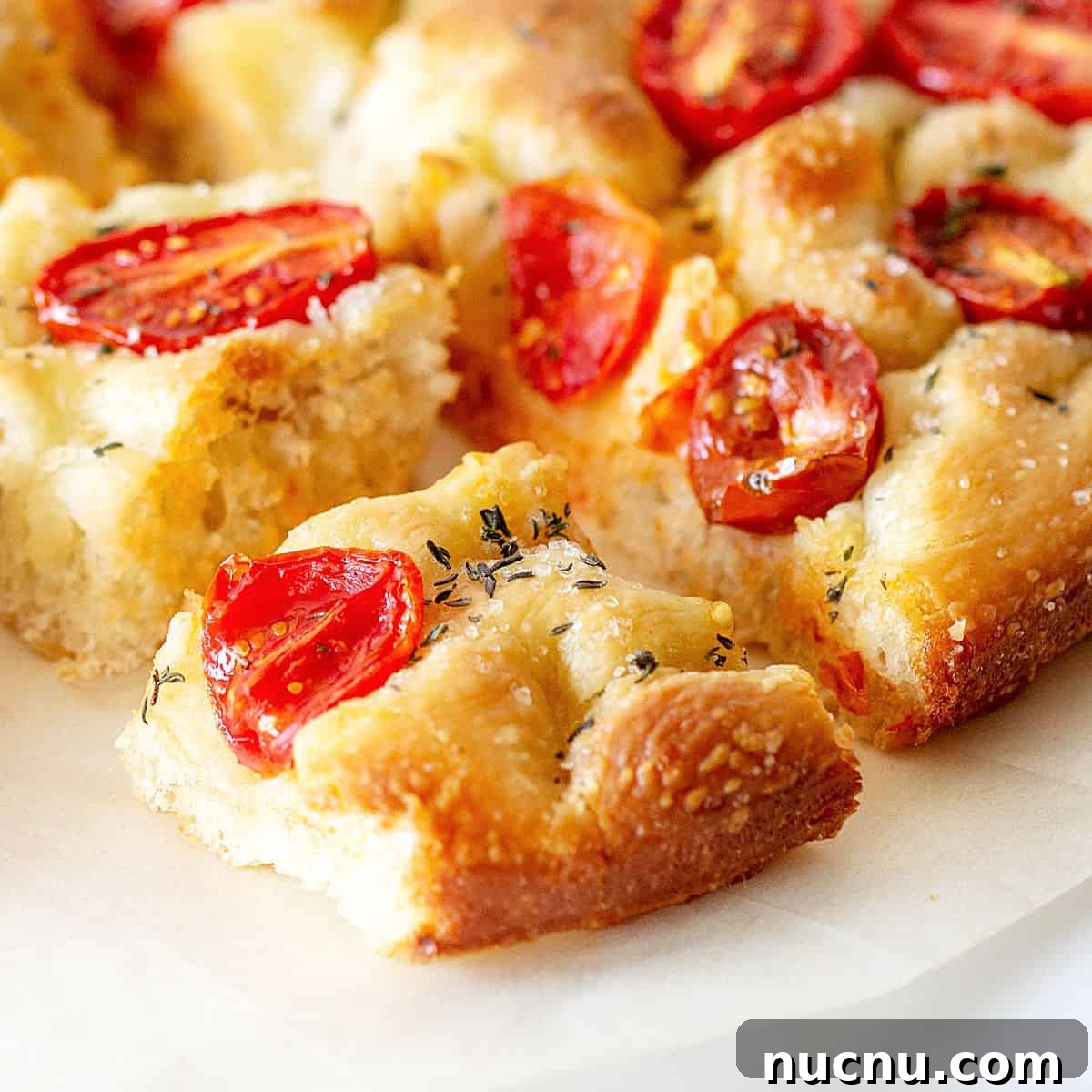
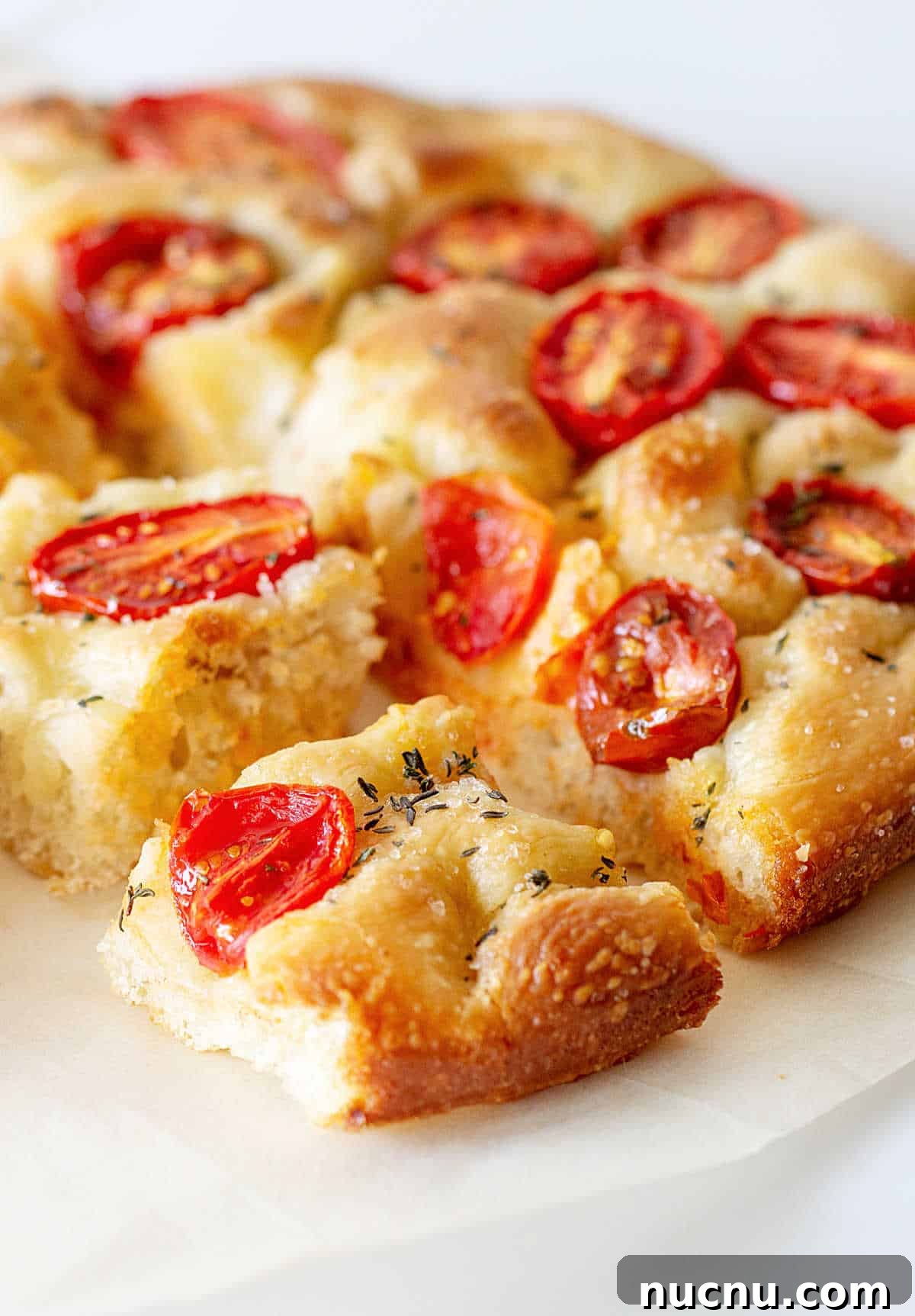
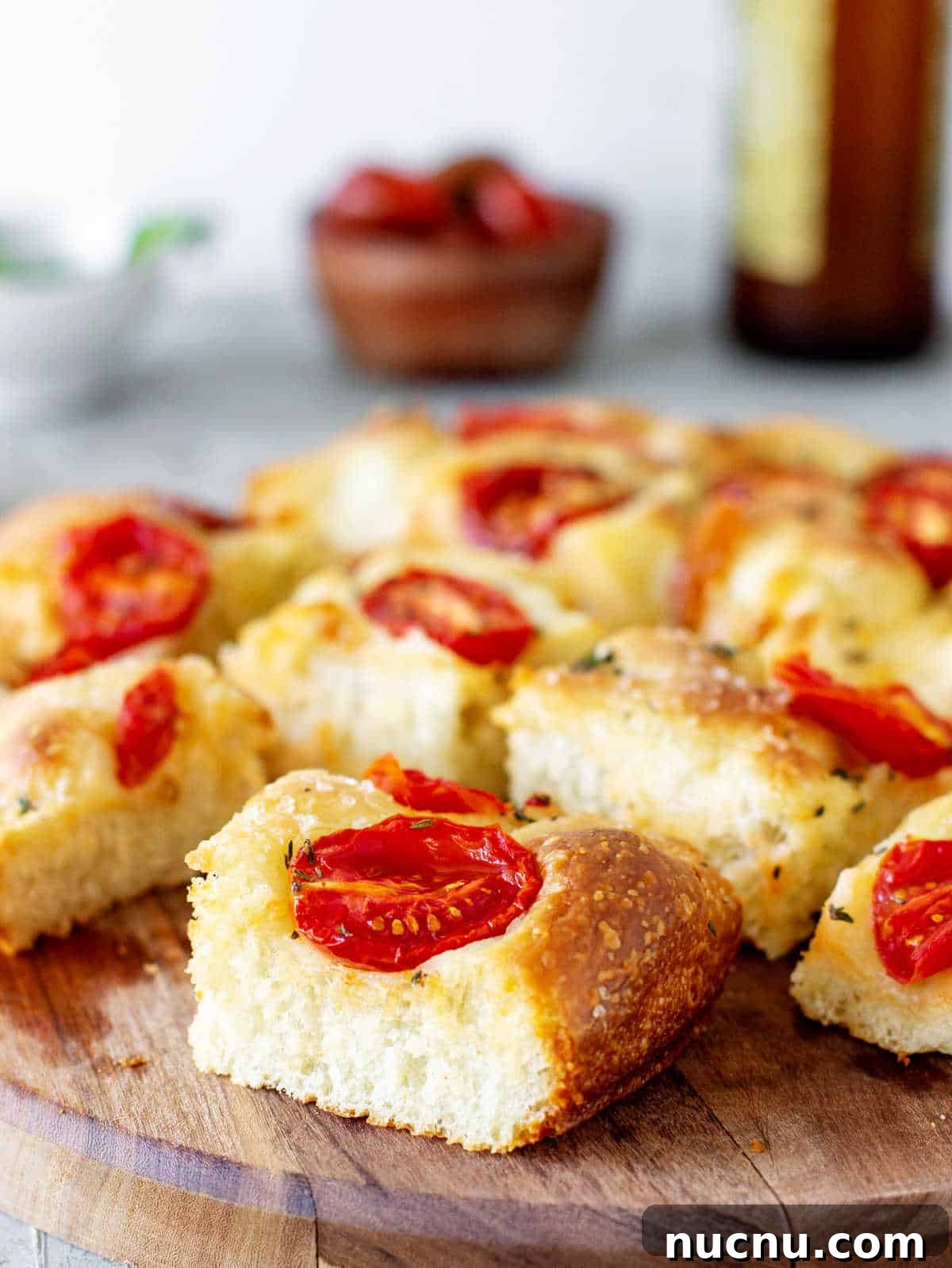
Also known as focaccia, this classic Italian bread is made from a simple yeasted dough with very few ingredients — and the result is spectacular: a golden, salty, olive oil–kissed crust with an irresistible crispness. You can bake it in round, square, or rectangular pans. Toppings are highly versatile, but tomatoes and Mediterranean herbs are particularly delicious. The aroma while baking will quickly turn anyone into a focaccia fan.
If you’re nervous about working with yeast, follow the step-by-step photos, tips, and video included below.
Italian bread
Focaccia is a yeasted Italian bread that resembles a thicker pizza, prized for its crunchy, golden-brown exterior and tender interior. Once you bake it, you’ll see why it’s such a favorite: simple technique, outstanding flavor.
This is one of those bread recipes you’ll want to make again and again. Like other Italian bakes, it welcomes many variations and adaptations.
Toppings range from classic rosemary and flaky salt to roasted garlic, olives, sun-dried tomatoes, thin potato slices, and cheeses like goat cheese. For a traditional, old-fashioned focaccia, keep it simple with rosemary sprigs, good olive oil and coarse sea salt.
– Maryann ⭐️⭐️⭐️⭐️⭐️
Delicious! Everyone loves it!
– Ryan ⭐️⭐️⭐️⭐️⭐️
I’ve doubled this recipe a few times. It’s super tasty!
Testing notes
Organization: Read the recipe through before you start. Yeasted doughs need resting time and the right temperatures, so gathering ingredients and equipment ahead makes the process smoother.
Mind the details: Yeast baking is sensitive to small things: use fresh yeast, lukewarm water to activate it, proof in a warm spot in an oiled bowl, and wait until the dough roughly doubles in size. These steps matter and improve your result considerably.
Toppings: Experiment with flavors like kalamata olives, sun-dried tomatoes, roasted garlic, sliced onion, or dollops of tomato pesto and creamy cheeses. Traditional herbs such as rosemary, oregano, and thyme pair beautifully.
Make ahead: Focaccia freezes well. Wrap cooled bread tightly first in plastic wrap, then foil. Re-crisp in a moderate oven (325°F / 170°C) until warmed through.
FAQ
Sometimes, yes. The same basic dough can be used, but focaccia is typically thicker and topped differently than pizza.
Usually an issue with the yeast. It may be old or inactive, the quantity may have been insufficient, or it could have been omitted by accident. Check yeast expiration and activate it properly when required.
Well wrapped, it keeps for about 2 days at room temperature but will lose some crunch. After that refrigerate or freeze. Reheat in a moderate oven (350°F / 180°C) for about 15 minutes to restore crispness.
Ingredients
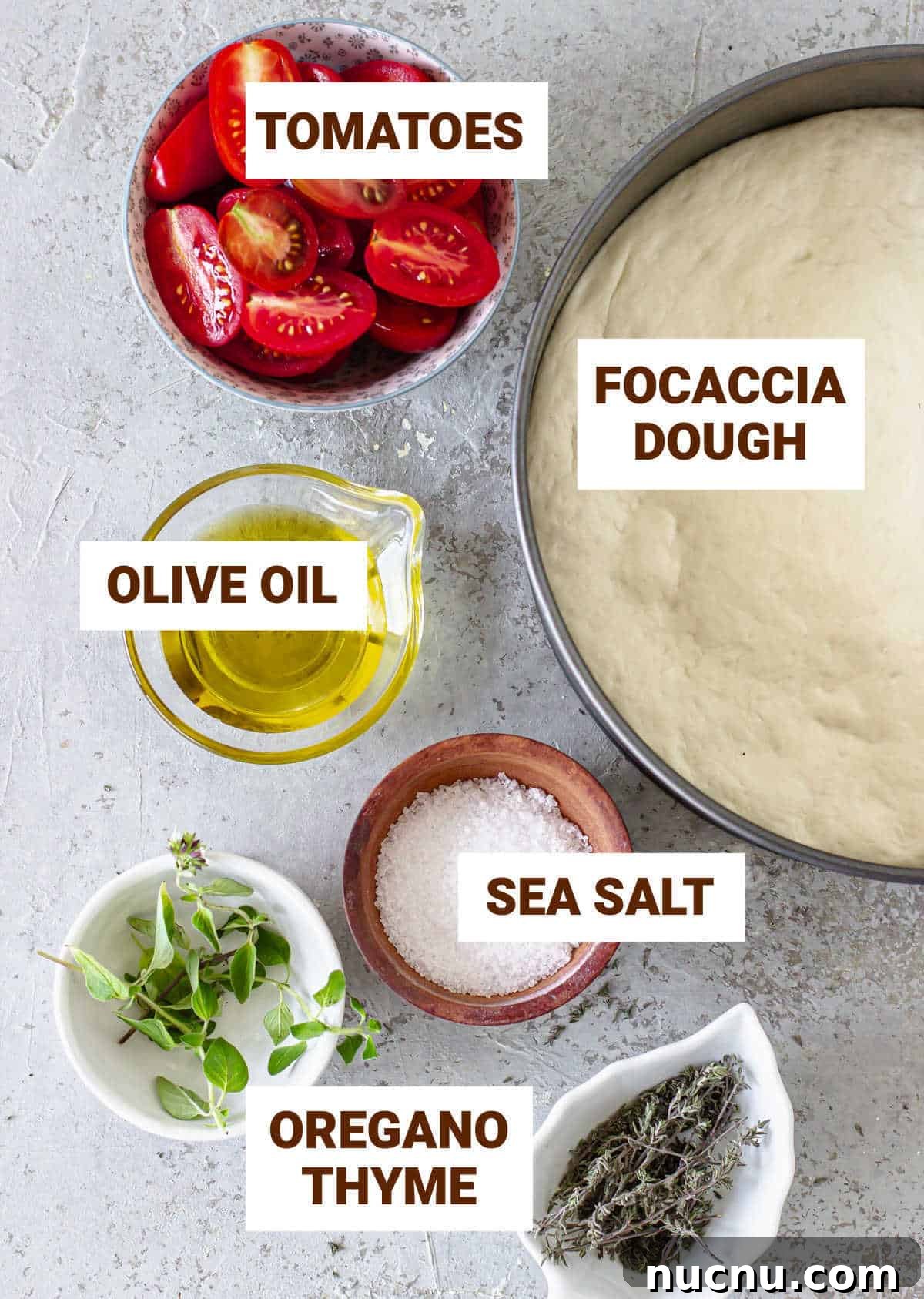
Exact quantities are listed in the recipe card below. Use bread flour when possible for better gluten development and structure; all-purpose flour will also work.
- Flour: Bread flour gives more structure thanks to higher protein. All-purpose is acceptable and yields good results too.
- Yeast: This recipe works with active dry, instant (rapid rise), or fresh yeast. Active dry is a reliable choice; instant works faster and can be mixed directly into the flour; fresh requires a larger quantity.
- Olive oil: A key ingredient for flavor and that signature crunchy top — use quality extra virgin olive oil if you can.
- Tomatoes: Halved cherry tomatoes are ideal because they’re less watery and slice-friendly year-round. Use other varieties if preferred.
- Herbs: Fresh or dried rosemary, oregano, and thyme all work. For this tomato focaccia, oregano and thyme complement the tomatoes nicely.
Steps to make Italian focaccia
Most yeasted breads require mixing, kneading for a few minutes, and resting to let the yeast and gluten develop. Focaccia is forgiving and a great beginner’s bread because it tolerates slight timing and handling variations.
Follow the recommended temperatures and rise times for the best outcome.
Don’t rush the process: allow the dough to proof in a warm spot in an oiled bowl and preheat your oven fully before baking.
Kneading
- By hand: Mix in a large bowl and knead on a work surface for several minutes until smooth and slightly tacky.
- With a mixer: Use a stand mixer and dough hook to knead until the dough is smooth and pulls away from the bowl sides.
Assembling
Pans: Use an 8 or 9-inch round, a square, or a rectangular pan. Pan choice changes focaccia height and how the bottom browns; metal pans often produce better color.
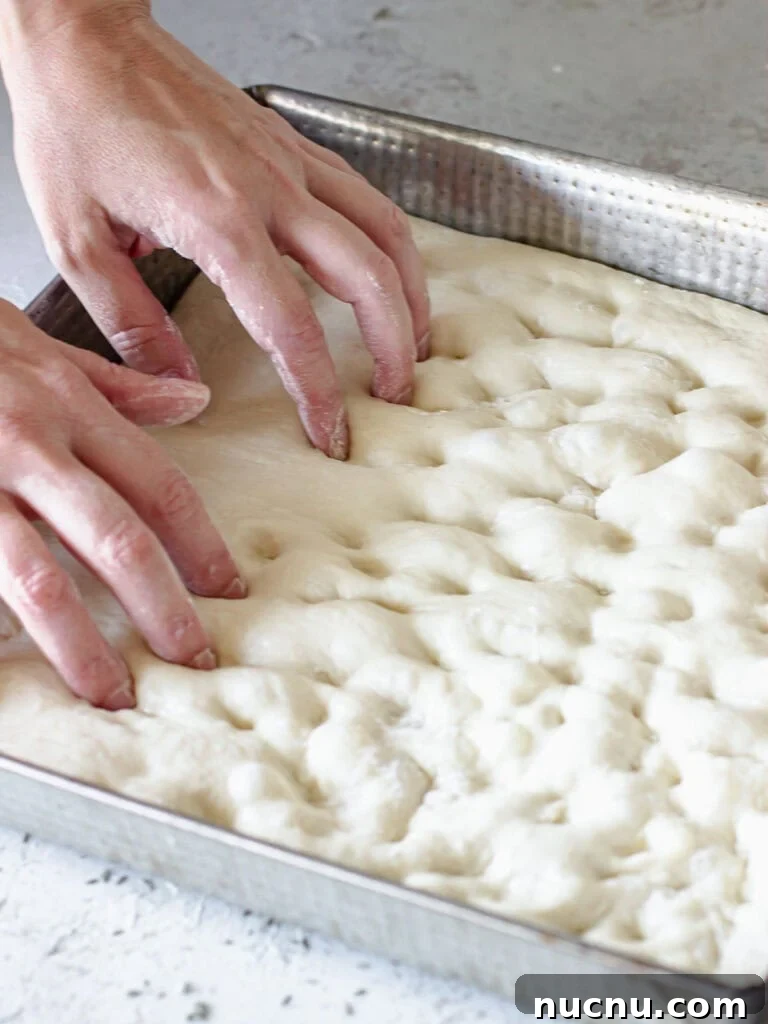
Dimpling
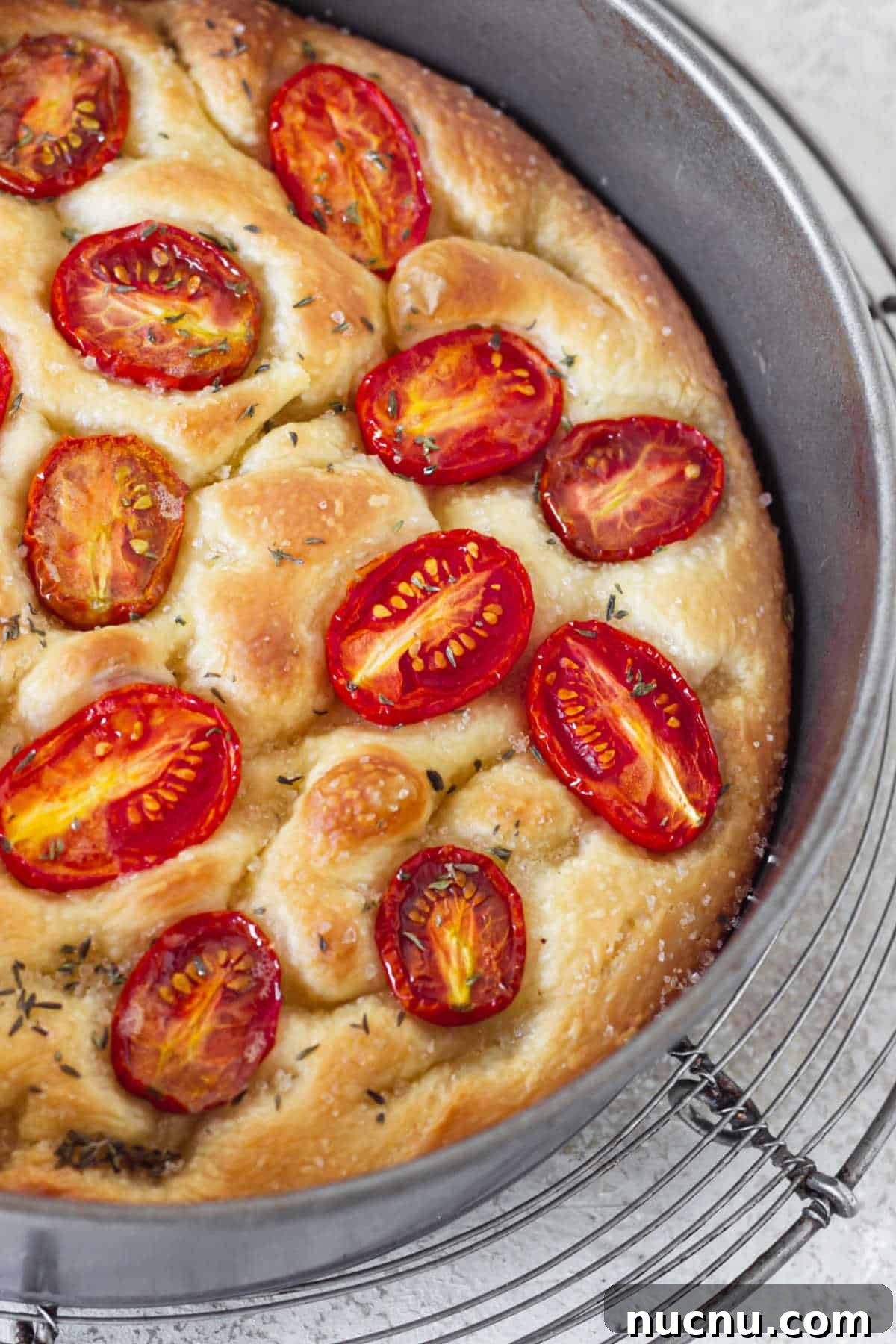
Use your fingertips to dimple the dough across the surface. This step lets olive oil pool in the indentations and creates the classic crackly, golden top.
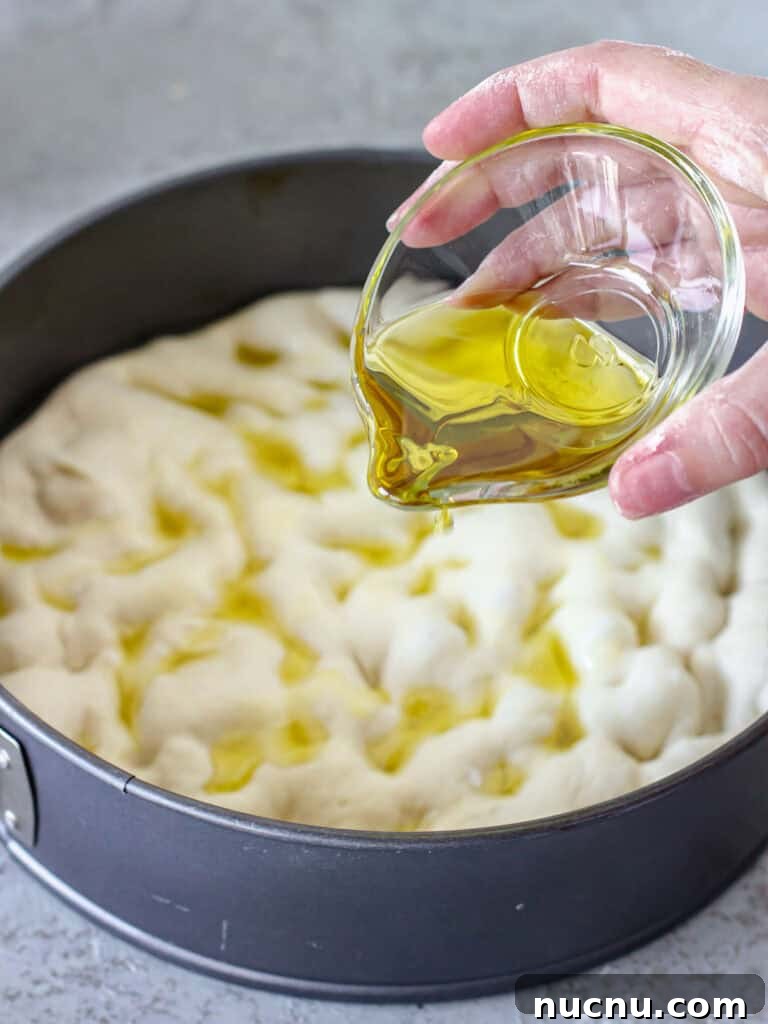
Oil and salt
Olive oil is essential. Drizzle generously into the dimples and finish with flaky sea salt or kosher salt for texture and flavor.
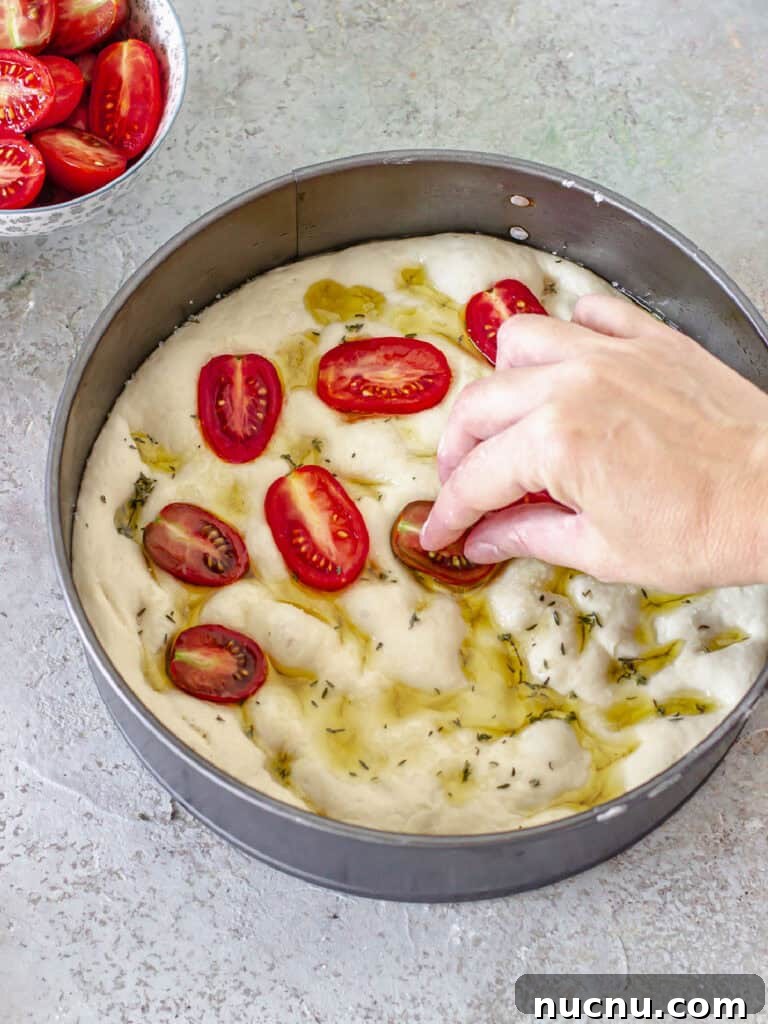
Tomato topping
Halved cherry tomatoes are ideal because they’re less watery and hold their flavor. Arrange them across the dough and sprinkle with oregano and thyme.
Baking focaccia
- Preheated oven: Always place focaccia into a fully preheated oven so it receives an immediate oven spring and browns properly.
- Steam: Adding steam at the start of baking enhances crust development. Lightly mist the oven when placing the pan or use a small pan of boiling water on the oven floor — both methods create short-lived steam and improve crust texture.
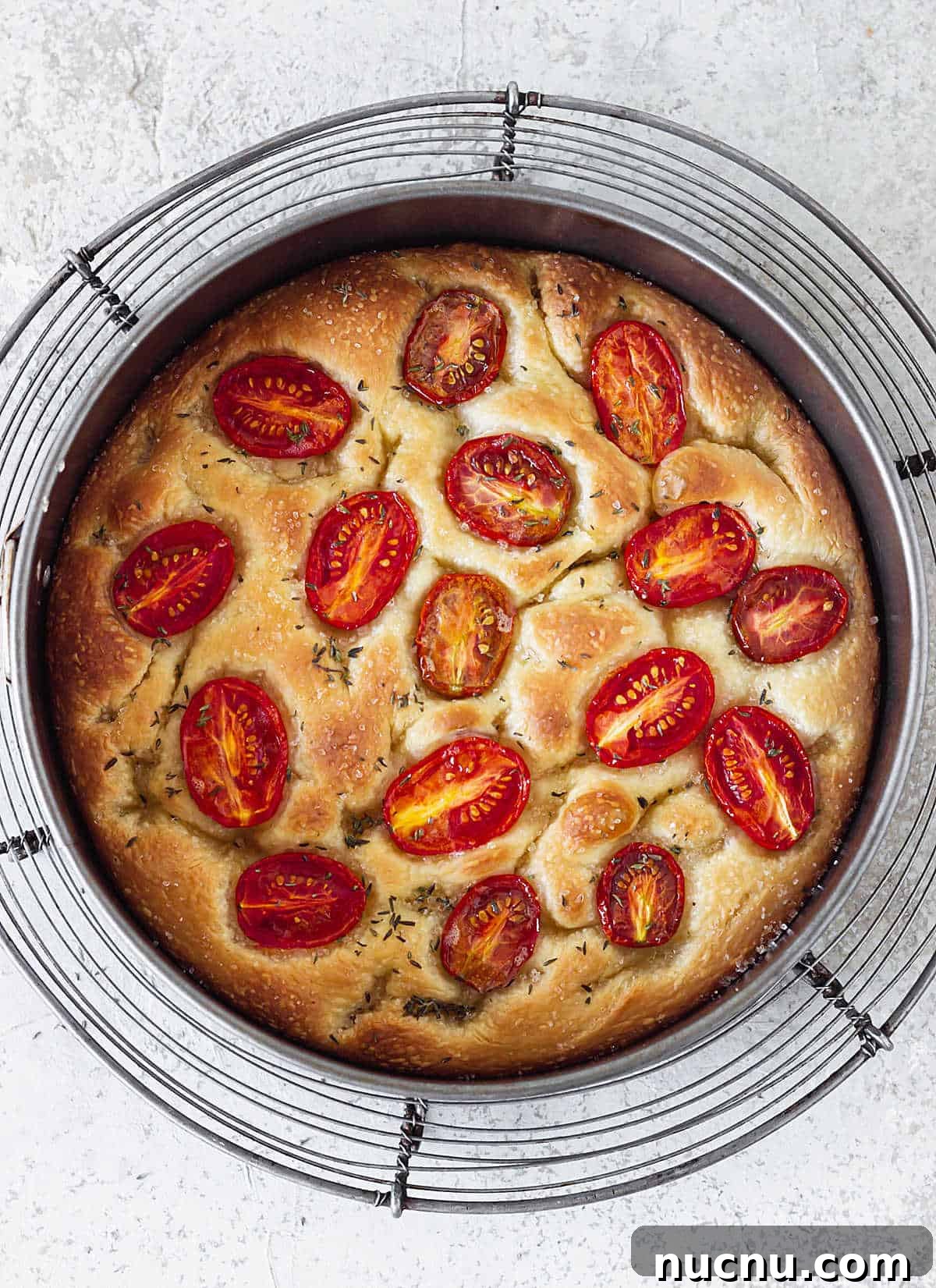
- Doneness: The focaccia is done when the top is golden brown, crisp, and the bottom sounds hollow when tapped.
- Baking stone: You can bake on a stone if desired. Use parchment to transfer the dough with a peel; results vary by method and equipment.
If you try this recipe and enjoy it, please leave a review and share your experience in the comments. If you ran into problems, describe them so we can help troubleshoot. Consider subscribing to the site’s newsletter for more baking tips and recipes.
Tomato Focaccia (best recipe)
Ingredients
- 1 cup warm water
- 2 teaspoons active dry yeast (or 6 teaspoons fresh)
- 1 teaspoon sugar or honey
- 2 to 2 ½ cups bread or all-purpose flour
- 3 tablespoons olive oil
- 2 teaspoons kosher or sea salt
Topping:
- 2 or 3 tablespoons olive oil
- ½ teaspoon sea or kosher salt (not fine table salt)
- 1 cup cherry tomatoes (halved)
- 1 teaspoon dried or fresh oregano
- 1 teaspoon dried or fresh thyme
Instructions
-
Combine 1 cup warm water, 2 teaspoons active dry yeast, and 1 teaspoon sugar (or honey) in a large bowl. Stir lightly and let sit 4–5 minutes until foamy.
-
Add 1 cup of flour and mix until combined.
-
Stir in 3 tablespoons olive oil and 2 teaspoons kosher or sea salt.
-
Add the remaining 1 to 1 ½ cups flour a half cup at a time until the dough comes together. You may not need all the flour.
-
Knead on a lightly floured surface or in a stand mixer for about 5 minutes until smooth and slightly sticky. Avoid adding too much flour — tackiness is fine.
-
Place the dough in an oiled bowl, turn to coat, cover, and let rise until doubled, about 1 hour.
-
Prepare an 8 or 9-inch oiled pan. Punch down the dough gently and transfer it to the pan.
-
Stretch the dough gently to fill the pan. If it resists, let it rest a few minutes and try again.
-
Cover and let the dough rise until puffy, about 45 minutes. You can refrigerate the covered pan overnight; bring it back to room temperature before continuing.
-
Preheat the oven to 400°F (200°C) about 20 minutes before baking.
-
Dimple the dough surface with your fingers, creating many indentations without tearing.
-
Drizzle 2–3 tablespoons olive oil over the surface, sprinkle ½ teaspoon sea or kosher salt, 1 teaspoon oregano and 1 teaspoon thyme.
-
Top with 1 cup halved cherry tomatoes or slices of larger tomatoes.
-
Bake for 35–40 minutes until golden brown and crisp. Check the bottom for a brown, crisp finish and extend time if needed.
-
Transfer to a wire rack and cool briefly before removing from the pan.
-
Serve warm, or cool completely, wrap tightly, and freeze. Reheat before serving to restore crispness.
Video
Notes
Yeast: Active dry yeast is a reliable choice and benefits from pre-mixing with warm water and a touch of sugar. Instant yeast can be added directly to flour but may act faster. Fresh yeast requires roughly three times the quantity of dry yeast and has a shorter shelf life.
Toppings: Try olives, sun-dried tomatoes, roasted garlic, onions, or different herbs. Focaccia is a great canvas for flavor experiments.
Make ahead: Focaccia freezes well. Wrap tightly in plastic and foil for the best storage.