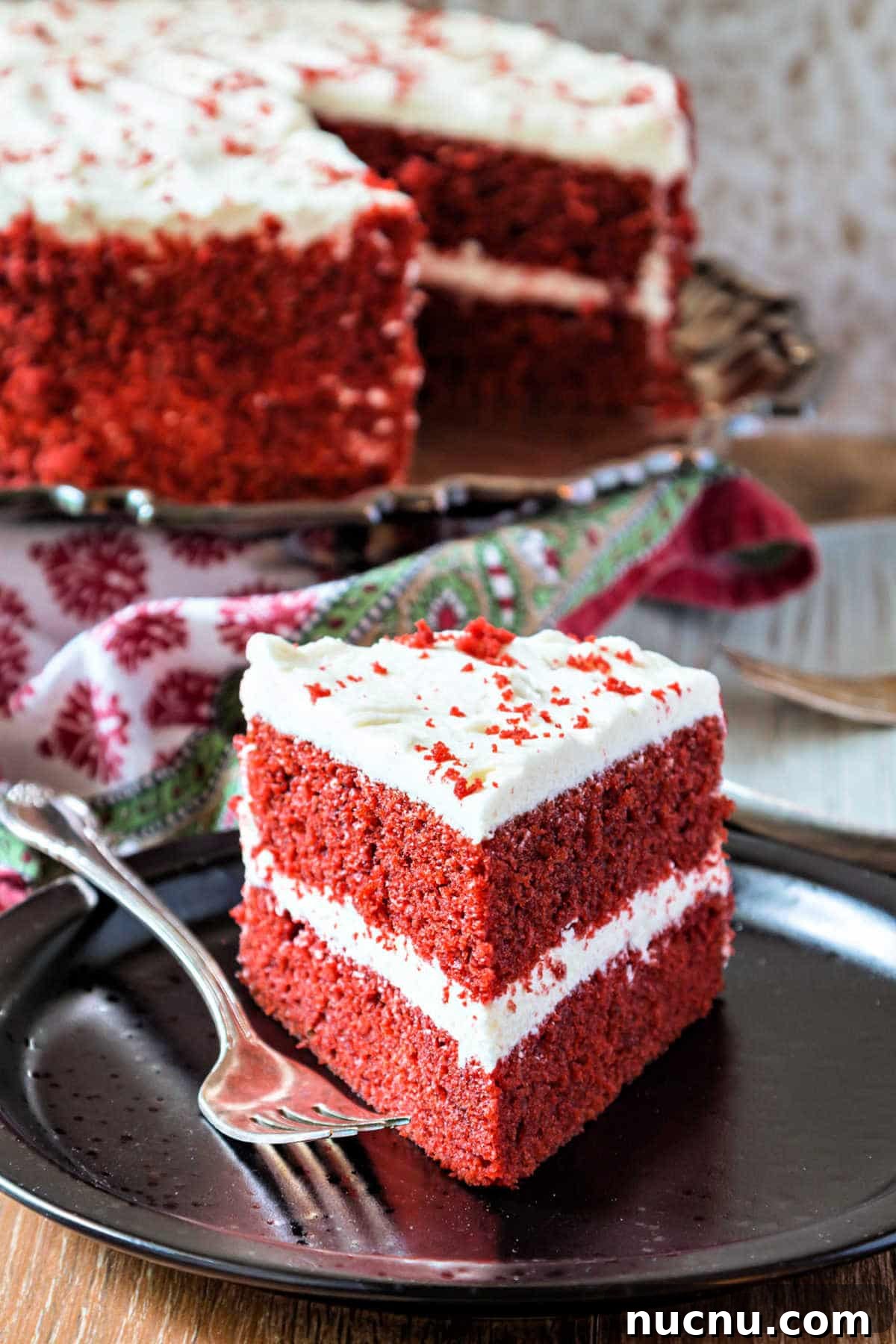
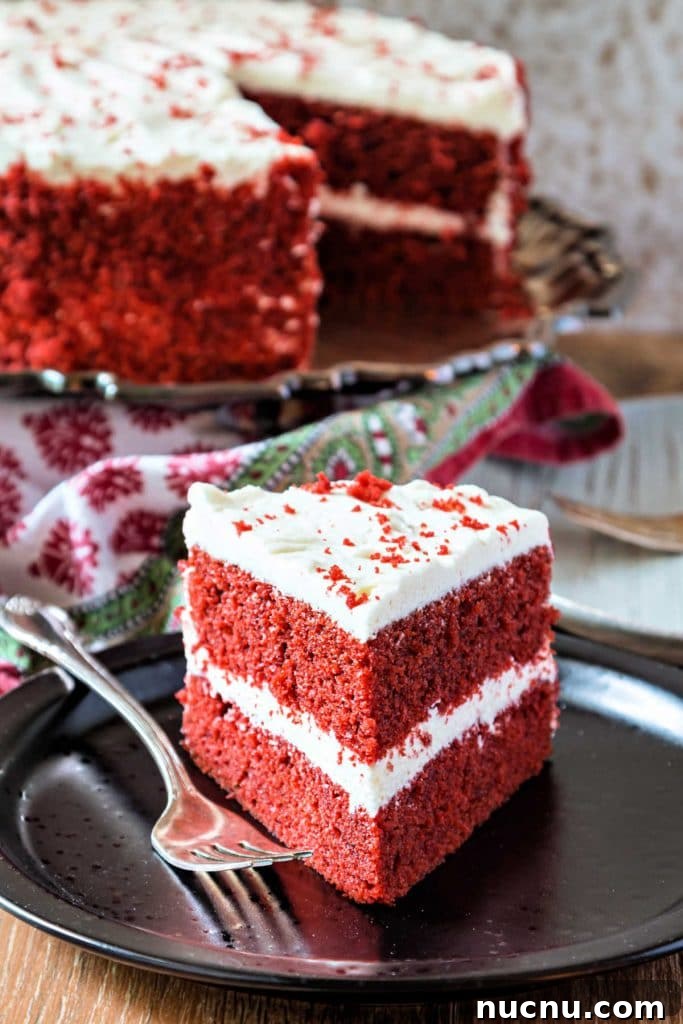
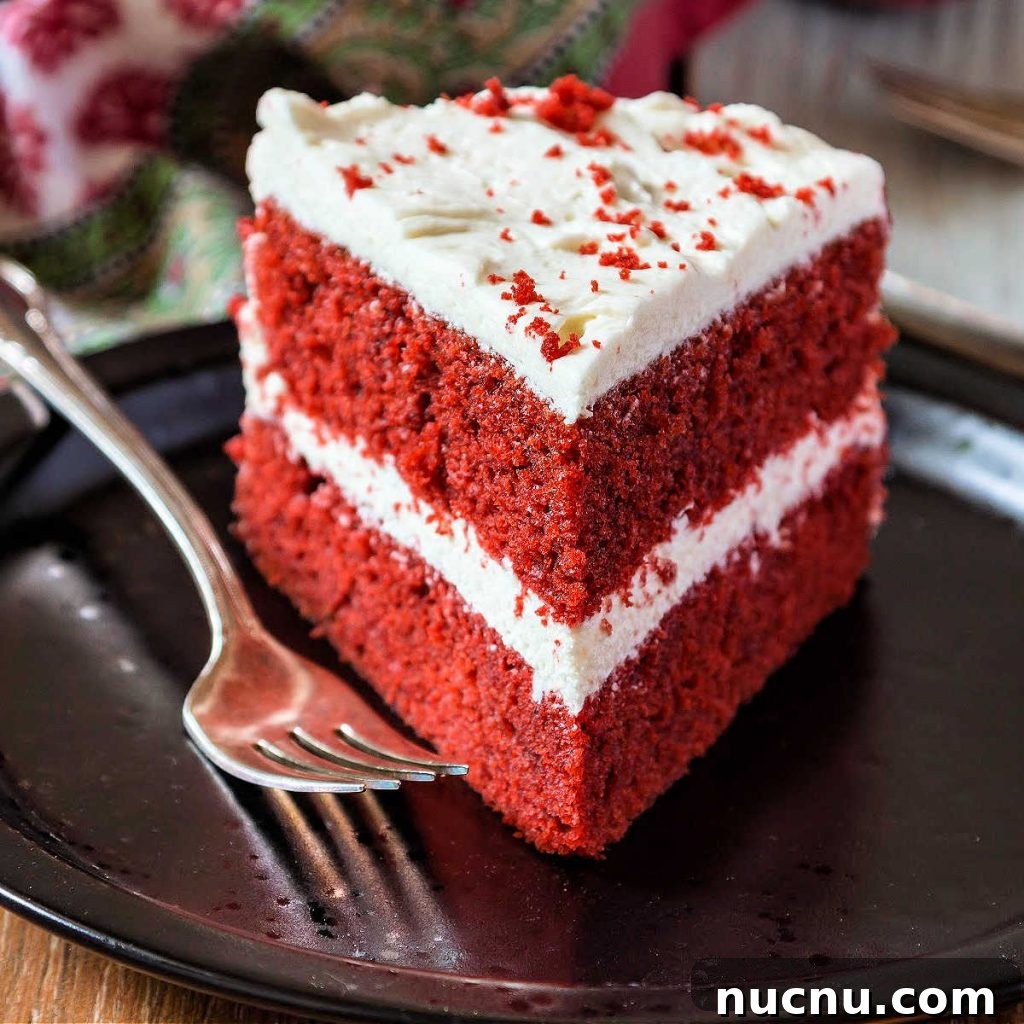
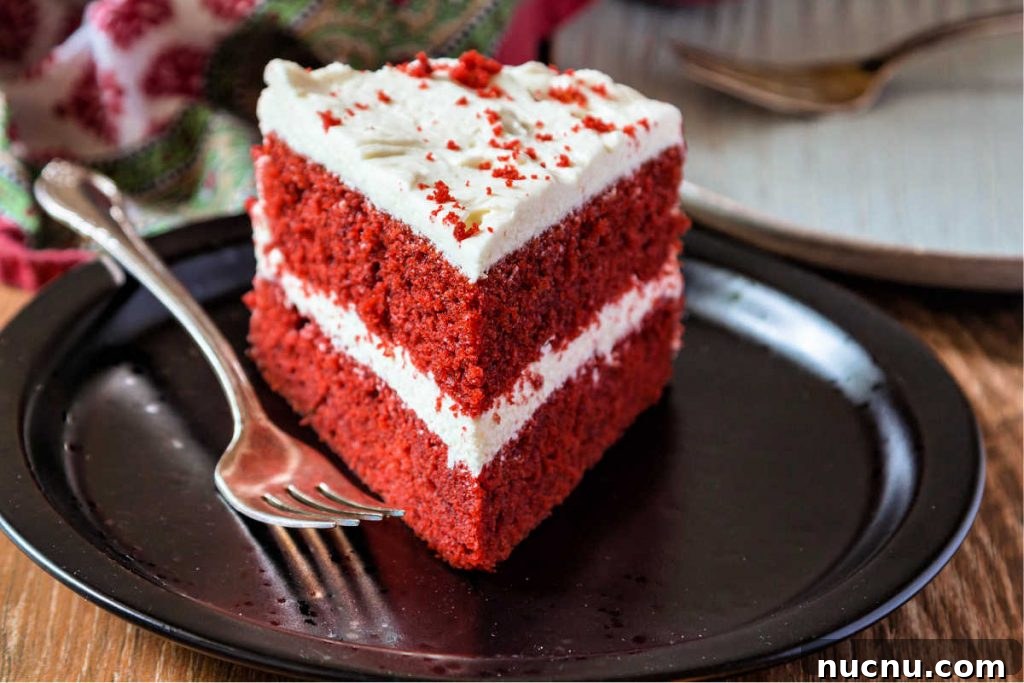
This red velvet cake recipe produces a moist, tender cake with a subtle chocolate flavor and a vibrant red crumb. Follow the steps and you’ll end up with a classic layered cake that pairs beautifully with ermine (also called boiled milk) frosting.
Ermine frosting is often cited as the traditional accompaniment to red velvet, so that’s what this version uses. If you prefer cream cheese frosting you can use that instead, but the ermine gives a light, silky finish that complements this cake especially well.
Red Velvet Cake, At a Glance
✅ Skill Level: Beginner
✅ Skills: Vinegar + baking soda leavening, baking
✅ Type: Layer Cake
✅ Number of Ingredients: 11
✅ Prep Time: 20 minutes
✅ Cook Time: 45 minutes
✅ Yield: 8–10 slices
This recipe is just amazing. Cake and frosting. I make filled cupcakes with this recipe all the time and people just go wild for it. The frosting is always a huge hit, but the cake is so fluffy and tender, it’s a perfect pairing.
Reader JJ
Where Did Red Velvet Cake Come From?
Two common origin stories are told: one suggests the cake’s red tint came from a chemical reaction between acidic ingredients and non-alkalized cocoa powder; the other credits a food-coloring company that promoted a recipe using liquid red coloring alongside cake flour and buttermilk. Both traditions influenced how red velvet evolved into the version many of us recognize today.
Traditionally the cake is finished with a white icing; ermine frosting is often cited as the classic choice. If you want a truly authentic mid-century style, use liquid red food coloring (not gel) and buttermilk in the batter.
PRO TIP: Use liquid food coloring rather than gel to keep the batter’s liquid balance correct.
Is This Cake Just Chocolate Cake with Food Coloring?
No. The cocoa powder is used sparingly in red velvet, so the cake has a hint of chocolate without being a full chocolate cake. Without food coloring it would likely be a pale beige rather than red.
What Makes This Recipe Work
Key elements in this recipe:
- Buttermilk provides acidity and tenderness, reacting with baking soda to create lift.
- A small amount of non-alkalized cocoa gives a subtle chocolate note without overpowering the flavor.
- Liquid oil keeps the crumb moist; leavening relies on the chemical reaction between vinegar, buttermilk and baking soda, so vinegar is added last and the batter is baked quickly.
- Using cake flour yields the finest, most velvety crumb, though all-purpose flour works fine if that’s what you have.
- Light or dark brown sugar deepens the flavor slightly; brown sugar is optional but recommended.
PRO TIP: For the finest texture, use cake flour.
How to Make Your Cake
Below is a concise overview of the process. Full ingredient amounts and step-by-step instructions follow in the recipe section.
Ingredients
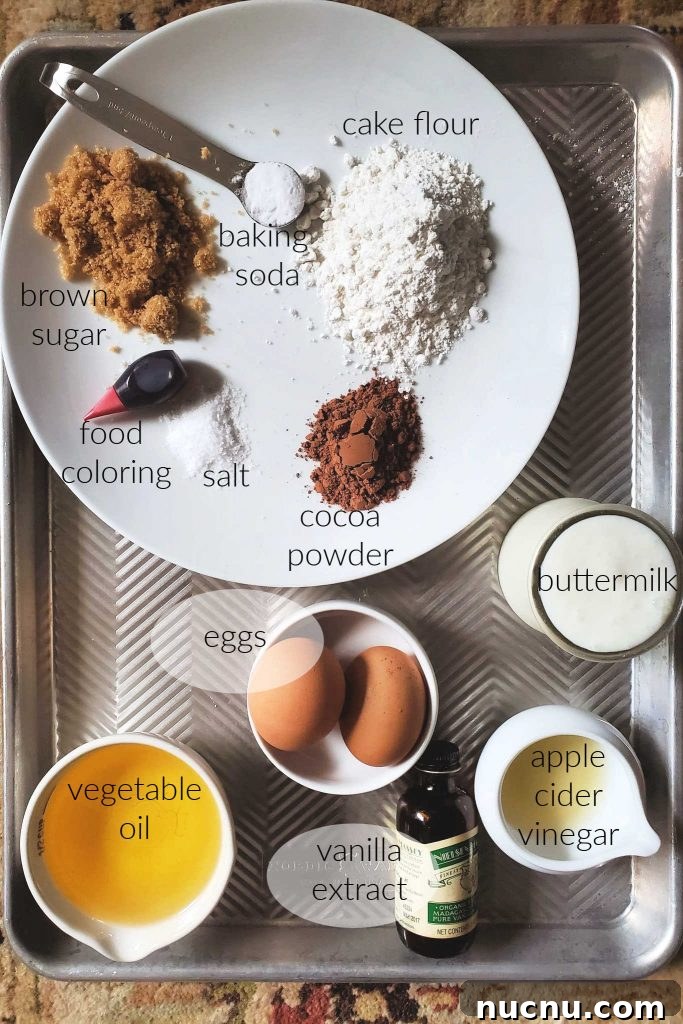
Most of these are pantry staples. Key items to have on hand:
- All-purpose or cake flour
- American-style (non-Dutch) cocoa powder
- Baking soda
- Buttermilk
- Liquid red food coloring (not gel)
- Vanilla
- Brown or granulated sugar
- Eggs
- Neutral vegetable oil
- Salt (use kosher or reduce fine salt by ~1/3)
- Vinegar (white or apple cider)
Mixing Method
This cake uses a modified creaming method because the fat is liquid oil. Aeration comes largely from the chemical reaction of the wet acidic ingredients with baking soda, so mix efficiently and add the vinegar last. Once vinegar is added, get the batter into the oven quickly to preserve the reaction bubbles.
- Sift flour, baking soda, and cocoa; whisk together and set aside.
- Combine buttermilk, red food coloring, and vanilla.
- Cream oil, sugar, and salt with a mixer; add eggs one at a time until the mixture becomes opaque and thick.
- Alternate adding dry ingredients and the buttermilk mixture, beginning and ending with the dry ingredients. Mix just until combined.
- Stir in the vinegar, divide the batter into prepared pans, and bake immediately.
Cake Baking Tips & Tricks for Success
- Preheat your oven at least 30 minutes before baking for stable temperature performance.
- Use parchment circles and spray the pan sides to prevent sticking.
- Place cake pans on a half-sheet for easier handling and to catch any spills.
- Cool in pans 10–15 minutes, then turn out to finish cooling right-side-up on racks to avoid cracks.
Decorating This Cake
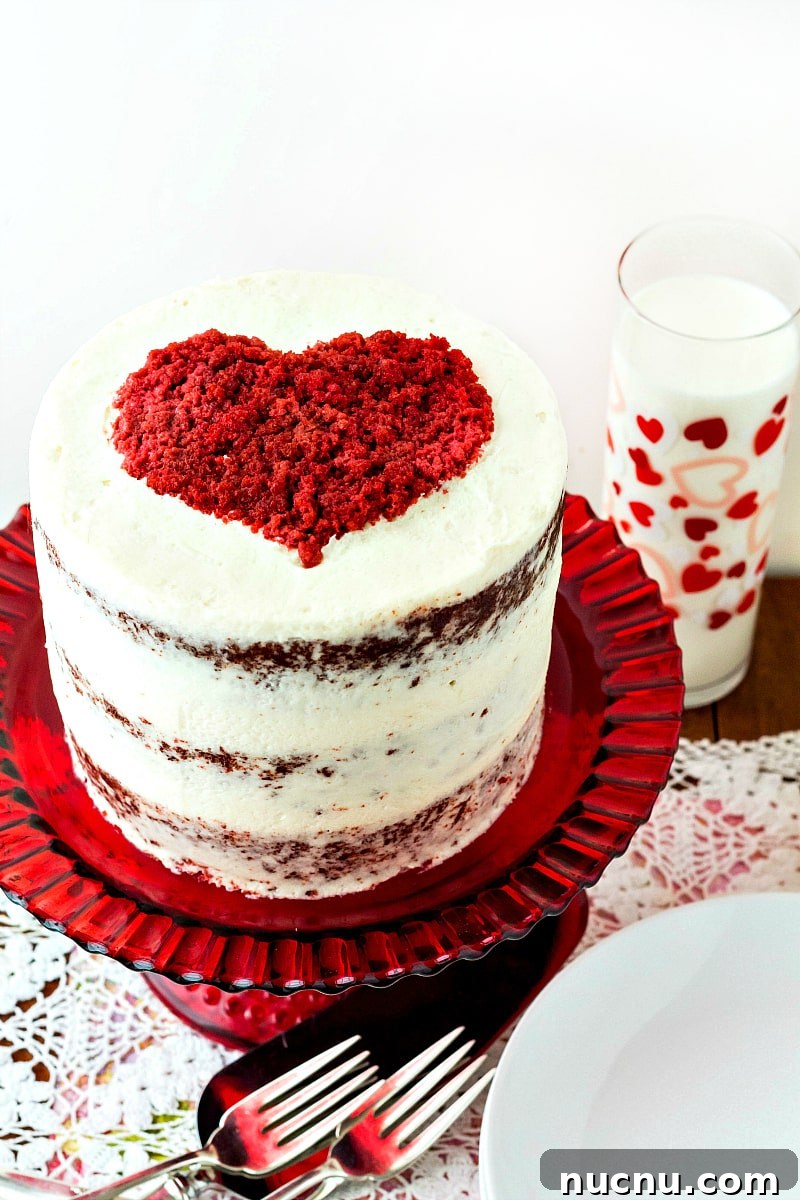
Traditional decoration is simple and old-fashioned. Trim the domes from the cooled layers, crumble them, and use the crumbs to decorate the sides or top. A stencil and a light dusting of crumbs make an attractive finish for a naked or lightly frosted cake.
Red Velvet Cake Q & A
Yes. Use your preferred liquid color in the same quantity (about 1/2 ounce or 1 tablespoon) to get the desired shade.
How long will this cake keep?
Store covered in the fridge for up to 5 days whether frosted with ermine or cream cheese frosting. Bring slices to room temperature before serving for the best texture.
Can you freeze red velvet cake?
Yes. Freeze unfrosted layers wrapped tightly, or freeze a fully frosted cake after it’s placed on a sheet pan and the frosting is firm. Wrapped well, layers or a whole cake will keep for up to 3 months. Thaw in the fridge and bring to room temperature before serving.
More Delicious Cake Recipes
If you enjoy this cake, you might like other classic and vintage-style cakes as well.
- Rocky Road Cake — a rich vintage-style chocolate sheet cake with rocky road frosting.
- Butterscotch Sheet Cake — an easy egg-free, milk-free sheet cake topped with butterscotch cream cheese frosting.
- Eclair Cake — layers of pâte à choux, homemade vanilla pudding, whipped cream and chocolate ganache.
Questions?
If you have any questions about the recipe or technique, leave a comment under the recipe or email the author. Comments and feedback are welcome and help improve the recipe for other bakers.
A Note About Measurements
Most recipes on this site are written by weight for accuracy. For consistent results, using a kitchen scale is recommended; it speeds up baking and cleanup and produces more reliable outcomes.

Red Velvet Cake Recipe
For the Cake (three 6″ layers)
- 11.5 oz (about 2 1/2 cups) all-purpose or cake flour
- 2 Tbsp non-alkalized cocoa powder
- 1 tsp baking soda
- 8 oz (1 cup) buttermilk
- 1/2 oz liquid red food coloring (liquid, not gel)
- 1 tsp vanilla
- 10.5 oz (1 1/2 cups) light brown sugar
- 10.5 oz (1 1/2 cups) neutral vegetable oil
- 1 tsp kosher salt
- 2 large eggs
- 1 tsp vinegar
For the Ermine Frosting
- 8 oz (1 cup) whole milk
- 7 oz (1 cup) granulated sugar
- 4 Tbsp plus 2 tsp all-purpose flour
- 1/4 tsp kosher salt
- 10 oz (2 1/2 sticks) unsalted butter, cool room temperature
- 1 tsp vanilla extract
- Optional: a couple shakes of chocolate bitters
Instructions — Cake
- Preheat oven to 350°F and position a rack in the center. Spray three 6″ cake pans, line bottoms with parchment circles, and set on a baking tray.
- Sift the flour, cocoa, and baking soda together and whisk to combine. Set aside.
- Whisk buttermilk, red food coloring, and vanilla in a bowl and set aside.
- Using a hand mixer or stand mixer, combine sugar, oil, and salt. Add eggs one at a time, beating until emulsified and the mixture is opaque.
- Alternate adding the dry mix in three additions with the buttermilk mixture, starting and ending with the dry mix. Mix just until combined and scrape the bowl as needed.
- Stir in the vinegar, divide the batter evenly among the prepared pans, and bake 40–45 minutes, rotating once after ~25 minutes, until the cakes are well-risen and spring back when pressed.
- Run a thin spatula around the pan edges, cool cakes in pans 10 minutes, then turn out onto racks to cool completely.
Instructions — Ermine Frosting
- In a medium saucepan, whisk together milk, sugar, flour, and salt. Bring to a boil over medium heat, whisking constantly.
- Boil for 15–30 seconds, then strain through a fine-mesh sieve into a bowl. Cool to room temperature.
- Stir in vanilla and bitters (if using).
- Cut butter into 1–2 tablespoon pieces and, using the whip attachment, add the butter to the cooled milk mixture one piece at a time, allowing each to incorporate fully before adding the next.
- When all butter is added, whip on high for 5–7 minutes until the frosting is light and fluffy. If it doesn’t come together, chill briefly and whip again.
To Assemble
- Level layers by slicing domes off; reserve the domes and crumble for decoration.
- Place one layer on the cake plate with a dab of frosting to hold it. Spread about 1/2 cup frosting on the layer.
- Top with the second layer, spread another 1/2 cup frosting, then place the final layer on top, bottom side up. Chill 30 minutes to stabilize.
- Apply a thin crumb coat around the sides and a thicker layer on top. Chill briefly if needed.
- Press cake crumbs around the sides or use crumbs with a stencil for a design on top.
Notes
Because the cake fat is oil, the crumb stays soft in the fridge. The butter in the ermine will firm in cold storage, so allow slices to come to room temperature for about 20–30 minutes before serving.
Freezing: For best results, freeze unfrosted layers tightly wrapped for 6–8 weeks. Ermine frosting is best spread fresh, so avoid freezing a fully frosted cake if possible.
Nutrition (per serving)
Serving: 1 slice (of 8) — Calories: 782 kcal; Carbohydrates: 77 g; Protein: 7 g; Saturated Fat: 37 g; Cholesterol: 86 mg; Sodium: 458 mg; Fiber: 1 g; Sugar: 51 g.

Thank you for reading. This classic red velvet with ermine frosting is an excellent old-fashioned dessert that’s both nostalgic and reliably delicious. If you try it, enjoy every bite!